Friday, 13 January 2012

LaRM day 4 (Adamski-Adem)

Solitary brothers! Yep, it's the 7" of Adamski's "club classic" 'Killer' (1990). God only knows where I picked this up from, but there it is in the list, clear as day so there's no avoiding it. I remember my brother was adamant (ha!) that Adamski's 'Killer' was an object lesson in how to construct a song, adding in new layers every fourth bar, etc. Be that as it may it is one seriously dated piece of vinyl and the B-side, 'Bassline Saved My Life' is absolutely abysmal. And besides it's got Seal on it. Seal!! There was a very awkward moment when Zoe and I had lunch with my uncle and his then wife. The topic under discussion was most hated singles and when Zo chose 'Kiss from a Rose' as the worst single of all time, my uncle's wife went very quiet. Anyway, 'Killer' is OK but another point that goes against it is that it ended up on Adamski's first album which was unforgivably called Dr Adamski's Musical Pharmacy - surely that constitues a crime worthy of capital punishment, no?

Then we're on to that arch post-modernist Barry Adamson and his debut solo album, Moss Side Story (1988). This is a fantastic record and one that really set out a quite unique idea of what pop/rock records could and should be striving for. As a kind of "pretend" soundtrack to an imaginary noir thriller, it is incredibly atmospheric, with snippets of faked dialogue and rumbling found sounds underpinning the Roy Budd-ish music. It's great stuff, claustrophobic and sweaty, genuinely unnerving and completely convincing. Unfortunately the brilliance of the conceit (together with his work on the real soundtrack to Jarman's Last of England) meant that some actual soundtrack offers came his way and the work he did for the low budget US thriller Delusion (1991) is a much lighter and extremely fragmentary version of what he had done so brilliantly as pastiche on Moss Side Story.

1992's Soul Murder goes back to the full length atmospherics but with mixed success, as it still feels a bit disjointed and lacking focus. There are some solid passages here (and the ska pulverising of Monty Norman's Bond theme reveals a lot about what Adamson's intentions are) and it also features what are possibly the most stomach-turning 'song lyrics' ever committed to vinyl, in 'A Gentle Man of Colour', a "news report" being related quite emotionlessly to a background of spooky clankings and shrieks. It still feels as if he's trying to find a way to create a record following the Moss Side Story template but without simply repeating it though. Oedipus Schmoedipus (1996) seems to have cracked it to me. It still has mostly instrumental tunes but they finally work in their own right, without relying on each other for support, and he replaces the real and mocked up voiceovers, news reports and dialogue parts with guest vocalists, meaning that there are some actual songs at last. And what cracking songs they are: Jarvis does his absolute pervyist for 'Set the Controls for the Heart of the Pelvis' Billy Mackenzie's turn on 'Achieved in the Valley of the Dolls' is both sleazy and heart-breaking at once and Adamson's old chum and ex-bandmate Nick Cave does his nice ballad thing. The found sounds and pitch black atmosphere have also been pretty much jettisoned (with the glaring exception of the absolutely terrifying stalker voicemail message nightmare 'It's Business as Usual') and the whole album is much tighter and melodically oriented than any that preceded it.

Finally for today we've got Love and Other Planets (2006) by Adem. This is one of those records that was being touted as being evidence of a kind of new-folk revival but to be honest the folk tag has become nothing more than evidence of laziness on the part of the critic because virtually none of the albums referred to as new folk or freak folk or anything folk have anything to do with folk music at all. The Adem album is simply a quietly charming, low key little pop record that happens to be played mostly on acoustic instruments. And as such it's certainly really pleasant but I can't help but feel too heavily the complete irrelevance to the universe if this record just didn't exist.

Well, not got much in today, so I'll have to make a concerted effort on Monday. Because otherwise I'm estimating this little project is going to take just over two years. And who has that kind of (work) time spare? Eh? Who has? Laters potaters.

Thursday, 12 January 2012

LaRM day 3 (Ryan Adams)

Phoo-ee, that's a whole lot of Ryan Adams right there. I think my good chum Lucy might want to skip this entire entry, being as she is the world's foremost authority on Adams-hating. I believe her main accusation is that Ryan Adams is basically a fake, a charlatan, a kind of stylistic band-wagon jumper who can't even recreate the stuff he rips off properly because he simply doesn't have the soul. You know the sort of thing, a bit like Bob Dylan. Ooooo.

Anyway, personally I've always had a soft spot for the Adams (well the records anyway, the man himself seems to be a prize cock - just ask those stately old crumblers Neil Finn and Janis Ian), and as is often the way with record buying, if you quite like someone and their records turn up for cheap you might as well pick them up. Which is why I've ended up with hundreds of the bloody things. So, let's dive in at the start with Heartbreaker (2000) which is an album that got people talking about an Americana renaissance. That's the people who had managed never to come across the many hundreds of much better Americana acts who had been busily renaissancing for years already. But Heartbreaker is a nice album (faint praise to many but I don't see what's wrong with being nice) alternating between cutesy downbeat tunes and an endearingly old-fashioned kind of rocknroll swagger. After Whiskeytown folded (apparently according to Caitlin Cary (who will crop in a future post. Under C. For Cary) because Adams was basically a bit of a jumped up dick) it seems like he was very keen to show off how much he could do it on his own and there are some good solid tunes and some great choruses ('To Be Young', 'Come Pick Me Up') but there are also some rather irritating failures ('Amy, 'Damn Sam, I Love a Woman That Rains' - there's a song title to prove Lucy's point if ever there was one). On the whole though I reckon it was an impressive opening salvo.

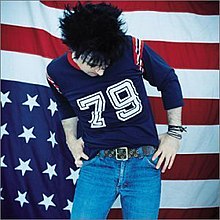
The chameleon qualities really start to show up on 2001's Gold, which sets its stall out from the cover - upside-down stars and stripes, 70's T-shirt, even scrappy leather strings tied round the wrist. I did the leather strings thing, did you? The trouble was I was doing it in 1988 so instead of looking like I was trying to emulate some kind of cool, loose 70's loner, I looked like I was trying to be Morten Harket. Anyway, the tunes on Gold vary pretty wildly in style and quality, from a silly but charming sax-blasted opening rocker ('New York, New York') to loose-limbed workouts (the 10-minute 'Nobody Girl') and "plaintive" ballads ('Sylvia Plath') but the whole thing really doesn't hang together and it ultimately suffers from his inability to let anything go. I dread to imagine what a compilation of unreleased tracks would be like because he seems completely unable to employ any quality control on the released stuff. There's just too much of Gold and it starts to drag despite having decent tunes peppered through it to the end.

Although in fact his label, Lost Highway, did have to sift through FOUR albums worth of unreleasable material to cobble together the pretend album Demolition (2002). Adams' tendency to write songs that sound as if they were commissioned for episodes of The OC really shows itself in this bunch, as well as a peculiar determination to sabotage songs that might otherwise be perfectly good, by extending them too long, or by turning a melody into a caterwaul. Nonetheless there's still a hundful of tunes that work well ('Cry On Demand' for instance), but on the whole it shows that while he might well "write at least 4-5 songs a day", at least 3 of them would be worth putting on the fire. Next up is the pastiche of Rock n Roll (2003) and the gloom by numbers of Love Is Hell (2004). This is where the complaint that he is just a kind of musical leech sort of starts to make sense. Rock n Roll is really a laughable excuse for a record, a collection of half-baked parodies of classic and modern songwriting that I think was supposed to create the impression that Adams could do anything he turned his hand to but instead exposes the limitations of an artistic temperament unwilling to accept that it only has a few good cards and should stick to playing them. Love Is Hell is certainly better but also suffers from a rather desperate sense of clinging on to bits of other people's rcord collections. An alt-country Smiths tribute band doesn't even sound like a good concept let alone make for a good record. Again, there are some lovely tunes in here, but an album as calculatingly downbeat as this doesn't make for a sympathetic listen. And again, over an hour of this stuff really isn't necessary. On top of which, Wonderwall? I mean, really, must try harder.

I think things really move back in the right direction with Cold Roses and Jacksonville City Nights (both 2005), mainly because there are other people allowed to be involved in the process of making the records (his part time backing band The Cardinals) rather than it all being solely in the hands of a maniac narcissist. Cold Roses particularly works despite (yet again) being far too long, partly down to the fact that he seems to have remembered where his songwriting strengths really lie. In other words, we're pretty much back where we started but with a bit more skill in the studio. Cold Roses is still pathetically in thrall to the kind of stereotypical 70's classic rock sound, but at least it's much more Fleetwood Mac than Loggins & Messina, and Jacksonville City Nights is a rewrite of every alt-country cliche in the book, but it's a confident and really enjoyable rewrite.

Unfortunately then we're on to what is effectively the fourth album's worth of material (Cold Roses being a double) for 2005, 29, which is a very, very bad record. A really very bad record. What appears to be an attempt at a kind of spooked out, creepy late night trawl through psychic debris is in fact just a really, really boring hour, that feels like being stuck in a lift forever with a self-obsessed teenager moaning about how hard life is because he can't afford a smart-TV.
After a couple of years off, which was surely a good thing, Easy Tiger (2007) quietly appeared. It's quite a low-key affair, but there really are some lovely songs here ('Two', 'Rip Off') and most of the duds are pretty decent little tunes, but again, the presence of the charming Neal Casal as a co-songwriter must be significant. It's probably the closest to Heartbreaker of everything, and it's telling that that remains the benchmark, because for all the determination to prove just what an important figure he is in rock's history, the only thing people go back to is the first record, in which he most successfully aped one particularly type of rock music. Easy Tiger really only confirmed that he's pretty good at one thing and one thing only, and it's the formula he stuck with through both 2009's Cardinals reunion, Cardinology, and last year's Ashes and Fire (I haven't got, or heard 2010's double III/IV) with the same result, some really nice tunes, some faintly boring ones, but reliability is no crime and I can't help but feel he would be best served making these records until he slowly fades away entirely.

Tomorrow for yet more A stuff chums.

By the way, because I'm lazy the only way I know to put pictures on this blog means that I keep being told off for "hot-linking" (whatever that means) and the pictures vanish, so I don't know if anybody reading this can see the pictures or not. If not, sorry, they're only the record covers anyway.

Wednesday, 11 January 2012

LaRM day 2 (Acid Mothers Temple-Adam & the Ants)

Well alright, as Mick Jagger would say. Or at least Phil Cornwell's impersonation of Mick Jagger in Stella Street would say. So, it's been quite the journey, this psychedelic freak-out. I've been musically tripping my brain off for the last few hours in the company of Kawabata Makoto and his troupe of cosmic gypsies, Acid Mothers Temple and the Melting Paraiso UFO. And when I say "tripping my brain off", I mean "listening to".

So, we started with the massive La Novia (2001), a three tune piece, the title track of which is 40 minutes of purest Japadrone, a glistening pool of shimmering feedback and mercurial whimsicality which takes you deep inside the beating heart of the experimental drone for the first half and explodes into a total psychedelic super freak out for its final part. In other words it's a whole bunch of quiet noises followed by a bunch of louder ones. Don't get me wrong, it is brilliant, but it does remind me a bit of a story my good friend Dr Uiterweerd once told me about an experimental jazz gig that he went to above a bar in Groningen. Three players - double bass, saxophone, drums - interplay - improvisation - all three running out of ideas and slowly stopping playing entirely - silence - expectation - silence - more silence - awkwardness - then! inspiration - the drummer rises from his stool - stalks across the stage - leans down - and gently rolls three small stones across the floor - Order is restored! As in, yes, it's funny, but is there any point in it? Still, I'll give La Novia credit for never being boring despite not going anywhere. Then we had the slightly less satisfying three song mini-LP 41st Century Splendid Man (2002). One of the great things about the Mothers is their determination to make jokes of every old prog and experimental song and album title from back in the day. 41st Century Splendid Man is not one of their finest records, being a bit flabby and unfocussed, but Dalai Gama gives it some good psychedelia for the 5 minute playout.

Right, so the preliminaries are over, let's get into the serious stuff - the 3.5 hour compilation Do Whatever You Want, Don't Do Whatever You Don't Want (2002), which is a kind of overview of the entire Acid Mothers Temple universe from around 1995 onwards, containing only a couple of AMT tunes, and loads of stuff by all of their off-shoots and side projects. There's some fabulous stuff, really fabulous and there's some dismal, boring stuff, really dismal, boring stuff. The whole marathon kicks off with AMT's hour-long piece 'Pink Lady Lemonade' which is absolutely fantastic, starting with a lengthy but lovely, delicate guitar figure around which various drones and noises drift in and out, before breaking off at the 20 minute mark into a kind of free-jazz breakdown and finally collapsing into a long piece of crackling drone. It's really invigorating stuff and completely gripping. It's all over the place from then on though, with some great bits (Kawabata's feedback drones 'Concurrence' and 'I Want You to Kiss Me Again', the delicate folk of Maquiladora's 'So Far Away' and Fursaxa's 'Mon Lion') but there's also some stuff that you can't help but wonder why you've found yourself listening to the workings of the inside of a vacuum cleaner ('Hello Baby' by the Wild Riders, The Pardons 'Pardon Monsieur'). On the whole though it's a brilliant trip through the mind of one of outsider musics most accomplished freaks. Man.

After that lengthy test of endurance though, it was on to something altogether simpler to deal with, namely the second and third albums by Canada's The Acorn. When I first heard Glory Hope Mountain (2008) I really liked it but wasn't sure if it was particularly special, but it only took a few listens before I was really sold on it. It's a truly lovely record, if a little earnest (but what's wrong with not having a sense of humour eh? EH? WHAT?) and I'm a sucker for sentiment so its back-story of being about the main chap in the band's mother's journey from Honduras to the US is a killer (the album title is a translation of ma's name). I'm often reminded when listening to Glory Hope Mountain and the follow-up No Ghost (2010) of just how terribly anaemic the records by The National are. Honestly, what is going on there? They're alright but honestly why are people acting like they're a collective second coming? Anyway, that's getting off the point, and I'll be slagging off The National again when I get to the American Music Club. And when I get to The National. I'll be slagging them off then for sure. But anyway, No Ghost is in some ways a better record and in some ways a worse record than Glory Hope Mountain. Individually the songs are better but the whole thing doesn't feel as fluid and cohesive. In any case, they are both just marvellous records, absolutely marvellous.

Next up we would have the indescribably soppy 'Fun Flies' 7" (1996) by great comic writer/terrible songwriter Peter Bagge's band The Action Suits. (Un)fortunately this also falls victim to the Abe & Malka effect (ie. vinyl only, no "internet presence"). Just worth mentioning that the sleeve features Valerie and Lisa, the two women in Buddy Bradley's life from Bagge's never-surpassed comic Hate, which I will now be re-reading having been reminded how utterly brilliant it is as a result of doing this stupid project.

So instead it's the eponymous album by the Action Swingers (1991). Now this is so much less than the sum of its parts it actually hurts. Various people were in the Action Swingers for a while: J Mascis, Thurston Moore, Don Fleming, but the core was ex-Pussy Galore members drummer Bob Bert and the MIGHTY Julia Cafritz (ah, there's one of the millions of indie crushes...). The really disastrous factor was that the band were effectively controlled by a guy called Ned Hayden, who seemed to believe that rock and roll was all about attitude, so he just sort of snarled a bit and did some shouting. There are a couple of great tunes ('Ski-Cap' for instance) but on the whole the album is a wash-out and certainly an ignominious entry for Cafritz.

To finish off for today though we move onto laughable fare of a very different, er, stripe - it's Adam and his Ants with Kings of the Wild Frontier (1980). What a record this is. I mean what a record. This is just the shizzle. Poor befuddled old Stu Goddard really believes that he was a kind of musical visionary bringing us messages from beyond our restricted understanding and opening us up to musics of the world. In fact that twisted gnome Malcolm Maclaren just made them get two drummers and made them play their drums "a bit African". In any event, forget any portentous nonsense about any genuine value and just listen to the brilliant pop songs - 'Dog Eat Dog', 'Ant Music', I mean 'Killer in the Home' - free the warrior! Come on!

See you tomorow for lots more letter A based musical fun, starting with an extremely lengthy Ryan Adams session. Fun? er...

Tuesday, 10 January 2012

LET'S alphabetically ROCK MOTHERFUCKERS (Abba-AC/DC)

OK, so, here we are then nearly a year after the last one. But this time it's not a movie post, it's a music post. Because over the weekend I had a notion that I would spend all day at work on Monday listening to the complete recorded output of.....err, who was it now? Erm, come on, come on, think, who was it? Nope, it's gone. And I was so irritated that I couldn't remember, I realised that the only possible way of actually achieving the original goal would be to listen to every record that I own, in alphabetical band order. And that's what I'm doing. This week anyway; it's certain that I'll get bored of this project within a few days and consign it to the gigantic theoretical pile of unfinished projects that lies strewn in my psychic wake.

Anway, anyway, we started with a challenge: Abba-The Album (1977). Now, I'm OK with Abba, I really don't have a problem with Abba, but I'm not prepared to engage in some post-modern flim-flam about what astonishing songwriters Benny & Bjorn were. They're alright. That's about it. Until you put Abba-The Album on and get Eagle first off. Good God, Eagle really is shit. I mean, totally shit. Astonishingly bad. But, you know, to give the album as a whole credit, it's really just a companion piece to the brilliant Abba-The Movie which is an honest to goodness treat. If you haven't seen it, check it out, it's great. The fantasy section where Robert Hughes, playing a DJ dispatched to interview our musical chums, dreams of having a highly erotically charged picnic with Agnetha and Anni-Frid is simply jaw-dropping. There are some great tunes on Abba-The Album: it's got 'Take a Chance on Me', 'Thank You for the Music' and 'The Name of the Game', but it's also got some absolute stinkers ('I'm a Marionette', oof).

Then we had the Chiquitita 7" (1979) (great tune, my favourite Abba number) with 'Lovelight' as the B-side (another horror show), and then Abba's Greatest Hits vol. 2 (1979) which, much like Abba-The Album is a curate's egg, some fine tunes ('Gimme, Gimme, Gimme', Alan Partridge fans) and some frights ('Angeleyes', 'Rock Me') but it's also got 'Summer Night City' which is great but for some reason reminds me of David Hasselhoff and those amazing spoof reviews people did on amazon for his greatest hits.

Anyway, Abba done, it's on to The Lexicon of Love by ABC (1982). Nobody, but nobody can deny the greatness of this fine slab of 80's popular music. This is surely the other of the twin peaks of smartarse white soul come pop besides Scritti Politti's Cupid and Psyche '85 (1985) casting their long shadows across the blighted top 40 landscape. If anybody wants to tell me that Martin Fry's hyper-earnest delivery of his own laughably ambitious (and therefore pricelessly stupid) lyrics isn't a thing of wonder, well, then that person is a fool, sir. Will Martin ever find true love? (sigh) I don't know. And anyway, it's true, brothers and sisters should he-ellp each other. And besides, Yipee-ay, yippee-ay yay-ay. Was ever a truer sentiment uttered? WAS IT?

Next was the Opposites Attract 7" (1989) by, oh yes, Paula to the Abdul. Now obviously the existence of the Opposites Attract 7" is by it's very nature, a sin against humanity, but I've got to say, I think it's a great tune. And full props to MC Skat Cat. No, really. Full props.

Then we have to skip over Abe & Malka's freak-folk workout from 1977, City Folk. It's a great record, but I only have it on vinyl and it isn't on Spotify or Grooveshark so I can't listen to it at work.

With Abe and Malka out of the frame, it's on to the eponymous A Camp album (2001). If anybody doesn't know, this was the side project of Nina Persson from the Cardigans (who will be appearing later in some volume. Under C. For Cardigans) and pre-death Mark Linkous of Sparklehorse. It's a strange record in many ways, a kind of off-kilter Americana with some lovely tunes and some downright peculiar arrangements, but you really have to focus on it otherwise it kind of drifts off into the horizon and out of sight. It's one of those records that sound like they should be played as background music, but don't actually work as such because you will not only miss the nice little touches, but also because it will take a while to realise that the album actually finished quite a while ago.

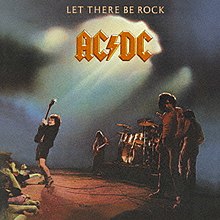
So, with the gentle and always surprisingly successful Swedish Americana project over, it's on to some serious work - a whole bunch of albums by the mighty AC/DC. Clearly the High Voltage (197 6) album is phenomenal ('It's a Long Way to the Top', 'The Jack', 'T.N.T.') but both High Voltage and Dirty Deeds Done Dirt Cheap (1976) are a little too heavy on a sort of, can I use the term, "blues-boogie" (or am I confusing the DC with Jools Holland?). We really great cracking with Let There Be Rock (1977) (I agree with Bon, once the universe was created, there really wasn't much left for God to do but say let there be drums, let there be guitars, and indeed let there be rock). Anyway, apart from the occasional mis-step ('Crabsody in Blue' anyone?), Let There Be Rock is great, legs spread, heads-down, er, rock ('Bad Boy Boogie', 'Hell Ain't a Bad Place to Be', and of course 'Whole Lotta Rosie'). The live album If You Want Blood (1978) is probably about as good a live rock album as you'll find (this side of Humble Pie's Live at Fillmore East at least, an album which sounds eerily like warm up for the DC). Then there's the treading water of Powerage (1978), a decent album but there's nothing much going on than hadn't already been covered by the previous albums.

But then - but then, it's Highway to Hell (1979). Well, what is there to say about Highway to Hell that hasn't been said a gazillion times. Pretty much nothing. It's great. Although, perhaps a new approach is to sound an note of caution. There are at least two terrible songs on Highway to Hell. Is it, er, (the opposite of) blasphemy to say so? Well, I'll add more controversy, the production is absolutely appalling. Typical Mutt Lange overlayering and anodysing. All the blood has gone out of the sound, and although it's a BIG ROCK NOISE, it's got very little soul. He's an idiot so it's no surprise, but I can't help but feel that a different producer and the absence of 'Touch Too Much' and 'Night Prowler' would have meant an even greater album.

Anyway, Bon chokes to death on his own vomit and in comes Geordie singer Brian Johnson to give an injection of northern grit and here's Back in Black (1980). Yep, Back in Black. Well, there it is, everybody in the universe knows how good Back in Black is. Then we've got the sorely underappreciated For Those About to Rock (1981). I love FTATR. It's got far and away the most transparently foul sexual nonsense in rock lyrics ('Inject the Venom', 'Let's Get it Up' - Johnson couldn't even be bothered to come up with double entendres), which obviously makes it brilliant and my word it's got some blistering tunes. It's a testament to the band that both Back in Black and For Those About to Rock survive nearly unscathed from Mutt Lange's bombastic crotch-grabbing approach to production. Next up it's Flick of the Switch (1983). A little like Powerage you feel that the spirit is waning a bit. Apparently the band had wanted to get back a bit of the rawer, pre-Mutt Lange sound, but by then the damage had been done and Flick of the Switch just sounds a bit weak.

My record collection then leaves the DC for a lengthy stretch, taking in only the Heatseeker 7" (1988) (a fine tune and many consider Blow Up Your Video something of a return to form. I've never been so sure about that, but the Heatseeker B-side Go Zone isn't up to much) before 2008's Black Ice. Well, it's the 800th AC/DC album and the formula has been recreating itself for so long now that the band didn't even need to turn up to the recording studio apparently. It's rock, but it's certainly rock as we know it.

Till next time, for a nightmarish trip through the world of the Acid Mothers Temple, rock on chaps.

Wednesday, 16 March 2011

OK, OK, so one year on and it's like I've been dead, no? Actually the last couple of days I've felt like I HAVE been dying. Gastric flu no less. I'm assuming it's the fault of the bloke at work who I happen to know didn't wash his hands after taking an uncommonly vile dump. Anyway, feeling wretched has meant that I have been able to watch a couple of movies (between brain-comforting episodes of Poirot), starting with Michael Powell's penultimate full-lengther, 1967's 'They're a Weird Mob'.
It's a peculiar movie is this, and it does show the remarkable degree to which Powell relied on Emeric Pressburger to provide the essential structure, the bones of the films, with his startling screenplays. Despite Pressburger's absence, 'They're a Weird Mob' is not a dud by any stretch, and it has one or two delightfully steotypically ideosyncratic Powell moments, but it's also not actually much good, and it demonstrates how little support Powell was left to work with after the absurd and shameful fall-out from the 'Peeping Tom' witch-hunt.

Taken from John O'Grady's autobiographical novel of the same name, 'They're a Weird Mob' ostensibly tells the story of an Italian (Irish in the original novel I believe) immigrant to Australia, who has arrived unknowingly under false pretences and, therefore has to learn the hard way the difficulties and barriers to assimilation. Interestingly however, Powell chooses to show Australia very much in the "new society" mode, as one in which although there are racists and flamin' hoons (to quote the mighty Alf Stewart), they tend to be drunken fools and in fact the majority of the working Aussies are relatively open to strangers, especially ones who demonstrate a willingness to work hard.


As a product of its time many of the film's social positions can be explained, even understood, but of course time can be, quite rightly, extremely cruel to certain opinions and the fact that the pay-off in which hard-nosed corporate bitch Kay Kelly comes to realise that she needs to soften up and thereby realises that she actually is in love with Nino (who she had previously been chasing through the courts for pots of cash, for reasons which I won't bother to go into), is predicated by the revelation that no man will ever love her if she doesn't start dressing and behaving like a woman seems particularly gruesome. Ha, back in the kitchen ladies, and no answering back or you get one of these. As the closing song (ironically? I'm not so sure) has it, it's a man's country sweetheart...


In many ways the film stands solely on the performance of Walter Chiari as newly arrived Nino Culotta, and it's fair to say he carries it off with a totally relaxed and naturalistic performance, and often one feels as if he isn't acting at all, making the character effortlessly likeable and supportable. The problem then however is that he almost feels out of place in a film which portrays down-under by turning the screen upside-down.

Anyway, it's an interesting curio and in its own right its worth seeing for those little flashes of Powellian genius (the filming from Nino's point of view when helping dig a trench, the distorted POV shot when Nino meets Kay's father), but on the whole its a rather dispiriting reminder of the power of the media to cripple anyone, no matter how brilliant, talented or insightful, if they so choose.

Oh yeah, also, early on in the film when Nino is learning what a "shout" is, check out the barmaid - it's only Anne "Helen Robinson" Haddy.

Thursday, 22 April 2010

Not Quite Pinewood

Right, it's been, what, half a year since I put anything on here. Too long by half. And speaking of things being long, let's sit down and have a cosy chat about Stanley Long, Britain's premier purveyor of prurient, er, porn-lite. I believe that Stanley Long had at one time intended to be the kind of film director to rank among the likes of Reisz, Reed, Powell and Hitchcock, but instead ended up only making a succession of grimy sex-flicks beginning by producing such "educational" fare as 'Primitive London' and 'Take Off Your Clothes and Live' and climaxing (natch) in the truly unspeakable 'Adventures of...' series, which can best be summed up by imagining the 'Confessions of...' series being ten thousand times more grubby and cheap. Indeed, Long began his directing career with a film called 'Naughty!'. Honestly, can you imagine?

Anyway, I only mention this because I had the misfortune to see Long's short film 'Bread' the other day, because it's packaged as an extra on the BFI's Flipside DVD edition of another gloomy slab of miserable Seventies cautionary "erotica", 'Permissive', more of which later. 'Bread' (and everything that could be read positively in this piece I mean negatively) is a comedy about a group of young hippies who try to stage a happening music festival on the grounds of an upper-crust toff. Now, what actually happens is the following: a group of desperate actors who can't get any work other than in the kind of cheap tat made by Stanley Long and his crusty cohorts put on hilarious "hippy" wigs and dismally try to give lively performances on what I can only assume was an extremely tight shooting schedule.


Clearly plot-wise 'Bread' has nothing whatsoever going for it: hippies fall foul of local toff Sir Alastair Tightarse (or something) who drunkenly rages at hapless hippies for camping on his land. Luckily for the hippies, the toff's missus is, phwooaaar, a right goer. She can't keep her hands off the really ugly hippy (see the potential for comedy here?) and enacts a seduction so devoid of emotion or charm that one can only feel depressed watching it (they end up having sex in the Earl of Rumptunnel's bed, while he's sleeping off the booze in the same bed!!!!) Quite simply priceless. Anyway, our acidhead chums haven't got any cash so amongst the hilarious schemes they come up with, they try amateur porn (see the potential for comedy here?), but when all their plans come to nothing (natch) they offer to paint Lord Reginald Buttplug's mansion. Off go the Lord and his, phwooaar, randy wife leaving our freaky pals to stage their wild happening. Enter Juicy Lucy, one of the worst prog-ish bands in the UK's psychedelic music history who agree to put on the show right there. And that's basically it. It's a pile of worthless, charmless, cheap, nasty, and really deeply unpleasant shit. And it's one of those experiences where you can only hope that the actresses who have to take their clothes off at any opportunity were doing it for the love of the craft rather than because they were absolutely desperate.

Much like, but for very different reasons, the actresses in Lindsay Shonteff's 'Permissive', a film so bleak it makes the fact that it's full of women taking their clothes off seem like the most depressing thing imaginable. Here's the story: small-town girl Suzy comes to London to try and hang out in the big smoke's happening music scene.


She falls in with an old acquaintance, Fiona, who has become sort of queen-groupie for a band led by her boyfriend, played by Allen Gorrie (the bloke who looks like Catweazel from the Average White Band - and if you want a clue as to the calibre of 'Permissive', you can find it there. The Average White Band, I mean, Jesus Christ how low can you get).


Suzy finds the constant rank misogyny a bit hard to handle so she heads off into the night with the seemingly more sensitive singer-songwriter Pogo. They busk and sleep rough, and that's pretty much the high point of Suzy's existence, because when Pogo (who turns out to be a total nutcase anyway) gets run over and killed she has to go back to Fiona, whereupon she launches herself into the groupie lifestyle wholeheartedly, sleeping with every member of the band and crew, working her way up to Gorrie himself. The revelation that he is happy to go at it with Suzy is too much for Fiona who slits her wrists in the bath.


The real kicker here is that Suzy finds Fiona bleeding to death and simply watches her die. Do you see what's happened here? Suzy has lost her core sense of self in the soul-destroying world of banging hairy failing musicians. The film plays some interesting games though, occasionally showing us brief glimpses of Fiona's suicide at various points throughout the film, forewarning us of the abject misery to come, and there are other instances of cutting back and forward in time. No amount of interesting camerawork (and there is plenty) or narrative gameplay can make up for the fact that 'Permissive' really isn't up to much as a movie, but I suppose it isn't relevant to even look at it in that light. Best just to see it as a bizarre but suitably downhearted slice of miserabilism, reflecting the depressing state of the 'entertainment' world and Britain in general as the 60's turned into the 70's.

Tuesday, 27 October 2009

These are my credentials


Right, for discussion today class, we'll be looking at a tired bit of 60's kitsch which has been talked about to death. But that's never, ever, stopped me from banging on about anything so Casino Royale it is. I refer of course to the brilliant one with the mighty Niv, not that piece of overblown mobile phone advertising starring Daniel Craig (whose position as possibly the worst British actor of his generation we will hopefully be discussing in the future), although while we're mentioning it now, I would just like to ask the laydeez how on earth can any of you find Spongebob Squarepants attractive:

Even Oldfield in his scants is a more appealing sight. Although obviously that's a bit like saying a rotting cadavar in its scants is a more appealing sight. Anyway, what were we talking about? Oh yes, the GOOD Casino Royale. Now, as any fule nose, Casino Royale gets off to a truly cracking start with what may well be the best theme tune ever written for a movie. In fact old Bacharach really pulled out all the stops with the whole soundtrack, giving us the gift of a cross between old school classic songwriting and incidental music for late Benny Hill sketches. And let me tell you, it doesn't get better than that. The film itself has often been derided in the past for being an unholy mess of half-baked ideas, mismatched talents and the disastrous product of a selection of different directors and producers all sticking their oars in. But to those who slag off the Casino, I ask, have you ever watched it? It's BRILLIANT. It's an unholy mess of half-baked ideas, mismatched talents and the disastrous product of a selection of different directors and producers all sticking their oars in - and in the late 1960's what could possibly be better than that? What?? It's as if some stuffed shirt in the film industry had been asked to write down what they would imagine a "trip" on "LSD" might be like. For a start is there a more disconcertingly trippy sight than the Niv in pyjamas and a sort of "night-fez" knocking over giant bekilted Scots with cannonballs while a bevy of classically fantastic looking 60's "chicks" look on? Maybe, but only if you've actually taken psychotropic drugs. Which I know none of you have, gentle readers.

Sellers, Andress and Welles - trois a la banque


The plot, such as it is, naturally has absolutely nothing to do with the novel at all and instead has David Niven, a retired James Bond taking over the position of M and renaming all of the secret service agents "James Bond" to confuse the enemy. Well, never mind whether any enemy is confused, that's the point at which the viewer might as well give up trying to make sense of the movie and just enjoy its finest qualities - namely a seemingly endless succession of images that have "1967" written through them in flourescent indelible marker pen. It's no surprise that the best scenes in the film are those directed by the disparate talents of John Huston (in charge of the "Niv/cannonballs/kilts/cuties" scene referred to above) and the great Joe McGrath (who not only made the Spike Milligan masterpiece The Great MacGonagall which we will look at in the future no doubt, but also the best British "big dog" movie of all time Digby, the Biggest Dog in the World - ah the 1970's) who oversaw the Peter Sellers/Ursula Andress seduction scene which for my money puts any of Sellers' Clouseau falling-about nonsense in the shade.

The cast is absolutely top-hole with a selection of 60's A-listers all obviously equally confused as to what the hell is happening around them but clearly enjoying it nonetheless and Andress looks like she's having the time of her life when she's firing a bagpipes-machine-gun. The obvious exception is Sellers who, angry at not being able to play a straight Bond, walked off mid-filming apparently hacked off with the whole thing (I've never really liked Sellers, I've always had the feeling that people like Lionel Jeffries and Ronald Fraser must have found him to be a joyless creature to work with), but everybody else is going great guns, even Woody Allen who it would be fair to assume would already have been considering this glorious mess to be beneath him (and indeed he has no kind words to say about it at all). Then there's the fabulous Joanna Pettet:


(She signed that for me you know. No she didn't, I just found it off of the computer's "the internet"). And there's the stately George Raft. And there's John Wells, and Richard Wattis, and even Jean-Paul Belmondo. Deborah Kerr, William Holden, Charles Boyer, Jacqueline Bissett, the awesome Alexandra Bastedo (awesome just for being in The Champions alongside William "Arthur Crabtree" Gaunt), Nimmo, Corbett, Cribbins, I mean the list just goes on and on, and that's just for the named characters. Uncredited we have a whole new layer of remarkable names: Angelica Huston, John Le Mesurier, Dave Prowse (oh yes, THE one and only Dave Prowse - check his website by the way, he manages a sort of nu-metal band these days, no shit), and Bob Godfrey (and yes, that's THE Bob Godfrey who, before taking up the pen, did the occasional bit part).

So, there we have it, even if we were to agree that Casino Royale is an indulgent scramble composed of lunatic directing and editing, and even if we agree that to have the whole thing climax with everybody dead following a scene in which the casino is invaded by (i) the US cavalry on horseback, (ii) a troupe of naked dancing girls painted gold, (iii) some seals and (iv) a bloke pushing a machine making bubbles is totally mind-meltingly stupid (and we disagree with both of those things, don't we kids?) one would have to admit that the sheer weight of 1960's talent, style, imagery, psychedelic disinterest in narrative form, post-modern disregard for structure and outright bloody brilliance carries the day.