Friday, 24 February 2012

LaRM day 29 (Beach Boys)

Four hours of the Pet Sounds Sessions box-set done. It's an interesting experience listening to the whole thing at once because it's simultaneously incredibly interesting and really boring. The insights into Brian's working mind and method are extraordinary and you really have to stand back in even greater awe at his achievement and his dedication as well as his brilliance. But four hours of working sketches, backing tracks, alternate versions and rehearsals is too much to take in one sitting and it's really quite exhausting. The real purpose that the box-set serves is to make clear quite how much better, how much more incredible Pet Sounds is than any other rock record. In many ways it highlights how much higher he was aiming (and achieving) than those silly little milksops, The Beatles. Brian wanted pop music to be as transcendant and as intricate as classical music, and when people describe Pet Sounds as "symphonic" it's not wide of the mark, this is intensely arranged stuff and listening to its component parts taken apart makes the idea that Brian felt he couldn't touch Sgt Pepper not only utterly, utterly laughable but also tragic. While the Beatles were fannying about in the studio trying to make funny noises, Brian was turning pop music into something akin to an art form.

And so on to possibly the most notorious unreleased work in the history of rock music, Smile. This is an interesting one for me because the reputation of what could have been seems so utterly immense as to make discussing it almost impossible, and yet the sketches (maybe even in some cases finished recordings) on the bootlegs are simply not good enough to warrant the bizarre slavering mania about it. On occasions you can hear that Smile might have been a fantastic piece of experimental music (the vocal harmonies on 'Child Is the Father of the Man' for instance) but on the whole, the idea that Smile would have utterly eclipsed Pet Sounds seems farcical to me. Where Pet Sounds was focussed, clear, beautifully designed and constructed, a masterpiece of musicianship, the bootlegs of Smile sound like sketches from a nervy artist's workbook. I think this is proven by the clear priority that Brian gave to 'Heroes and Villains' and 'Good Vibrations'. He was working and working on these songs, in the same way that he worked on the songs on Pet Sounds, and nothing else. Almost every other song that exists in any form that was planned to appear on Smile (with the possible exception of 'Look' but even that is hidebound by a stupid reference to another tune) is little more than a frivolous (albeit very smart) doodle. Now, it may be that if he had been able to spend the next six or seven years working on Smile it might have been the miracle that people imagine, but frankly it doesn't matter if he had created the most astonishing orchestral arrangement for 'Vege-Tables' it would still be the sub-standard song 'Vege-Tables'. Sonically, I understand the veneration for the idea of what Smile might have been, but in fact I don't believe that whatever it could have been, it would ever have come close to what Pet Sounds achieved. The best record of all time had already been made, there was no way that Brian could trump it himself. In all events, I need to give a shout out to Alex for providing me with the opportunity to even discuss Smile.
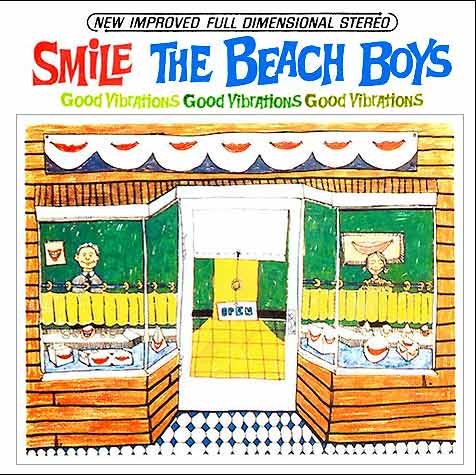
And so on to the curiosity that came out of the fall-out from the Smile catastrophe, Smiley Smile (1967). It must have seemed like a particularly peculiar record for the Beach Boys fan at the time. Presumably nobody knew much about either Brian's increasingly erratic behaviour or the debacle of the Smile recording sessions so for Smiley Smile to have appeared in the wake of Pet Sounds must have felt like something of a slap in the face. Or worse, an attempt by the Beach Boys to cash in on the growing psychedelic movement. The fact that Brian had been moving towards an experimental approach would have been a total unknown to the record buying public and as such Smiley Smile will have been a complete head-scratcher. Composed mostly of cleaned up bits and off-cuts from the Smile sessions, it's a difficult album to get to grips with. Where the songs on the Smile bootlegs you can accept as works in progress, the scrappy and haphazard nature of Smiley Smile is a real enigma. Fans listening to 'She's Goin' Bald' and 'Wind Chimes' must have been completely bemused and I think it's fair to say that to ask the audience to accept a sudden leap into lo-fi experimental music was an ask too far. There are still some great tunes here ('Gettin' Hungry' for instance) but on the whole it's a really odd record, and the way it came out gives some credence to that prize idiot Mike Love's view that this was a step into the unknown too far. After the psychic meltdowns of the Smile/Smiley Smile experiences it was time to take stock and the Beach Boys made the ultimate move away from Brian's ambitious heights by recording a back-to-basics piano, vocal and occasional guitar/keyboard rock record, Wild Honey (1967). It's a marvellous record, and you can hear how cathartic it must have been to make. No orchestral arrangements, no massive overdubs, no complex arrangements and no tripped-out paranoid psychedelia, just a true tribute to the notion of songs as an innate instinct. For the most part it's just Brian bashing out some lovely R&B influenced numbers, nothing complicated, nothing tricksy, just great, great songs. People often talk about it as a kind of rebirth of the band after its gruesome collapse under Brian's ambition and the band's antipathy at the end of 1966, and I think that's true. Wild Honey sounds like a new beginning, starting from scratch and using the best materials available to start rebuilding. It really is a lovely record.

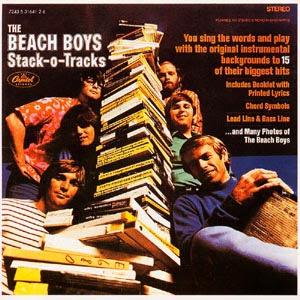
The slow rebuilding of the broken Beach Boys continued with Friends (1968). The songs are relatively simple, but you can hear how the band are building up again from the bare bones of Wild Honey and there are some tentatively beautiful harmonies and deceptively lovely little songs here. The title song seems like a plea from each member of the band to the others to remember the value of staying close after the cataclysmic bust-ups they had during the Smile sessions and it's a charming thing to listen to. There are delicate steps back into using the studio as an instrument and making the vocal arrangements interesting, but it's all still very low-key. There are some gorgeous songs on Friends, and the whole thing sounds like the whole band are glad to have the opportunity to relax into making a record for a change. Possibly relaxing too much bearing in mind the whole thing ends with a dedication to the joys of transcendental meditation but we'll just mark that down to it being the 60's. Finally for this week it's the absolutely bizarre Stack-O-Tracks (1968). I have no idea what the point of Stack-O-Tracks was. It's a selection of the band's biggest hits to that date with all of the vocals removed, and weirdly it seems to have been sold as a kind of proto-karaoke deal ("You sing the words and play with the original instrumental backgrounds" shouts the album sleeve). Although the record does make you concentrate on the complexities of the instrumental arrangements, it does also serve to remind you how fundamental the vocal arrangements are to these songs. And therefore you're left wondering why on earth was this released? I think it's fair to assume that this was another desperate attempt by Capitol Records to milk what was left of the Beach Boys cash cow and that the band themselves had very little to do with its release.

Looks like we'll finish up with the mighty Beach Boys on Monday and that means the twin highs of Surf's Up and Holland. Excellent. Good weekends tout le monde.

Thursday, 23 February 2012

LaRM day 28 (Beach Boys)

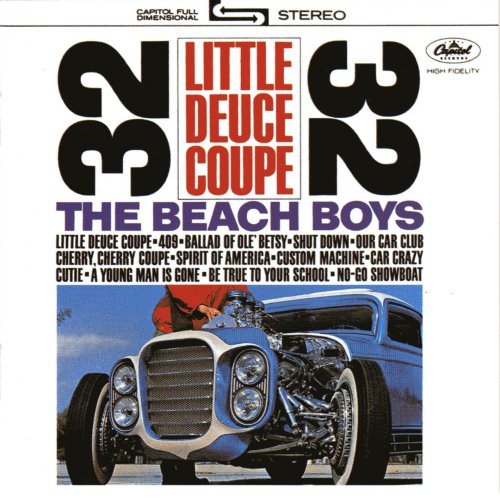
More angelic harmonies all day today of course as the Beach Boys odyssey continues. After the first two rather throwaway Beach Boys albums comes Surfer Girl (1963). This is another step up towards the untouchable greatness they would achieve later, and although it is really not a massive development in terms of the sound or style of Surfin' Safari and Surfin' USA, Surfer Girl has a greater number of ace tunes. It kicks off with two definitive bits of surf rock in Surfer Girl which is a great slower number, and Catch a Wave, which although a knockabout tune, has the first real signs of Brian's interest in using the studio to greater effect featuring as it does a harp. It's still got some absolute howlers ('South Bay Surfer', 'Our Car Club') but there's no denying the remarkable effect of the album's centrepiece, 'In My Room'. Now, this is a song that really marks out just how extraordinary Brian's work and his approach would become, with its complicated arrangement and dense instrumentation. Where most of the songs on these early albums sound like the were knocked out in a couple of takes in the studio, 'In My Room' sounds like something that was worked on and worked on. It also shows the first signs that Brian was preparing to really start looking inside himself for inspiration rather than telling silly stories about drag racers and surfing. It's an astonishing song and a beautifully constructed one and makes Surfer Girl an essential step in tracing the Beach Boys development. Interestingly it's the last tune that Brian wrote with Gary Usher who had been so unhelpful earlier, but it also shows the direction that Usher himself would take also. Next up is the third and last album from 1963, Little Deuce Coupe. After the promise of the high points of Surfer Girl, Little Deuce Coupe is a real disappointment. To a large extent it was just a means of mitigating damage done by Capitol who had released a sub-standard compilation album without the band's permission, and they recorded and released Little Deuce Coupe just one month after Surfer Girl's release. As a result the album unsurprisingly contains a handful of pointless re-recordings of songs from the first three albums and a number of fairly uninteresting new songs ('Car Crazy Cutie' anyone?). The one truly golden moment is 'Be True to Your School', which, while still a back-step, is a fantastic song.

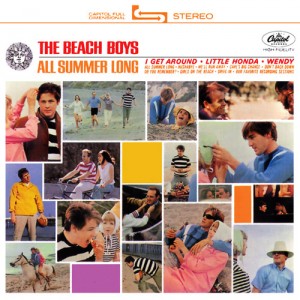
The first of 1964's albums, Shut Down Vol. 2, is an interesting halfway house in a way, because it's got some really classic work ('Don't Worry Baby', 'The Warmth of the Sun') which is moving inexorably closer to genius, some barnstorming knockabout workouts ('Fun Fun Fun') and the rest, while not particularly impressive, is certainly interesting. There are a couple of instrumental workouts and some studio horseplay which also show that Brian was really thinking about the possibilities of working hard and working seriously. The only down sides are the inevitable cover versions (a pointless 'Why Do Fools Fall in Love' and a dispiriting 'Louie Louie') but it's telling that Wilson's own songs are finally starting to really eclipse other people's work. (PS, get the double reissue CD for an astonishing extra cut of 'In My Room' IN GERMAN!!!). The next 1964 album, All Summer Long, is where the buds start to really burst into bright flowers. Interestingly, this was the first album released after Brian finally stood up to his grotesque, vicious father and sacked him as the band's manager. To say that the album sounds like liberation is scarcely hyperbole. This is joyous, complex stuff. There are some just wonderful songs here ('I Get Around', 'Wendy', 'The Girls on the Beach', 'Little Honda', 'Do You Remember?') and for the first time the album feels like it was constructed to be a whole rather than a collection of songs simply strung together. The vocal arrangement for the title track is fabulous and you can hear how intrictately thought out they would become. Of course, there are the usual handful of minor songs and unnecessary numbers ('Drive-In', 'Carl's Big Chance') but on the whole it's where the Beach Boys really started to sound like a truly great band.

Unfortunately we have to skip a couple of albums that I don't have (1964's live outing Beach Boys Concert, and the fourth and final 1964 album, The Beach Boys Christmas Album), neither of which are anything to really write home about. So instead we move directly on to the three albums from 1965, beginning with The Beach Boys Today! This album is where we finally reach the truly groundbreaking phase of the band's career. After a gruelling touring and recording schedule throughout 1964, Brian Wilson collapsed physically and mentally, and he effectively retired from touring. This meant that he began to dedicate himself wholly to writing and recording, and marrying himself to the studio meant that his proficiency as well as his ambition made quantum leaps. Not only are the songs on Today! absolutely great, the arrangements are extremely complicated and the recording is fantastically intricate, making the previous albums sound like one-take studio knock-offs. The sound is lush and deep and the structure of both the individual songs and the album as a whole are miles ahead of anything they had recorded before. The other dramatic change is the subject matter of Brian's lyrics. There are some really soul-searching things going on in some of these songs, particularly in the second half ('She Knows Me Too Well' is noteworthy for its brutal honesty), and it's clear that the peak of his talent is not far off. Next up is Summer Days and Summer Nights (1965). This is a little bit of a step down from Today! and it feels a little as if Brian was taking his foot off the songwriting pedal a bit and working at figuring out how to maximise the studio's potential instead. On the whole the songs aren't as strong, the arrangements less compelling, but the production is really stepped up another notch. There are daft songs here ('Amusement Parks USA', 'I'm Bugged at My Old Man') the like of which were notably absent from Today! Needless to say though there are some truly fantastic songs here, I mean, this has 'California Girls' and the sublime 'Let Him Run Wild' as well as the gorgeous 'Girl Don't Tell Me' on it, all of which also show off just how much Brian was learning about the studio. These two albums are suitable precursors to Pet Sounds, which was the next proper studio album to be released.

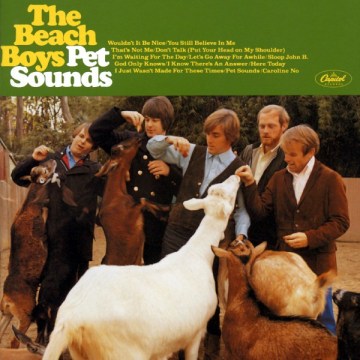
Finally for 1965, and acting as a Christmas album stop-gap between Summer Days and Pet Sounds, is Beach Boys Party which is a peculiar album to say the least. As a concept it's a strange one to begin with - we're listening to an impromptu singalong of other people's songs at a party that the Beach Boys happen to be at, and they're casually knocking out a few numbers live, while the party goes on around them. OK, so far so tricky, but what's particularly odd about the record is that all of the party noises (people chatting, clapping, shouting and yelling, odd crashes and bangs) were recorded and dubbed over the actual recordings of the songs at a later date than the songs themselves, which were carefully and deliberately rehearsed and studio recorded to sound suitably "loose". The instruments are appropriate, acoustic guitars, bongos and not much else, but the whole was so carefully engineered that you can't help but wonder why they didn't just actually do the real thing and record themselves having a party. It's fun in an odd sort of way, but it's hard to really get your head round the Beach Boys pretending to be doing house party versions of Beatles and Dylan songs. Not everybody felt the same way, and their cover of Barbara Ann from this album become one of their biggest singles to date. And so now, just under the halfway mark, we come to the crowning glory of pop's chequered and remarkable history, Pet Sounds (1966). Obviously the album is legend, the making of it is legend, the songs are legendary and its reputation is legend. I'm not really sure what I can say about it that would serve any purpose. Nobody in the world doesn't know these songs, but not even total familiarity can stain them, they're timeless, perfect and most of all they're brutally personal in such a way that absolutely anybody in the world can empathise with. They're beautiful songs, recorded and arranged with such care, such precision, such intelligence and such grace, it's all just a wonder to listen to. Well, it's the greatest record ever made. There it is, simple as that.

And tomorrow we begin with the mammoth Pet Sounds Sessions box-set. Anybody else looking forward to hearing the timpani only rehearsals for 'I'm Waiting For the Day'?

Wednesday, 22 February 2012

LaRM day 27 (Battles-Beach Boys)

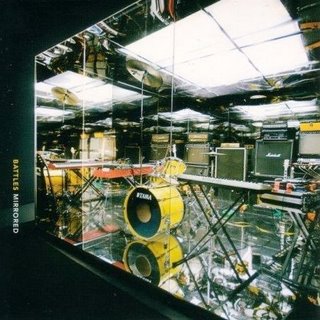
Let's get arhythmical, I want to get arhythmical, let's get into arhythmical. It's the compilation of Battles EPs C & B (both 2004), that we're talking about here, and this is great experimental post-rock larking about. Although not the grandstanding show-off of first album Mirrored, the tunes on these EPs, for the most part, really set out the stall for where the band were going to go. This is properly intellectual math-rock, with a hard edge, and most of it is fascinating, and surprisingly tuneful. With the exception of one or two rather pointless noise experiments (the 12 minute 'BTTLS' for instance) this is enlivening if relatively low-key soundlab stuff. I don't think that the EPs utilise the possibilities of computer manipulation in the same staggering way that Mirrored (2007) does though. Mirrored is an astonishing album, taking the experimental sketches of the EPs and turning them into massive full-blown art-rock workouts that are completely unique, and apart from anything else show off the kind of technical skill both in terms of musicianship and studio and computer expertise that hasn't been seen since the height of prog. Now that in my book is a compliment by the way. In any event, what's amazing about Mirrored is that it doesn't sound simply like prog at all. If anything it sounds like any number of musical styles, metal, rock, jazz, prog, musique concrete, all stripped of their flesh and the bones then strung together in a completely compelling and thrilling way. It single-handedly made the briskly stale idea of post-rock relevant again. In truth, none of it should work, in fact it should sound like a bad joke. Instead it sounds like the future. It isn't, obviously, but while it's on the record player it sounds like it.

Gothus maximus! It's Pete Murphy, his devil's cheekbones and his Bauhaus. Weirdly the only Bauhaus record I ever picked up was the 1983 live album Press the Eject and Give Me the Tape. I dug the goth for a while and where most goth bands I now realise were truly awful, I still have a soft spot for the Bauhaus. I think they were cut from a slightly different cloth and the fact that their first couple of albums were on 4AD makes a lot of sense to me, I think of them as much more a sort of dark art-rock act than goth. Admittedly a pricelessly absurd and overblown dark art-rock act. Press the Eject was originally a limited edition bonus album with early pressings of their second album The Sky's Gone Out, but on its own it's relatively unremarkable as live albums go. It does have the quintessential version of 'Bela Lugosi's Dead' which in the live version is a lot more, if you'll forgive me, full-bloodied than the studio version, and there are also pretty decent outings for 'Kick in the Eye' (always Bauhaus' best song for me) and 'Dark Entries' but on the whole it's a fairly unnecessary album, as is so often the way with live albums.

Next up it's the dismally titled Nico Teen Love (2009) by the French Fratellis, B.B. Brunes. Now, I picked this up from work because there was a cute looking French girl on the cover and it was in a funny shaped sleeve. There is not much else to recommend it. I don't know if B.B. Brunes are big in their home nation, but it's pretty lucklustre and relatively unimpressive layabout rock. There are many, many, many worse records than this around but that is, as we must always remember, not the same as saying that it's good.

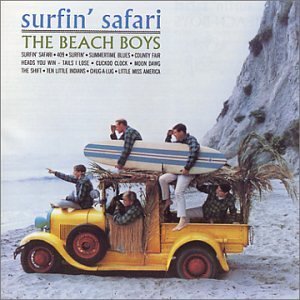
And that's it, time to wax down our surfboards because here comes the first of a handful of epic marathons that we'll be doing over the next few months, it's our 27 album Beach Boys session (I'm counting the Pet Sounds Sessions box set as four albums by the way...). So let's begin with the opening duo, Surfin' Safari (1962) and Surfin' USA (1963). For me the Beach Boys didn't really hit their masterful phase until 1965, and there are many albums before then and although there are great tunes on every early album, the whole tend to be less than the sum of the parts. Surfin' Safari has a bunch of Brian's in your face tunes which seem so innocuous today but caused him terrible heartache and mockery at the time, and some of them are great ('Surfin' Safari' itself, obviously, '409') but Gary Usher's involvement I think was probably not helpful because it added an element of strangeness which really jars ('Country Fair's carnival barker, 'Chug-a-Lug', which is not only peculiar but is also rubbish). Usher's work in Sagittarius, amongst other things, is great, but he wasn't helping Brian out much in my opinion. Surfin' Safari set a remarkable template and spawned many imitators, all of whom were worse by far than the Beach Boys, but as an album it's really fairly mediocre. As is follow-up Surfin' USA which although moving the style up a notch is still a way off the dizzying heights they were to reach in just four short years. Again, the formula is much the same and the good tune to bad tune to mediocre tune ratio is also similar. A couple of barnstormers (the title song, 'Shut Down', which is my favourite early BB tune) a couple of absolute stinkers (an ill-advised cover of 'Misirlou', 'Honky Tonk') and a bunch of otherwise OK numbers. It all stays much the same for the next four albums, but the ratio shifts increasingly in favour of the good tunes, as I think we'll find out conclusively tomorrow...

Tuesday, 21 February 2012

LaRM day 26 (Lou Barlow-Mike Batt)

Yay, it's the ever unreliable and prolific Lou Barlow, who is one of my favourite songwriters but I can't really work out why when so much of what he writes is so half-baked. I suppose that when he's on it, the stuff he writes is so great that it feels quite personal to the listener. I think maybe it's that day to day emotional subject matter that he trades in that makes it easy to connect to. However, that's when he can put the self-consciousness to one side, and that's not in truth that much of the time. The rest of the time he'll deliberately play out of tune, or stick some horrible noise over the songs, or make them hard or unpleasant to listen to in some other way. Another Collection of Home Recordings (1994) collecting various bits and pieces between 1991 - 1994 is a case in point. Besides the rather silly cover versions ('Run To You', 'Blonde in the Bleachers') there are a couple of lovely Barlow tunes that he comprehensively ruins on purpose. In many ways it's a great record, like all his earlier work that he made actively hard to listen to, because the tunes under the mess are so good, but it's also easy to dismiss it as the work of an audience baiting game-player. Unlike 2005's Emoh, which is an entirely different proposition. After the success of Barlow's side project The Folk Implosion's album One Part Lullaby, he clearly thought that it might be worth stripping out the mess and noise and let the songs stand for themselves and Emoh is a truly lovely album, whose songs are genuinely affecting and beautifully understated. I think some people think that his later work is lacking in character but for my money he really found himself with this record, after all, we're none of us teenagers any more. There will be loads more Barlow to come with Folk Implosion, Sebadoh and Sentridoh...

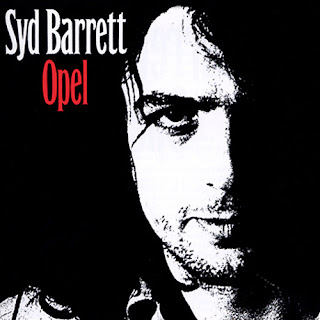
From one uncomfortable and unpredictable musical personality to another, more legendary, one, it's the great Syd Barrett. Now I'm no big fan of the old "drugs make art" argument and I'll happily use old Syd as an example - I have it on good authority (thanks mum, but I'll not bore you all to tears AGAIN with my Floyd-dropping stories - but cleverly I've done it again anyway, see?) that Barrett was a prodigiously talented but eccentrically bohemian person waaaay before he started taking the drugs and I sort of suspect that any records he made later in life would have been similar in nature but more focussed and probably better than the ones he made post getting totally fucked up. I use first post-Floyd album The Madcap Laughs (1970) as my example - this may be a peculiar and affected record with a singular point of view and style, but it is not I would argue so out of left field that it couldn't have been made by a person like Barrett without the acid breakdown. It's a brilliant album, and it is chock full of tunes that are fully realised, beautiful and tragic, alive with a compassionate sadness that I think idiots see as a kind of tribute to casualty without recognising that Barrett's mental complication might be a pathetically irrelevant side-issue, and worse a distraction from, what are simply wonderful, wonderful songs. There is certainly horror here but it's from a life lived on an artistic edge, not simply a tripped-out one, and there is so much beauty too that I see this stuff as a celebration of the glory of art, both musical and visual, and not merely a treatise from a psychic hinterland. Late compilation album Opel (1989) which collects various rejected takes and miscellaneous recordings that didn't make it onto Barrett's two proper studio albums, is really not much more than a way of contextualizing the development of many of the songs on The Madcap Laughs and Barrett and although interesting in its own right it really does feel like a bunch of random stuff stuck together for avid fans to sate their maniac interest. I can't help but feel that the people who are most obsessively interested in Barrett are probably the people who understand him the least.

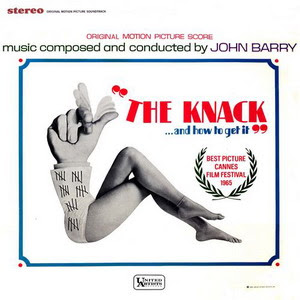
After that wilful eccentricity it's soundtrack composer extraordinaire, the none more English John Barry with his soundtrack to super-60's Brit-flick The Knack (And How To Get It) (1965). Now, this is a great film, caught somewhere between miserabalist kitchen sink drama and knockabout saucy stuff. And it's got the luscious Rita Tushingham and the mighty Ray "Big Deal" Brooks in it. Barry's soundtrack is suitably jaunty and its vintage is absolutely unmistakable. Few things sound more like the 60's than this lightweight (but genius) nonsense. It's got the all important sweeping strings and glockenspiel combo, the ever tinkling hi-hat and that all-pervasive sense that something is not quite right. It's perfect for the movie and of course awesome in its own right.

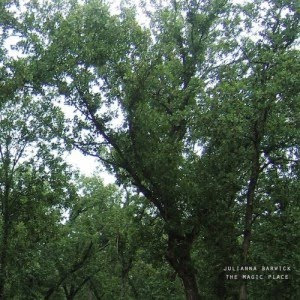
Right, difficult one now, it's Julianna Barwick's The Magic Place (2010). This is not a record that would be to everyone's taste, skating dangerously close as it does to a number of divisive things: Wyndham Hill style New Age, Cocteau Twins at their most precious, found sound and field recordings, hippy rip-offs of "native" vocal techniques. What's amazing though is that Barwick is doing something truly remarkable that steers shy of all of those things and is quite unique despite not using any particularly innovative ideas. Almost entirely constructed from loops of her own wordless vocals, all drenched in cavernous reverb, these are pieces of music that sound like they're coming from deep inside yourself, or from the core of the earth, or from the furthest reaches of space. All a bit silly sounding I know, but this is bizarrely powerful, even elemental, stuff that moves sinuously into your mind and drifts through it leaving the weirdest traces behind as it goes. Very occasional piano and percussion add a grounding to the swirling vocals and give it a sense of propulsion, but in all honesty, the whole record is like Apollo-era Eno times ten, and that is a really, really good thing. You know what, it's an aural equivalent of when the Nazis open the Ark of the Covenant and all the beautiful angels come out (before they go all bad-ass).

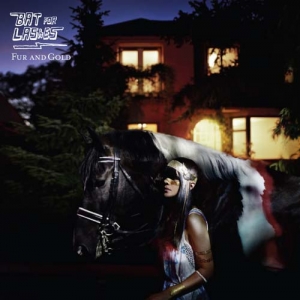
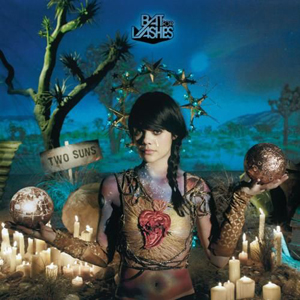
And speaking of women being all ethereal, it's time for a couple of records by an act I truly love, Natasha Khan's kohl-eyelinered Bat for Lashes. First album Fur and Gold (2006) is a marvellous bit of creepy twelve-sided dice kind of fantastical rock. In many ways it recalls the D&D stylings of Mary Timony's post-Helium records and I'm proud to say I'm one of the six or seven people in the world who think that those are awesome records too. But Natasha Khan's voice is a far more impressive and remarkable instrument than Timony's, a truly lovely, controlled sound and Fur and Gold I think is a genuinely exciting record because it was so wholly unexpected, appearing in the midst of a thoroughly stolid British indie scene, like Gandalf blasting a magical path through hordes of orcs. All joking aside (and apparently, hard to believe though it is, Natasha Khan herself takes her work very seriously indeed) the album really does create a very wholly realised crepuscular atmosphere, all moving shadows and strange shapes in the distance, the mystical lyrics being true to the genuine spirit of fairy tales in that they're spooky, unsettling. The video for 'What's a Girl To Do' sums up the feel of the record brilliantly - if you've not seen it, I heartily recommend it - BMX tricksters with massive animal heads riding forest roads in the dead of night, it's great stuff. When Khan occasionally pauses the fantasy atmosphere, she does so with real grace, and the couple of straightforward ballads on the album are simply beautiful ('Sad Eyes' is really fabulous). Second album Two Suns (2009) is less successful I think because Khan really tries too hard to create a kind of hermetically sealed world for her work, and it ends up seeming all faintly ridiculous, overblown. There are some great spooked up songs here, two absolutely heartbreaking slow tunes ('Moon and Moon' gets me every time) and maybe the best song she's written so far ('Siren Song') but the big stuff ('Peace of Mind') is no match for the big stuff on Fur and Gold ('I Saw a Light') because it doesn't have the same out-of-nowhere, guileless thrill. It's still a really fine album but it suffers in comparison to its predecessor. I think there's a lot more interesting stuff still to come from her though.

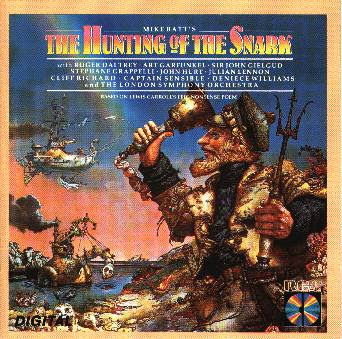
Oh no! Can the day really end with Mike Batt's astonishingly awful musical version of The Hunting of the Snark (1986)? Dear God, what a disappointment after a really, really good day. Oh well, if it must be, it must be. This may be the worst thing ever set down on a record. It's amazing. It truly has to be heard to be believed. I think Mike Batt may genuinely have thought that he was creating Jeff Wayne's War of the Worlds TO THE MAX. Although shit, at least War of the Worlds has the good grace to be insanely over the top. The Hunting of the Snark is just common or garden shit. Right, let's have a look, where Jeff Wayne scraped together Phil Lynott and RICHARD BURTON!! Mike Batt gets Julian Lennon and Captain Sensible, so far so bad, but he also got JOHNs HURT AND GIELGUD!!!!. And even yet, everything about The Hunting of the Snark screams out "amateur regional theatre" - it's a musical in its loosest sense, I mean, it does have music. Of sorts. The most dramatic bits here sound like off cuts of string sections from late Emerson, Lake & Palmer records, the rest sounds like Pilot. It's that bad, it sounds like Pilot. In fact, did Mike Batt have something to do with Pilot? I bet he did, it would explain everything. I mean, why even turn The Hunting of the Snark into a musical in the first place? It's such a non-idea, it's like something that someone on the Apprentice would come up with. And who's that singing with such heartfelt sincerity about "gaining on the Snark"? Why, is it...can it be...IT IS! It's Sir Cliff Richard. Jesus. Wept. But, hold on, what's that? It's ROGER DALTREY. I mean, what the hell is going on here?? Have I lost my mind. Batt clearly thought that he'd get everybody he could lay his hands on to out-do Jeff Wayne (I mean even Art effin Garfunkel is on this atomic pile of mediocrity) and get them to do their single most unimpressive performances ever recorded. And to cap it all off, nobody mention the fact that Deniece Williams, the only woman on the whole record, plays "The Beaver". Incidentally, to really illustrate exactly how bad this is, I'll just tell you that the "I'm gonna be snookering you tonight" song that acted as the theme tune to Jim Davidson shitfeast snooker quizshow 'Big Break' is from The Hunting of the Snark. Once again though, this is one that my mum picked up from the Oxfam shop so not only can I not get rid of it, I also can't slag it off. So I'll just finish by saying that it's brilliant.

Crumbs, we're really motoring so we'll be starting the 27 album Beach Boys marathon tomorrow afternoon. I thought it was a lot further off...

Monday, 20 February 2012

LaRM day 25 (Band of Horses-Brigitte Bardot)

So we begin this new week with Band of Horses' debut album Everything All the Time (2006). Right, now I've got nothing against mid-tempo folksy rockers, nor have I got anything against beards, but I'm getting heartily sick of the combo of the two. And really, has there ever been a more tragically obvious band name than Band of Horses, bearing in mind that the only two bands they want to copy outright are The Band and Crazy Horse? I mean, it makes you want to despair. Anyway, the record itself is fine, it rumbles along like these types of moody rock albums do, and it's another wholly adequate low level example of this stuff, that drifts along like a car in the middle lane. It really is perfectly pleasant (indeed on occasion it's genuinely lovely), but I really have to wonder how many of these records and bands the world really needs. Got some mid-tempo, faintly angsty rockers? Yep. Got some beards? Yep. Anything else to bring to the party? Nope. Fantastic, here's a record deal. Oh well.

Alphabet crisis! The homemade list of my record collection has gone haywire. Nuts. Well, that means we have to take a couple of steps back to what should have been between Meg Baird and The Band, being a 2007 compilation of tunes by the mighty Lavern Baker originally released between 1954 and 1963. Baker was an awesome R&B singer and she really belted them out with the best of them, but there is a fantastic control to the gravelly delivery and what seems at a cursory listen a bit like bellowing is actually phenomenally clever singing. There was a tendency in those early rock n roll days to make pop songs as novelties and nonsense like Bop-Ting-a-Ling and Tweedle-Dee is disappointingly throwaway now but I suppose at the time it was all par for the course. However, the serious stuff ('Soul on Fire', 'I Waited Too Long') is absolutely spellbinding and the majority of Baker's recordings are truly fabulous.

Now we have The Band of Blacky Ranchette and their fourth album Still Lookin' Good To Me (2003). This is essentially one of the many vanity projects by Giant Sand's Howe Gelb and by the time of this final outing for Blacky Ranchette he had managed to pull together a dazzling array of alternative Americana's brightest stars, namely Calexico, most of Lambchop, bits of Grandaddy, Cat Power and Neko Case to record a loose collection of ramshackle old fashioned C&W influenced Americana. Like much of Gelb's work it's sort of charming, sort of thrown together and sort of brilliant, but it's hard to really get to love. There are some really nice songs here but I often find myself wishing he'd give up the "dust-blown" feel and really work on these songs because they could be really great rather than pretty good. As is often the way with these indie supergroup type of deals, it's all sadly underwhelming.

Next up is a lengthy retrospective of art-noise-rockers Band of Susans called Wired for Sound (1995) which covers their work from 1986-1993. Pioneering stuff this, if a little insipid in today's compression stifled age. Students (literally in some cases) of John Cage, Rhys Chatham and Glenn Branca, they made a sheet metal kind of feedback drenched noise which fit well with the NY scene at the time, sounding musically at a kinship with Sonic Youth, Foetus and Big Black. It's all very high end, with the bass sitting sludgily deep in the mix and their songs were never really up to much, nor their vocals, but the songs really were just an excuse to contort the guitar mangling into some sort of melody. It's the instrumental pieces which unsurprisingly are much more successful and there are some pieces that the Band of Susans recorded that could easily stand up next to Branca or Chatham's own superb work.

Hurrah, pop music! Who doesn't love The Bangles, particularly glorious debut album All Over the Place (1984)? Eh? Who doesn't? I pity the fool. Anyway, yes, All Over the Place, what a great guitar pop record this is. How much did I have the hots for the Hoffs? Eh? What's that? What's that got to do with anything? Well, nothing really, except if pop music is as much about the people making it then the Hoffs was it. Obviously I'm not talking about the Hoff here, but Susannah Hoffs. Hmm, er, well, anyway, yes, All Over the Place, it's a great guitar pop record. It's got some fantastic not quite throwaway tunes ('Hero Takes a Fall', 'Going Down to Liverpool' - and let's not forget the fantastic video with Leonard Nimoy in it) and the whole thing is a joyous celebration of a post-punk world where everyone plays guitar and listens to Big Star, it's brilliant. Second album Different Light (1986) is a rather more heavily produced affair, but even the presence of Prince's underwhelming 'Manic Monday' can't put a dampener on the whole affair. It's easy to imagine that girl-band veteran Michael Steele and the Petersen sisters must have felt that the band was being taken from them, as this is a session musician, keyboards and drum machines record with Hoffs placed centre stage, and the whole business is a very long way from their origin as guitar-slinging ramshackle post-punk girl band. Nonetheless, there's no denying the greatness of the pop songs ('Walking Down Your Street', 'If She Knew What She Wants', 'Let It Go', they're all diamonds, even the brain meltingly familiar 'Walk Like an Egyptian' is grand) and the whole record is pretty fun while not having the real spirit of All Over the Place. They give their props to Alex Chilton though with a suitably straight cover of 'September Gurls'. The band moved even further down the calculatedly chart-bothering style with third (and first break-up) album Everything (1988). Again you can't argue with the songs though ('In Your Room' is a cracking opener) and although the production is even more unpleasantly 80's than ever (ugh, those drum machines, why are they so high in the mix??), there are still some truly blistering pop songs here and if anything the harmonies are more beautifully worked out than ever. I suppose that's the key to Everything's success, these are brilliantly written songs, much more so than on All Over the Place or Different Light. Hell, even the middle eight in the otherwise ghastly Eternal Flame is absolutely stunning.

Finally for today we have a dose of the majestic Brigitte Bardot, with her first album Brigitte Bardot Sings (1963). Now obviously this is a pretty stupid record and if you compare it to other relatively lightweight French singers of the time like the wondrous France Gall or even Sheila, Bardot is disastrously lacking in a voice and the songs they gave her were considerably more ridiculous novelty fare. Nonetheless you can't deny the charm of this nonsense and while it's all a bit carnivalesque, there's still a completely irresistable 60's lure to this stuff. Nobody would suggest that it's worth listening to Bardot over watching her movies (although most of them were fairly dicey too) but you can't help but love this fabulous fluff. We also have a seriously dodgy Italian picture disc (if the picture has worked you can see what kind of market it was aimed at) called The Early Years, but this is actually Bardot Sings with one extra track ('Sidonie' from a 1961 film soundtrack).

Till tomorrow, when we start with Barlow. And no, I don't mean Gary.

Friday, 17 February 2012

LaRM day (Meg Baird-The Band)

Meg Baird's Dear Companion (2007). Lovely. In her time off from Espers, Meg Baird put together this collection of absolutely beautiful old-fashioned folk songs, which sounds like a broadcast directly from the late 1950's. This stuff is so true to its origins that you could easily peg it as having been recorded at absolutely any point over the last sixty years. In some ways you can see how the success of Gillian Welch's hyper-authentic approach to American folk music has opened the doors for other artists with a similar interest in the real stuff, but nonetheless, this is a hugely successful interpretation of the classic tradition, and unlike the Espers records, there is very little suggestion that a kind of "psychedelia" is necessary to add in to the mix to bring out just how strange classic folk music can be. The only flaw is that when she covers English folk songs, it underlines just how incapable American folk artists seem to be in understanding the real flavour of the songs. I'm sure it works the same the other way around, but it seems a shame when Baird's own songs seem to fit the tradition so nicely that you're joltingly reminded that in fact the English and American folk traditions are far apart.

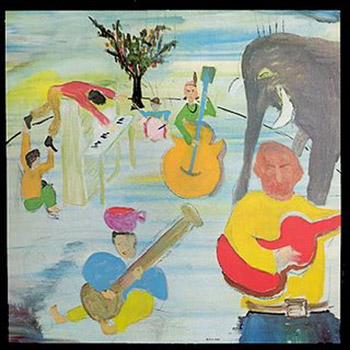
And so on to something marvellous. It's the first three albums by The Band. Now this stuff is, of course, just awesome. First album Music from Big Pink (1968) is a statement of intent, not only using American pastoral and folk traditions to create a whole new kind of rock music, but also setting a template so strong, so robust and so perfect that Americana has taken a long, long time to get beyond it. Interestingly the least successful tunes as far as I'm concerned are the covers of songs by their old mucker Bob Dylan. Robertson's own songs are much clearer in terms of where the band were going to go and how stridently they would go there. Second album, The Band (1969) is a truly remarkable record, expanding and refining all the elements that were so extraordinary on the first album and creating a record that not only has its own mythology but also contributed to creating a mythology of a country in the process. It's an amazing record and a completely coherent and perfectly realised one. Every song is a triumph, from Richard Manuel's astonishingly moving 'Whispering Pines' to Robertson's rocking 'Look Out Cleveland', it's just all gold. From these incredible heights the only way is down and the most remarkable thing about Stage Fright (1970) is how little the quality really drops. There's no denying that the album is more disjointed and the songwriting not as strong as on The Band, but if it had followed directly on from Big Pink, it would have seemed like a natural progression and it only seems lacking in comparison to the brilliance that preceded it. For the first time though there are a couple of songs that don't cut it, and there were albums to come where the ratio goes very wrong, but when an album has 'The Shape I'm In' and 'Stage Fright', there's really nothing to complain about. PS, my editions of those albums have a ton of extra alternate versions and scrapped songs, which although not adding anything to the actual albums are, for once, hugely interesting in their own right. This also explains why there aren't many records today - these each go on for twice the length of the original albums.

The rest of The Band's albums are a mixed bag, varying in quality from the really quite poor (oof, Moondog Matinee) to the great but still patchy (Northern Lights-Southern Cross) so I've always made do with the compilation album To Kingdom Come to cover the best tunes from these albums, and there are some truly fantastic songs ('It Makes No Difference' and 'Acadian Driftwood' being two of the best they ever recorded). To Kingdom Come includes a couple of pre-Big Pink rarities and has tunes from every studio album to 1977 (they split following 1978's live extravangaza The Last Waltz, more of which in a mo), and as such has pretty much all the vital bits of those later albums. The Last Waltz itself is a gargantuan slab of self-congratulation that from a lesser band would seem like the most stomach-churningly vainglorious load of tripe. Imagine inviting some of the biggest stars in rock music to each come and do a brief turn to celebrate your own career - it's truly gruesome egotism, and yet, of course, this being The Band, it's the most spectacular and inviting bit of egotism modern music has ever seen. It's charming even when it's grotesque (I'm looking at you Neil Diamond) and when it's great (I'm looking at you Neil Young) it's fabulous. It doesn't even outstay its welcome at 19.5 hours long. Of course it's always better watching Scorsese's truly groundbreaking concert film of The Last Waltz, but listening to the show is almost as good as watching it.

And with this true greatness the weekend can begin. Nothing of this calibre to come next week, but some charm and some grace and some Bangles, so it's all gravy for a while. Deep breath for Mike "Womble" Batt's musical version of The Hunting of the Snark midweek though - ooooh dear...

Thursday, 16 February 2012

LaRM day 23 (Angelo Badalamenti-Badly Drawn Boy)

Back from holiday (Dublin was very nice thank you) and it's time for some appropriately dark and unnerving soundtrack stuff for being back at work. Angelo Badalamenti's soundtracks to Blue Velvet (1986) and Twin Peaks (1990) are, of course, creepy, unsettling and wonkily old-fashioned. Blue Velvet is in some ways the more creepy of the two, being less obviously stylised. It's more classically arranged and although it does have odd shards of jazz and swing, it's mostly piano pieces framed with nasty found sounds and discordance. Twin Peaks is more specific in its scene-setting, being a twisted amalgamation of 50's dance music, free-form jazz and general spookiness, but it's also somehow a "nicer" listen, smoother, spooky but not jarring. Everybody in the world knows a substantial amount of the soundtrack to Twin Peaks, whether they are aware of it or not, from the title theme to Julee Cruise singing 'Falling'. Both albums are fantastic in their own right, but Twin Peaks works better as a stand-alone album.

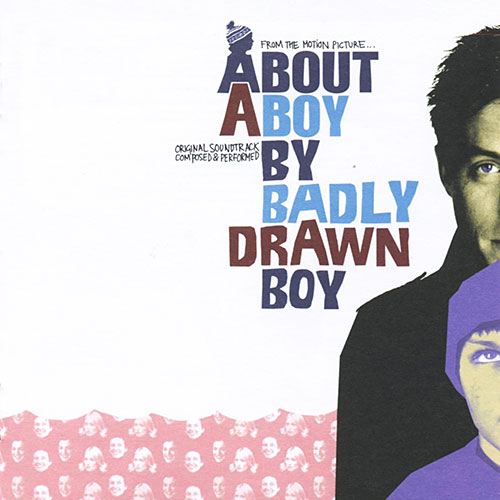
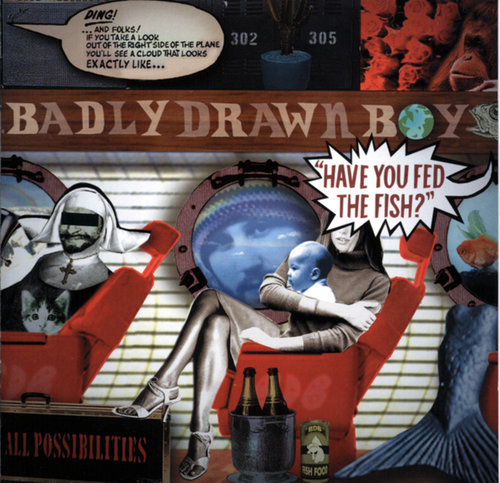
Following which we have something much lighter, it's a Badly Drawn Boy marathon, which starts with debut The Hour of Bewilderbeast (2001). This is an interesting record I think because it sort of sits outside what was happening in indie music at the time. There's a lot more ambition than most people were interested in here, and not in a grandstanding Divine Comedy kind of way, but in a very homely, low-key way. There's a lot going on in these songs and while there are obviously solidly written songs in a "classic" mode, there are plenty of funny noises, and evidence of mucking about which undercuts the surface earnestness of the songs. There are some fine tunes here as well, but while it's the restlessness that makes for the album's finest qualities, it's the restlessness that makes the albums increasingly difficult to listen to. However, second album About a Boy (2002) which was the result of Damon Gough being commissioned to write the soundtrack for the film, manages to stay focussed and concise, and some of the best songs of his career are found here. There's a really warm feeling about his songs at this point, which is what makes some people absolutely adore these records. For my part I could never really find the key to fully getting him. Sometimes the songs are really fabulous and sweet in a cheerfully cosy middle-class kind of way, but too often there's the feeling that ambition and boredom play an equal part in making up Gough's musical inspiration and that really comes through on 2002's Have You Fed the Fish?. It's interesting that such contrasting albums should have come out in the same year, because you get the sense that Have You Fed the Fish was intended to be the "proper" album and About a Boy the filler soundtrack, but it worked out very much the other way around. There's too little cohesion and too smug an atmosphere to HYFtF (If Comet use one of your songs for their ad then you've done something wrong), and it's all too heavily produced. There are still some fine songs but they're drowned by the overall weight of the album and the slick production.

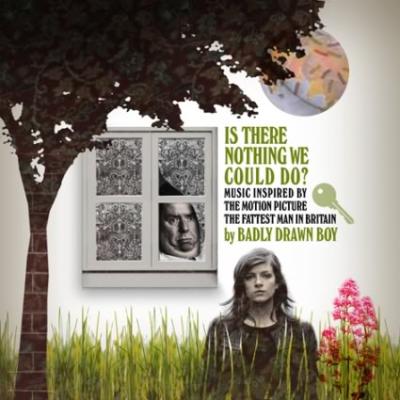
One Plus One is One (2004) is more of the same, but crucially has a stripped back production which allows the songs some room. And there are some excellent songs here. Yet again though, it's the seeming inability to sit still or to let a mood really develop that stymies this album. It's far too long and I end up wishing that he would relax and accept that his best trick is to write lovely, calm, earnest pop songs, with clever arrangements. The apparently restless spirit throws too much into the mix, as ever. When it all works though, it really works beautifully ('Easy Love' for instance) and I can hear just how good a record Have You Fed the Fish could have been with this less showy, easier production. Then it's Born in the UK (2006) which many people think was a bit of a proper return to Hour of Bewilderbeast form, but for me is really a step back towards Have You Fed the Fish and is ultimately all pretty forgettable despite a handful of lovely songs. Finally it's Is There Nothing We Could Do? (2009) which is another soundtrack, this time for Caroline Aherne's TV movie The Fattest Man in Britain. This is more of a traditional soundtrack than About a Boy, mostly made of relatively slight instrumental pieces and a handful of new songs. Interestingly, again, the constrictions imposed as a result of soundtracking someone else's work really seems to bring out the best in Gough, as although it's relatively throwaway, these are some of the nicest and most delicate pieces of music he's written in a long time. There are a couple of more recent albums, but I an't got em.

And so ends yet another day.