Tuesday, 6 March 2012

LaRM day 36 (Belle & Sebastian-George Benson)

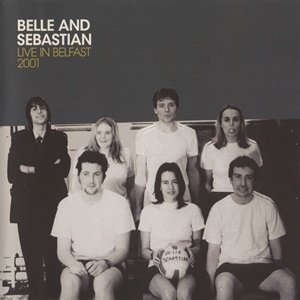
OK, so after the sad demonstration of the effect that time can have on talent, we go back a page or two in the Belle and Sebastian book with the BBC Sessions compilation which was released in 2008. It covers all the sessions that the band recorded for BBC radio between 1996 - 2001 and for the most part is great. The first few songs show that the band had feet of clay technically when it came to performing but the sincerity of the performances of those lovely, fabulous songs just shines. As the years and the recording sessions progress so does their proficiency but along the way, as with the studio albums, the magic drifts away. By the time of the final 2001 session there's little left to be excited about, however, the session does have more passion than I would have expected, and perhaps that's because they all knew that it would be the last time that Isobel Campbell would record with the band. Also, for the completist it's an interesting session because they "did a Pavement" and only played songs that had never and would never appear on record. Coupled with the BBC Sessions is a recording of a live show in Belfast from 2001. It's a spirited performance and the old songs are given a decent outing, but the fact that it all kicks off with a cover of 'Here Comes the Sun' speaks volumes about just why things were going wrong by this point.

Next is Belly, starting with their debut EP Slow Dust (1992). These are four great songs, and although Tanya Donnelly's songs never quite sat comfortably on the Throwing Muses albums, when they aren't contrasted with Kristen Hersh's, they work really, really well. Donnelly's pop sensibility was really acute and although she made determinedly indie-rock, the hooks in these songs are fantastic. 'Dusted' and 'Slow Dog' are two of her finest songs, and the versions on the EP is much better than the re-recorded versions on first album Star (1992). Star is a lovely album, and when the songs are good, they're really good, but there's a sense of filler about some of the songs, and the fact that three of the songs from the EP are reprised here suggests that maybe she didn't have that much material. However, on the whole this is a lovely and odd record, which feels in an old-fashioned sense like an album - it flows, it sounds like it was constructed with a view to being coherent. Every one of the big songs brings back memories and hearing those indie-disco bothering songs 'Gepetto' and 'Feed the Tree' is always a joy, and they aren't the best tunes on the album by any stretch. Second album King (1995) has an even greater emphasis on pop hooks, and while these are all great pop songs, the album as a whole has a slightly hollow feeling, and I get the feeling that not bouncing ideas off of the more unconventional Hersh meant that Donnelly drifted maybe too far away from the idea of alternative rock. It's still an album that I really love though, and 'The Bees' is for me the best song she ever wrote.

Right, let's get some revivalism on the go with musicologists and arch-traditionalists Belshazzar's Feast and their album, Find the Lady (2010). As far as trad English folk goes, this is an interesting piece of work, because although there's no room for studio trickery or any new folk styles, they do play fast and loose with the old songs they tackle on Find the Lady. There's a great, and slightly odd, arrangement of 'The Wild Rover' and really lovely interpretations of 'Thresherman' and 'Turtle Dove', and a lot of the time they're playing around and they really just spend the whole of 'Primus Hornpipe' pissing about. For the most part though the album is a respectful selection of accordion and violin folk dances and ballads and on the odd occasion that anybody else appears (Jackie Oates makes a nice appearance on one tune), producer Jim Moray (who I'm going to see on Friday btw) makes the most it.

Now I know that many people find Ben Folds massively annoying but I've never minded his Joe Jackson meets Billy Joel schtick. Nobody have a go at me for putting these records under B for Ben Fold Five, the man himself will come under F later. So, the first two Ben Folds Five albums. The eponymous debut (1995) is chock full of clever-dick musical phrasing and wordplay and occasionally falls beneath the weight of its own ambitions and pretensions, but on the whole it's a really interesting bit of work, not least because the idea of a kind of indie craftsman appearing in the world of slacker half-arsedness was pretty refreshing (if a bit irritating). Follow up Whatever and Ever, Amen (1997) is a better recorded, better produced and better crafted record, but although the songs are a step up again from the first album, there's something slightly more smug about the album generally. I think maybe it's because there's no sense that this is a sort of singer-songwriter/indie crossover, it's just a smart-arse singer-songwriter's album. Nonetheless I really rate it and think there are some really decent mature pop tunes on it.

And so finally for the day we really are having to do George Benson. Once again, this came about as a result of taking pretty much anything when we used to get loads of records come into work. A five album boxset of Benson. What possessed me? Anyway, I took it, therefore I have it, therefore I have to sit through it for this project. And we start with 1976's Breezin'. It's called Breezin'. Do I have to say anything else? It's as smooth as a jazz knife entering jazz flesh. Honestly, what is this nonsense? Have I really got to listen to five albums of this navel gazing jazz cheese? If I throw the lot out tonight I won't have to listen to the last three. The weird thing is that, like many jazz guitarists, he's technically fantasic - the problem is it sounds like you're in a really, really bad clothes "boutique" in the early 80's. Or your phone call to the bank has been put on hold. Next is 1977's double live Weekend in LA. This is a brutally extended dose of more smooth jazz/soul guitar workouts (a ten minute 'On Broadway' anybody? No? Nobody?). It's actually not as ghastly as Breezin' simply because the live format doesn't lend itself so well to hold music. Don't get me wrong though, it's still ghastly.

See you tomorrow for more beautiful Benson. Jesus.

LaRM day 35 (Belle & Sebastian)

I should have mentioned that although there are some great songs on I Am the Cosmos, not many match the heights of the tunes on the first two Big Star albums. But now we move on to the next marathon - it's Belle & Sebastian, beginning with Tigermilk (1996). Belle & Sebastian may come second only to Liz Phair in the squandered potential stakes. If ever you need a practical demonstration of the law of diminishing returns it's B&S. Tigermilk is a wonderful, wonderful record, full of tunes that are lyrically smart and dense, bleak but charming, backed by tunes that are wholly enlivening, sweet, uplifting and superbly constructed. As arts group funded business degree projects go, this is as good as they get, it's a great record. It channels all the charm of the C86 aesthetic, and made the idea of softie-indie vital again, really strident and, dare I say it, gave all us weedy indie kids a voice we hadn't really had for some years. With the sole exception of failed keyboard/drum-machine experiment 'Electronic Renaissance', the tunes on Tigermilk are absolutely perfect. Better yet though was follow-up If You're Feeling Sinister (1996). Every song is a charm, and although it's so sweet you occasionally feel like your teeth might rot, it's the ultimate example of what talent and ambition can achieve when you don't want to be part of the mainstream. These are songs that sound like nostalgia of the deepest kind, and hearing them takes me right back. They are imbued with an undeniable wistfulness and I can't think of a better recommendation for any art than that it makes you think about yourself, your life and what it is in your own life and the rest of the world that are shared. For my money, Tigermilk and If You're Feeling Sinister are easily two of the best albums of the 1990's.

Their next step was to release The Boy With the Arab Strap (1998) which many people regard as their finest record. Many people are wrong, it's the first clear sign of rot setting in. In a bid to be more democratic (and in fact more likely demonstrating that Stuart Murdoch's songwriting well was already running dry) all the band members get a turn at either contributing a song or a vocal performance. What results is an album with a few of Murdoch's songs which are not nearly as strong as anything he'd written for the previous two albums, and a bunch of songs that are considerably worse. Isobel Campbell's 'Is It Wicked Not to Care' is a pale version of a B&S song, and I can't help but think that the pitchfork reviewer who described The Boy With the Arab Strap as a parody of a B&S album might have had a point. It's still all in all a relatively charming record, but the coherence and the confidence have dissipated. If it had been their first album you could expect great things in the future. The fact that it's their third portends ill fortune ahead and this is lived out by Fold Your Hands Child, You Walk Like a Peasant (2000) which is as anaemic a record as the band would ever make. It's not their worst album (that sadly is yet to come) but it's a limping, wounded and joyless version of the band that we'd come to love. If anything the astonishing brilliancy of the representation of the daydream romance of youth, of life, which the first two albums made so palpable, is precisely what's missing by this point - these records now sound like just a band making various brands of sappy indie music. It's as if Belle & Sebastian had become a testing ground for each member's own ambitions and the resultant album is a mess, most perfectly exemplified by the genuinely harrowing story of a rape in 'The Chalet Lines' being followed by the mock-jaunty 'Nice Day for a Sulk'. Even the band knew things weren't right though and by the time the next album appeared two founding members, Isobel Campbell and Stuart David, were gone leaving Murdoch and a selection of other sympathetic minds to carry on.

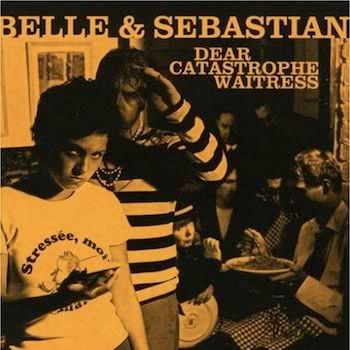
The next move was to hire 80's uber-producer Trevor Horn to sit behind the desk. Now, bearing in mind Horn's most recent (pet) project was Russian pretend lesbian pop disaster Tatu, it seems like a strange choice. The official critical line goes that it was an inspired choice, reinvigorating a flagging B&S. I suspect that the truth of the matter is that it was an expedient choice aimed at producing a high gloss record to capitalise on the band's surprisingly popularity at the time. The album, Dear Catastrophe Waitress (2003) isn't very good. Once again, we have Murdoch on coasting form and despite apparently doing the lion's share of the work, he hasn't managed to get his muse back. One suspects that Campbell had a lot to do with his focus and once they fell out he found it more difficult to get his song on, and once she actually left the band altogether he had lost his driving force entirely. In any event, despite its high production values, Dear Catastrophe Waitress is just another album by a once-great band. The whole thing starts with a limp, and rather irritating, 60's pastiche in 'Step Into My Office, Baby' and it scarcely improves from there. Murdoch has apparently commented on the fact that although he acknowledges that the songs on If You're Feeling Sinister are the best he's written, he thinks they're badly recorded. This is telling because it implies that what he really would have wanted was for Sinister to be recorded like Waitress, and if that had happened then Sinister wouldn't have been the great album it is. Like Liz Phair's astonishing debut album, you can't help but think in light of how things developed, that these early records are fantastic more by accident than design. There are still some lovely songs, as there are on all B&S albums, and all this slagging off is relative - they've never made a truly bad album as such, but with each successive release you feel they should have stopped with the one before.

Until Dear Catastrophe Waitress Belle & Sebastian didn't release singles from albums but instead released 3 and 4 track EPs with all non-album tracks, and most of them were great. 2005 gave us the chance to remember what B&S had once been with the release of Push Barman To Open Old Wounds, which is a compilation of every one of those EPs released between 1997 - 2001. The earliest of these EPs is an absolute joy, the first, Dog on Wheels (1997) is four songs of lo-fi, high ambition brilliance. By the way, can you believe I had all of these records indivually, bought as and when they were released and then sold the lot to make space? Quite the mistake I can tell you, I really wish I still had them. Anyway, the second EP, Lazy Line Painter Jane is a bit more dicey because it features the ghastly screeching vocals of Monica Queen and a rather aggressive hammond organ - but the other three songs from that EP are fabulous, especially 'You Made Me Forget My Dreams'. Then it's the best of the three first EPs, 3..6..9..Second of Light (1997) which is absolutely great, all four songs are some of the best B&S ever recorded and 'A Century of Fakers' is a real career highlight. In many ways it's worth seeing these three EPs from 1997 collectively as the fabulous third album before the downward turn of The Boy With the Arab Strap. 1998's This is Just a Modern Rock Song is also really great, four more top-flight songs, and a decent coda to Arab Strap. Then things go a bit awry with the Legal Man, Jonathan David and I'm Waking Up To Us 3-song singles. There are lovely tunes in amongst this final lot, but on the whole you can hear the band coming apart in microcosm on the singles, just as it's crystal clear on album. Never mind though, because taken as a whole, Push Barman is an uplifting reminder of greatness.

But don't let the euphoria fool you, the worst comedown follows hard on its heels. The Life Pursuit (2006) is, in relative terms, just awful. At a casual listen The Life Pursuit is a jaunty, cheerful set of nice pop songs that have a bounce and a spring in their step. But closer inspection reveals some dreadfully badly written songs that have only a half-hearted nod towards anything other than trying out new styles. That wouldn't necessarily be in any way a bad thing, if it didn't show just how terribly, terribly limited the Belle & Sebastian pallette is. To be able to make consistently interesting pictures with only two colours is far better than making consistently terrible pictures with twenty colours but clearly Murdoch felt that he was limiting himself rather than simply limited. This is a record with flanged guitar solos (the truly dire 'We Are the Sleepyheads' which is far and away the worst thing they've ever recorded), Stevie Wonder style Hammond organs (the depressingly pointless Roy Ayers styled 'Song for Sunshine'), some of the most transparently audience baiting song titles ('Sukie in the Graveyard') and the whole thing smacks of a bad comedy sketch show's parody of Belle & Sebastian. Bearing in mind that the best song here is also the closest to the old sound of the band ('Act of the Apostle') and that it makes two appearances on the album, you know just how dud the whole thing is. This is truly the joke version of the band that Arab Strap-era B&S was accused of being. The fact that he's revisited 'Funny Little Frog' suggests that even he knows that his best at this point is considerably worse than his worst ten years before. To put the album on when the sun's out and you don't care what it sounds like as long as it's fun then The Life Pursuit is fine. If you want to listen to a good record, avoid at all costs. It's just such a shame.

See you tomorrow for our final B&S session, which thankfully takes us back in time again. Then it's Belly and, eh? what's this? Uh? GEORGE BENSON????!! NNNNOOOOOOOOOOOOOOO.

Monday, 5 March 2012

LaRM day 34 (Bee Gees-Chris Bell)

So, Odessa (1969). This is a fantastic album, bonkers, sprawling, absurd, and quite brilliant. The idea of the Bee Gees making a genuinely brilliant album is sort of absurd to begin with, but this is the one. It's a mammoth double album, originally intended to be a concept album but when they all fell out with each other, that idea was abandoned and instead we have unconnected songs about Russia in the 19th century, the British empire and hillbilly families amidst the psychedelic love songs. Stylistically it's all over the place with country and blues rock as well as the delicate psychedelia and the densely orchestrated numbers (the orchestral arrangement on 'You'll Never See My Face Again' is really lovely), but it all works, there's scarcely a dud song and certainly there are no dud arrangements. It's the sound of a band struggling to find its own identity after years of pastiche and essentially failing, but as a result making a truly remarkable and fabulous album in the process. Now we skip forward six years and six albums to alight on the Bee Gees opening disco salvo of 1975's Main Course. This is also a very good album, but in a totally different way. There are great songs here and the disco stylings are really interesting (Jive Talking's ace choppy guitar) but as with most disco, even when it's as brilliantly done as this, it sounds totally and utterly stupid. All those daft squelching synths and falsetto vocals, it's just all so cheesy. But if you can take that in your stride, this is a great record, and unlike the albums to come, it's not overloaded with disco cheese. There's still room for a couple of decent love songs and ballads and the balance is all about right. After this it all gets so utterly daft that I can't listen to it, and so ends the Bee Gees chapter.

Next up is the second album by Beekeeper which is called Ostrich (1998). This was the outfit of Karla and Matt Schickele, before she joined Ida. It's an interesting piece of experimental indie, and the siblings odd harmonies and even odder instrumental arrangements are on the whole really successful. It's a fairly low-key album but its peculiarities really underscore just how well constructed and attractive Karla's melodies are. What she would bring to Ida is well represented by this record, it's really good.

And at this point, under no instruction and for no discernible reason, Spotify seems to have instructed iTunes to wipe my entire ipod thereby putting an end to pretty much the whole thing for the day. Technology, eh? Shit isn't it? Anyway, I'll stagger on as best I can until I hit a defining stumbling block. So, thanks to Grooveshark, we have next the Be Good Tanyas third and last album, Hello Love (2006). I love the Be Good Tanyas, I think they're ace. There's something very dark and very strange in these Canadian folk records and while the vocal phrasing takes a bit of getting used to, their three albums are all quite special. Hello Love is maybe the least successful of the three but there's little really to judge between them and there are some fabulous bits of sharp edged folk on it and the band's three vocals do their usual wonderful harmonising, in which one person will always slip out of key or yelp or something to add a weird depth. Anyway, it's a really good record.

Then it's Norway's esoteric answer to the Cocteau Twins, Bel Canto and their third album, Shimmering, Warm and Bright (1992). While being nowhere nearly as good or inventive as the Cocteau Twins, Bel Canto nevertheless made a couple of lovely records, using electronics rather than treated guitars. They do veer dangerously close to naff on occasion, but on the whole these are lovely bits of delicate pretension and there's no denying that Anneli Drecker has a fabulous voice.

So a couple of quick ones to finish off - Archie Bell & the Drells compo Platinum Collection taking in a whole load of their joyous funk and soul in the late 1960's including, of course, the legendary 'Tighten Up', which is the ultimate example of the funk riff, never bettered, with Archie himself inviting us all to join him in having an excellent time. The genius of the riff was not lost on the Drells and they basically replicated it a number of times and the first half of this compilation is rife with it. There are a stack of other great tunes on here too though, including some fantastic slowies, but when it all ends with 'Tighten Up part 2', you can tell everybody knew at the time that this was as good as it was going to get.

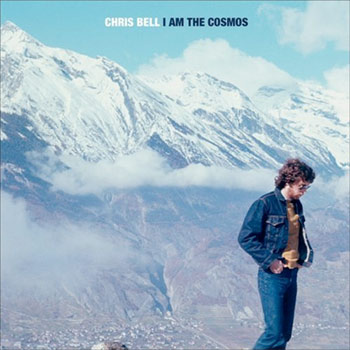
To finish we have Chris Bell's posthumously cobbled together collection of demos and full recordings, I Am the Cosmos (1975). Obviously the majority of these songs are fantastic and 'You and Your Sister' remains a benchmark for a particular style of post-Barrett songwriting. There are some low moments ('Fight at the Table' with its funky bass/keyboard combo) but you can feel at the low moments that even Bell's own sense of purpose is awol and there are times during the record when you can feel the fragile mental state of the man and it's occasionally a little overwhelming. When he concentrated on the songs over their provenance though, they were great, great songs.

Thursday, 1 March 2012

LaRM day 33 (Beck-Bee Gees)

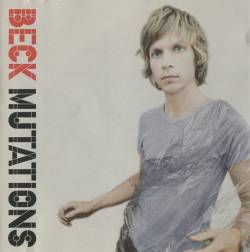
Mutations (1998) is a low-key follow-up to Odelay, and it's a quieter, more introspective effort, despite having the usual Dadaist lyrics. Beck still throws everything into the mix, from folk to bossa nova, but there's no big indie club tunes here, just quiet experimentalism. It's a nice record, but it feels like a come down after Odelay's late night party. I haven't got either the Prince-alike Midnite Vultures, or the parade of pastiches that is Sea Change, so we skip straight on to 2005's Guero. This is something of a return to the anything goes rock of Odelay, but it's much calmer, more assured and, dare I say it, more crafted. The songs are considered and structured rather than just charging headlong and hoping for the best (an approach which paid massive dividends on Odelay but crashed and burned on Midnite Vultures). If anything Guero is more a songwriters album, still chock full of ideas and excellent noises but never overloading itself. What it also demonstrates is that, once again, it's the Dust Brothers who have had a large part to play in creating the sound of Beck's best albums.

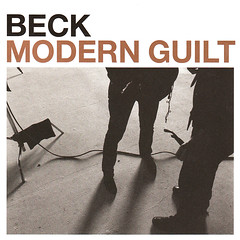
Beck and the Dust Brothers also put together follow-up The Information (2006) and it's pretty much more of the same, but even more cool, laid-back, casual. If anything I like The Information more than any of Beck's other albums because it wears its influences quite clearly without simply coming across as pastiche (I don't think anybody else in the world likes The Information more than Odelay but there we are). For the most part these are really lovely songs and there is no trace of Odelay's jittery discomfort. This is a record made by some blokes mellowing as they get older and more experienced in the skill of record making and songwriting, as well as the art. The only downside is, as usual, there's too much of it for one sitting. Finally we have 2008's Modern Guilt, which he made with Dangermouse instead of the Dust Brothers. This doesn't suffer from the overextended playing time, clocking in at just over half an hour. It's an aptly titled album, as it has an air of discontent about it and the tunes come and go without much ceremony but leave a distinct sense of something not quite right. It's a great record and the seam of darkness to it is a nice change. It's got some great edgy pop songs as well as the usual low-key experimentation.

And now we move on to something faintly ridiculous, it's the first few albums by the Bee Gees. First album 1st (1967) is a not very good album of Beatles rip-offs (the Bee Gees really, really wanted to be the Beatles) but there are a couple of fantastic hints of the songwriting chops they would develop in 'New York Mining Disaster 1941' and particularly 'Every Christian Lion Hearted Man Will Show You', which is an awesome song. The follow-up Horizontal (1968) is more of the same slavish devotion to the Fab Four but it too has some fabulous songs on it ('Massachusetts', 'The Earnest of Being George'). Occasionally though the increasing sophistication of their rip-offs really does jar, as basslines and vocal melodies lifted almost wholesale from Beatles songs represent themselves under the brothers Gibb's tremulous voices. Third album Idea (1968) continues the theme, but this is where, in amongst the obvious pastiche (which they have expanded to include a number of other 60's acts to ape), the real strength of the Gibb's songwriting starts to properly demonstrate itself, with such giants of late 60's pop as 'I've Got to Get a Message To You' and especially the bizarrely brutal 'I Started a Joke'. There still is a strong sense that the Bee Gees were a convenient tool for making money by creating such pitch-perfect and unironic copies of the Beatles and the Zombies (and anyone else required pretty much) and three albums in you can't help but wonder at what point the Bee Gees stopped being simply copyists and became a band worthy of note in their own right.

That development actually came in 1970 with the increasing disharmony in the band and the release of the frankly bizarre but brilliant album Odessa. The internal strife over the writing, recording and track listing of Odessa led to Robin actually quitting the band for a couple of years, and it's often the way that a band's best work is also the one that they didn't know the quality of themselves at the time. But with the benefit of an ealry mark from work, I'm off, so Odessa will kick us off on Monday. Cheeeeeers.

Wednesday, 29 February 2012

LaRM day 32 (Beck)

Woah, between meetings and generally being busy there's not been much listening going on today, and I'm too tired to do much writing either, so briefly we have managed only two records today: One Foot in the Grave (1994) and Odelay (1996) by Beck. One Foot in the Grave was his last low-key, lo-fi record showcasing his interest in outsider folk and blues, and his homemade press play and record experiments. Released within two weeks of his first big budget record, Mellow Gold (which inexplicably I haven't got), it's kind of a deliberate challenge to his own big brother album. There are some fantastic tunes buried in amongst the mass of ramshackle indie messes, but on the whole it's too wilfully difficult to get a handle on (similar to, but nearly as difficult as, his other early albums, Golden Feelings and A Western Harvest Field by Moonlight (which I remember Adam Ball had a copy of, and that must now be worth some serious hard cash...)). Odelay of course is a huge mess, and a fantastic one at that, containing some blistering pop songs (the big guns 'Devil's Haircut' and 'The New Pollution') and some lesser known gems ( I really love 'Ramshackle' and 'Readymade'). As with much of Beck's work it all goes on for too long, but it really is a great piece of mainstream baiting experimental pop. However, speaking of going on too long, my copy is a deluxe reissue thing which goes on for nearly two and a half hours (and a lot of the extras are amazing - a great new 'Feather in Your Cap' and 'Thunder Peel' and naturally some are truly pointless), which of course has contributed to there being nothing else listened to. Hopefully things will be easier tomorrow when we can do the rest of the Beck sesh. See ya.

Tuesday, 28 February 2012

LaRM day 31 (Beach House-Be Bop Deluxe)

Teen Dream (2010) by Beach House is another step forward for the band, adding really solid and spooky melodies to their hushed atmosphere. It's their first properly successful album and has some really nice songs on it. I'm still not sure that the whole thing isn't slightly forced, a little artificial but putting that concern aside, it's a lovely record.

Now we've got a little dose of the Beastie Boys, starting with second album, Pauls Boutique (1989). This is often regarded as the highlight of the Beastie's career, and it is a fantastic album, although I think that it's possibly worth bearing in mind that most of the work has already been done by the Dust Brothers before the Beastie's even met up with them to make the album. Musically it's a brilliant assemblage of random samples and newly recorded beats and guitar lines, and although the Beastie Boys put some interesting and unexpected lyrical material over the top, it's really a triumph for the often under appreciated Dust Brothers. In some ways I prefer fourth album Ill Communication (1994), because it's more eclectic, throwing in more of the band's real history as thrash punks and a much more open appreciation for all kinds of cultural ephemera. Besides all of which there are some brilliant songs here, 'Sabotage' and 'Sure Shot' being the most obvious examples. It's a great record and marks a leap forward I think. Sprawling compilation album The Sounds of Science (1999) covers their entire career to that point and includes some real highlights, and although being chronologically jumbled, makes clear just how sophisticated the band became and from what juvenile roots that sophistication grew.

Next up we have Beat Happening's third album, Black Candy (1989). Everything Beat Happening recorded is, of course, wonderful. It's as wonky, guileless, artless (in every sense) and refreshing as all their other albums, but there is a somewhat darker edge to Black Candy and at times it feels as if the late-night creepy, Cramps-y atmosphere that they seemed to be driving at is at odds with their more generally upbeat nature, and when it doesn't work, it really doesn't work ('Pajama Party in a Haunted Hive' for instance). But there are some really great songs given the typical hapless, lacklustre treatment ('Cast a Shadow' being the obvious highlight) and what continues to be remarkable about Beat Happening is that this should be so local-indie-club that it should utterly maddening, and in fact is completely uplifting. As an unreconstructed indie boy I have no idea why I don't have the rest of the Beat Happening albums.

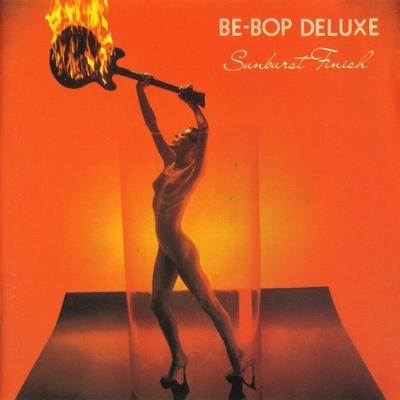
However, I don't, so now it's on to the biggest, most absurdly show-offy British rock act of the 1970's, Be Bop Deluxe. I haven't got debut album Axe Victim, so we move straight on to second album, Futurama (1975). Virtuoso guitar work as part of some futuristic prog-metal anyone? That makes it all sound awful, but the Be Bop Deluxe were far from awful and are due a serious reappraisal in my book. Of course it goes with the territory that a lot of this stuff will be pretty bad, but when Bill Nelson was on form the stuff he came up with was fantastic. I don't think I'm saying that only because of his superb axe work, which is something so much more spectacular and so much weirder than just prog noodling - it's not surprising to me that he was one of punk's early record producers, I think punk bands heard something odd in his work. Futurama is not the best album, but it's got a couple of absolute barnstormers in 'Maid in Heaven' and 'Sister Seagull' (he makes his guitar sound like seagulls - like woooh). Their next album was the big one, Sunburst Finish (1976), which so many of us didn't dare buy because of the saucy cover. This is where all of the silly sci-fi preoccupations and the overblown songwriting and the massive riffage all properly coalesced into a magnificent, preposterous whole. The main thing though, besides the showy guitar work, is that the songs are really good this time round ('Fair Exchange', 'Ships in the Night', 'Blazing Apostles', they're all great pop songs despite being in a sort of prog rock setting).

Next is the Hot Valves 7" (1976) which was just used a showcase for the band, containing one song from each of the four albums released to that point. 'Bring Back the Spark' (from 1976's Modern Music) is a great song, but 'Jet Silver and the Dolls of Venus' (from 1974 debut Axe Victim) is not so great. Then we have 1977's Live! In the Air Age, which is a quite remarkable example of a live album, in that it improves on the studio versions of almost every song. 'Life in the Air Age' itself, which is surprisingly insipid in its original form, is transformed into an absolutely blistering showcase for Nelson's songwriting and guitar skills. The whole album really is great, and in some ways is the best they made.

Hold on to your hats because we're spending tomorrow being totally postmodern with a whole day of Beck.

Monday, 27 February 2012

LaRM day 30 (Beach Boys-Beach House)

Final day of the Beach Boys-a-thon and here we are at 1969's 20/20. Another decent post-breakdown album this. It's the first to really hint at the super downbeat outlook their albums would begin to adopt ('Be With Me' is a beautiful, gloomy number), despite on the whole still striving to keep cheerful in the face of hard times. There are some serious rockers ('All I Want To Do') and there are one or two really duff moments ('Bluebirds Over the Mountain', 'Cotton Fields') but there are some absolutely wonderful songs too ('I Can Hear Music', 'Never Learn Not To Love', the classic Smile hangover 'Cabinessence'). It's something of a curate's egg to be sure (as is follow-up album Sunflower) but on the whole it's the sound of the band finally saying goodbye to one style of songwriting and ushering in another, wholly less upbeat, style. (We should here have the Live in London album from 1970 but I've not got it nor ever heard it). In many ways Sunflower (1970) acts as a companion album to 20/20 having the same somewhat elegaic atmosphere. Again, there are some fantastic songs (Johnston's 'Tears in the Morning' is lovely for instance, and 'This Whole World' is a grand pop song) and it's a markedly better album than 20/20, setting out the stall for the huge artistic successes of the band's trilogy of "end of the dream" albums that followed, and it's a real shame that it was the second least successful album of their entire career (and bearing in mind the shameful garbage the Beach Boys were to release from the late 1970's onwards, Sunflower's commercial failure is brutally unfair).

Following that commercial failure, there were various changes in the Beach Boys camp which led to the consolidation of Carl Wilson's position as nominal head of the band. Brian was in a mental wonderland and was incapable of overseeing the opening of a bag of crisps let alone the recording of albums and with Carl at the reins the tone of the Beach Boys changed comprehensively. The downbeat sounds and thematic preoccupations hinted at by parts of 20/20 and Sunflower became the focus and 1971's Surf's Up proclaims its mood from the cover art onwards. This is an album that has environmental as well as emotional concerns to the forefront and despite the presence of some lightweight jokes and experiments ('Take a Load Off Your Feet', the brutally gloomy 'A Day in the Life of a Tree', Mike Love's disastrous 'Student Demonstration Time'), this is a hugely impressive slab of post-60's reappraisal. Carl's 'Long Promised Road' is a fabulous song, and Johnston's 'Disney Girls' really defines the album best, with its truly elegaic and beautifully wistful look back to the long-gone glory days of the 50's. And then there's Brian's 'Til I Die' which is quite an incredible piece of emotional honesty, and the finally constructed 'Surf's Up' which despite being a patchwork of pieces recorded over 5 years, is a masterpiece of musical and lyrical invention. To really make clear who was in charge, the next Beach Boys album was called Carl & the Passions-So Tough (1972). Despite quite a savaging over the years, this is a really great record, and one that continues the much lower-key feel. As if to underscore the tricky emotional landscape both in the band and in the US, the production is sort of muddy, thick, and the songs seem to be weighed down, even when they're relatively upbeat. It's a fascinating contrast to the sound of the band just ten years before - all that bright optimism is almost entirely gone, and instead this world-weary songcraft has taken its place.

And then it's the peak of the band's post-Pet Sounds incarnation, Holland (1973). The troubled recording history of Holland is well documented and while the plan to reinvigorate a drug-addled and mentally broken Brian Wilson by recording in Europe singularly failed, what it managed instead was to push the other band members to write some of the dourest, yet most creatively inspired and beautiful music of their career. There is some remarkably odd but brilliant stuff here, from Dennis' awe-inspiring 'Steamboat' to Carl's anti-imperalist diatribe 'Trader' and although I stand alone in this view, I put Holland next to Pet Sounds as examples of the true greatness that pop music can achieve, despite their wildly differing natures. I do have to mention the fact that Brian's contributions are effectively 'Funky Pretty' which closes the album and is its one bad spot, and the priceless bonus 7" single that came with the album, 'Mount Vernon and Fairway: A Fairy Tale'. While Dennis and Carl were composing challenging, beautiful music, Brian was making funny noises and doing silly voices on a totally spooked out ten minute suite about a boy finding a transistor radio which has a magical "pied piper" inhabiting it. In some ways it's a sweet insight into the way a deeply troubled psyche seeks to retreat into a childish revision of its own experiences, but the sad truth is that it's so strange and so silly that it plays like a tragedy. Anyway, to focus on Mt Vernon is misleading because the actual album itself is truly wonderful, brutally bleak, strange, and really, really lovely. But Holland was also the end of the Beach Boys as a band to take remotely seriously. The band toured So Tough and Holland (without Brian, as usual) and a live double album, In Concert, was released late 1973. This is an unusually compelling live album and showcases some of the best songs from both albums as well as containing a number of songs from Pet Sounds and earlier, played in their more low-key 1970's style, and it proves just how good a live rock act they were by this point.

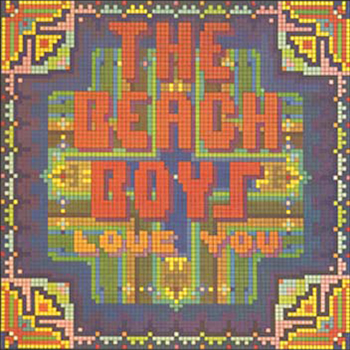
Following the brilliant success, artistically and commercially of the Holland tour, touring quickly became the band's bread and butter, and they rapidly turned into a parody of themselves and effectively became the biggest "oldies" live act in the world. Three years of increasing naffness and concurrent increasing success led Mike Love to think that they should get a record out to capitalise on their live success, despite having no decent new material and despite Brian being in as bad a mental state as ever. Inexplicably they insisted that Brian take the producer's chair and the whole band immediately fell out over the nature of the record they should make. Dennis and Carl, ever the more artistically minded, insisted they should focus on writing new material while Mike Love and Al Jardine, ever the more conservative (and corny) minded, insisted on recording covers of big hits from way back in the day. The result of the consequent compromise was 15 Big Ones (1976) an absolute car crash of a record, simultaneously listless, boring, weirdly-produced, dismally constructed, and completely fascinatingly awful. There isn't much to say about it except that it's as bad as you can probably imagine. The covers are terrible, it's even got them doing 'Chapel of Love' on it, which is utterly horrifying. The new Beach Boys own songs are considerably better, but even they're still totally awful (with the sole exception of album closer 'Just Once in My Life' which sounds like another missive from Brian's personal hell). Strangely, after the disaster of 15 Big Ones, Brian took total control of the band's material and made Love You (1977) almost single-handed. This one splits people into two very distinct camps. Everybody agrees that from 15 Big Ones onwards the band were little more than a joke, but one camp (including REM's Peter Buck) claims that Love You is Brian's last brilliant wild hurrah (the other camp of course saying it's just another terrible album from a now terrible band). Well, I'm firmly in the second camp I'm afraid. I can hear what's interesting about the album but I can't hear what's great about it. I suspect that because it's so clearly a Brian record rather than a Mike Love record, people want to believe that it's a great record. It's certainly miles and miles better than 15 Big Ones, but mainly because it's much more interesting rather than because it's genuinely great. I mean, "honkin' down the gosh-darned highway"? Come on. There's lots of funny trickery, weird backing vocal arrangements and all sorts of funny or bonkers little noises and jokes but it really isn't a very good record. There are, I'll admit, some great nuts lines ("Neptune is God of the sea, Pluto is too far to see") but again, the album is a fascinating curio, not a great work of art. And as a final word on it, it's truly heart-breaking to hear how just how badly the years of excess booze, fags and cocaine had utterly wrecked Brian's voice. And on that sad note, we must get off the Beach Boys rollercoaster. There are a number of other albums after Love You, but I will never own them - Mike Love may have been more than willing to tarnish the reputation of one of the greatest talents in pop music, but I don't want to ever hear it.

Finally for today we have the first two Beach House albums. Eponymous first album from 2006 is a fuzzily bleak bit of gloom pop. I know a lot of people who would disagree about that description but whatever it is that they're hearing, I'm not hearing. It's one of those records that you know you should like but just can't get near. People have compared the first Beach House album to Mazzy Star, but that seems very wide of the mark to me. This is far less engaging and far less enigmatic. If anything perhaps the problem is that it all seems so studied, so arch. It's a nice listen to be honest, but if you can remember anything about it once it's over then you're a better man than me Gunga Din. Second album Devotion (2008) has got a bit more going for it - there are some melodies here that actually stick and the whole exercise sounds less forced, but I still can't quite get to grips with what it is that I'm supposed to find so special about it. There are lots of hazy downbeat records with lazy female vocals around, I don't get why Beach House are supposed to be a particular unique example.

Laters!