Monday, 16 April 2012

LaRM day 60 (Kate Bush-Donald Byrd)

Kate Bush apparently was unhappy with the production work on both The Sensual World and The Red Shoes and re-recorded half of each album, and released the results in 2011 as Director's Cut. With regard to The Red Shoes she wasn't wrong, the production was pretty horrible, nasty digital recordings which stripped all the warmth out of the songs. The Sensual World has always sounded pretty bang on to me though, and the disastrous new version of 'Deeper Understanding' demonstrates amply the mixed fortunes for the songs that she chose to re-record fro Director's Cut. In the original version of the song the "voice" of the computer is a beautifully recorded female vocal which uses the idea of only finding companionship through a computer as a metaphorical as well as literal commonplace tragedy of loneliness. Changing the voice to a pitch-shifted "electronic" noise takes the metaphor away entirely and leaves rather a trite song instead in its place. Bush's original vocal is suitably straightforward and the re-recording sees her doing a bit more grandstanding which seems to me wholly inappropriate. It's strange because even the re-recordings of the songs from The Red Shoes are bad ideas as often as not. The new version of 'Lily' is spectacularly overblown and, if anything, makes the original sound better than ever. And as for re-recording 'Moments of Pleasure', well, why bother? There are some triumphs though, the new versions of 'And So Is Love' and particularly 'Top of the City' are wonderful and much warmer, emotionally engaging versions than The Red Shoes originals. I think that the intention was to remind people that the songs should have always sounded warm and real rather than the rather anodyne digitally deadened versions that appeared on the original albums, but I'm not sure it really works and weirdly it serves to make me positively reassess much of The Red Shoes (The Sensual World doesn't need reassessing, it's pretty near perfect anyway).

And finally for Kate, the other album she released in 2011, 50 Words for Snow. There's no doubt that 50 Words for Snow is the most beautiful record that she has made and little doubt that it's one of the most perfect. It's no Hounds of Love in terms of grandstanding groundbreaking but it's an extremely bold and challenging piece of work. Thematically it's a miracle of structure, every song sounding like a different kind of snowfall, mostly drifting beautifully around, occasionally swirling up into a blustering flurry before settling down again, and it means that the songs take a long time to work their way through (the shortest just under seven minutes, the longest nearly quarter of an hour). It's lush, romantic but astonishingly understated, and every song has its own distinct feel, and although they are all gentle, graceful, sedate, stately even, there's no mistaking one for another. It's an extraordinary achievement and proof that there's absolutely no second-guessing Kate's genius for development. There are distractions (most obviously Stephen Fry making up names for snow in his all too mockable way on the title track, and a predictably ruinous appearance by Elton John (why does she let these people on her records?)) but the distractions aren't able to damage what is to all intents and purposes an unprepossessingly remarkable record. There's no telling how long the wait will be for the next statement, but whatever she does, even when it's a failure, Kate's work is always a hundred times more interesting than pretty much anybody else's.

Next up would have been the endearingly gloomy How to Know the Butterflies of Love (1999) by The Butterflies of Love, but surprisingly, apart from the first two songs being on Youtube, it isn't on the internet (it's another vinyl version in my collection), so we'll have to skip it.

US indie underground legends Butterglory released three albums on Merge, the first of which was Crumble (1994). The most obvious influence that Butterglory had was on Scotland's the Delgados, who basically ripped off Crumble wholesale for their first album. As ramshackle indie rock goes, Butterglory were absolutely it. Not for them the absolute shambles of The New Bad Things, this was spectacularly well-constructed and contained shambling. Along with Pavement, it was Butterglory who demonstrated that it took a lot of skill to sound this loose, and again like Pavement, it took a lot of skill to write songs this good and make them sound like you were pretty much making them up on the spot. Crumble is a brilliant example of just how great, and how endearing, American indie rock could be in the early 90's. Second album Are You Building a Temple in Heaven (1995) is more of the same engaging shamblepop, but in contrast to Crumble's uplifting pop, this album has a rather sombre, melancholy air about it. It's still great, but there's a sense that something wasn't quite right in the Butterglory camp. It doesn't negatively affect the record at all, and it's still got some blistering songs ('She's Got the Akshun!' remains a classic) but playing the albums side by side makes Temple in Heaven sound like harder work.

Butter 08 was a peculiar kind of supergroup consisting of Russell Simins of the Jon Spencer Blues Explosion, both of Cibo Matto, and film director Mike Mills. They made one album and it's a brilliant but frantic kind of mash up of Jon Spencer-ish blues riffs and funky hammond, with some shrieking and shouting combined with a muddy hypercool stylisation that befitted their signing to Grand Royal. It's all pretty messy, splashy stuff with keyboards and guitars and various disparate vocals sort of doing their own thing without much reference to each other but mysteriously it all works. I remember the lanky idiot that ran Edgeworld records in Brighton going on and on and on and on about this album when it came out - it's not that good, but it's certainly pretty fine.
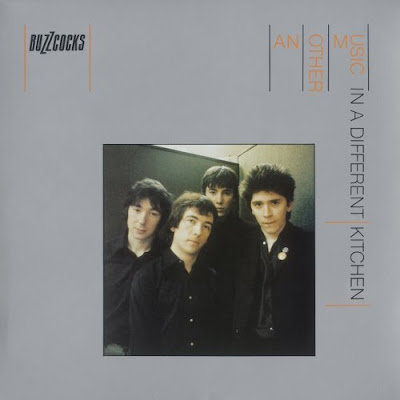
The first Buzzcocks album, Another Music in a Different Kitchen (1978) is a gleeful dose of ranaway punk-pop, but it's lacking the stupendous melodies that would come later. It's certainly got some fantastic songs ('Love Battery', 'I Don't Mind') but although it's a rush, it doesn't really fulfil the promise of the Spiral Scratch EP that had preceded it. My CD copy of Another Music has Spiral Scratch tacked on to the end, and to say that it has four untouchable songs of punk-pop brilliance would be to understate it. Which is why the album feels strangely flat. Not so the follow-up album Love Bites (also 1978). Now this is one great big song after another. There's no tedious sound experiments (Another Music's 'Moving Away from the Pulsebeat' which is terrible), it's just heads-down and tearing away, speeding from one awesome pop tune to the next. 'Ever Fallen in Love', 'Just Lust', 'Sixteen Again', one after another after another. As a signal of how great late 1970's guitar music could be, it's interesting that the Buzzcocks records weren't the ones that made the stir compared to the Sex Pistols third-rate pub rock. There are one or two lower points on Love Bites (I find 'Operators Manual' and the instrumental closer 'Late for the Train' a bit dull) but nothing really breaks the flow of the album and it feels like it's over in the blink of an eye.
Finally for today it's some new direction jazz by the understated pioneer Donald Byrd. His A New Perspective (1963) album was a fascinating bit of self-effacing redefining of the standard approach to hard-bop. In terms of the music there isn't anything particularly radical going on, but the introduction of a gospel vocal group was a pretty bold move and it works fantastically, adding a whole new layer of musicality over an already fairly impressive instrumental setting. The players on A New Perspective are the typical top flight Blue Note housers, Hank Mobley on tenor sax, Herbie Hancock on piano, Kenny Burrell on guitar, but there's also some delicate vibes work from Donald Best. All in all A New Perspective is a relatively laid-back piece of hard-bop and the vocal group really adds to the cool atmosphere that Byrd creates. I think that Donald Byrd has sort of fallen from the top ranks of people's opinion of the old school jazzers and I think that's a shame, he was pretty sharp.

Friday, 13 April 2012

LaRM day 59 (Kate Bush)

Kate Bush's second album, Lionheart (1978) was rush-released after the success of The Kick Inside, and it suffers quite badly. Although similar in sound and style, Lionheart sounds very much like it's composed of songs that didn't make the cut for The Kick Inside. It does have some lovely songs on it ('In the Warm Room' is particularly graceful) but for the most part it's minor league stuff, and there are some real duds on it ('Hammer Horror' is disastrous). The only big song from the album is 'Wow' which although a great song, was subject to some fairly justified ribbing at the time due to its being so absurdly overblown. A break of a couple of years and the decision to take over production herself gave Bush the chance to revise both her writing and recording style and third album Never For Ever (1980) is a marked improvement on Lionheart. It's a very diverse record, featuring all kinds of stuff from not very good rock songs ('Violin') and melodramatic concept songs ('Breathing', 'Babooshka') to simply fabulous stuff that signposted the brilliance ahead ('All We Ever Look For', 'The Infant Kiss'). When Never For Ever is bad it's really quite bad, but when it's good it's fantastic and the good bits are pivotal in terms of the rapid development that followed. As an aside, it also has one of the most upsettingly rubbish record covers ever, being a drawing of Kate stood on a hill with a flood of both grotesque and beautiful creatures flooding out from under her skirt. It's appallingly bad. Record Mirror voted it album cover of the year in 1980.

Bush spent the next couple of years capitalising on the success of the singles from Never For Ever and consolidated her position as an autonomous artist and her insistence that her record label leave her alone paid off (it's an amazing thing about her that from a very young age she seems to have been able to get people to allow her total creative freedom while never coming across as anything other than utterly charming). The next record, the first she effectively wrote and produced completely single-handed, was 1982's The Dreaming. She describes it herself as her "I've gone mad" album and it is a strange and disconcerting record, but it's an absolutely brilliant one. I can't think of anyone else who, having had significant success, responded by making a record as personal and as unapologetically challenging as this. In amongst all the braying donkey noises, didgeridoos, skittering drums, bizarrely fractured melodies, shrieks and moans and Percy Edwards doing his birdsong impressions are some single-mindedly fantastic songs. In fact there isn't a bad song here. It's a staggeringly creative record, and although it's a stubbornly idiosyncratic album, if you can allow yourself to accept its wilfulness, it's a magical listen. As context, it's no surprise that Bjork has cited it as a major influence.

Three years later we have the crowning glory of her extraordinary creative career, Hounds of Love (1985). This is one of my favourite albums, an easy top five entry, and it's a record which, despite being a reminder of the time it was released, is creatively speaking, completely timeless. The depth of intellectual and structural engagement in this record is genuinely awe-inspiring, and even when the songs seem little more than basic pop songs ('Cloudbusting' for instance), closer examination reveals incredible detail and precision. Lyrically I think Hounds of Love is an important departure because it blends the usual esoteric cultural influence that always appears in her work with a much deeper personal engagement than ever before. 'Running Up That Hill' for instance, although slightly marred by its familiarity, has an absolutely desperate yearning in it which is heartbreaking. The first side of self-contained chart friendly (but still astonishingly creative) pop songs is fabulous, but it's the second side (sub-titled The Ninth Wave) which always leaves me breathless. As a kind of concept piece about a woman drowning at sea it's literally and metaphorically dense, both musically and lyrically and I can't think of any other record in the "pop music" world which has such genuine poetry in both its concept and its execution. In some ways The Ninth Wave makes me almost prepared to accept that modern music can be an art form. (The 'Hounds of Love' 7" has a spooky B-side in a cover of the folk standard 'The Handsome Cabin Boy', and the reissue of the album includes a few other B-sides including the beautiful 'Under the Ivy' and 'Burning Bridge').

After the success of Hounds of Love, EMI released a singles compilation in 1986 called The Whole Story. This contained a couple of songs with re-recorded vocals, but the only new song on it was the non-album single 'Experiment IV' which is a decent song with a peculiar sci-fi theme.

The next album was preceded by the single 'The Sensual World' (1989), which is a beautiful song, and it had a decent but strangely straight B-side, 'Walk Down the Middle'. The album, The Sensual World (1989) is for many people quite a step down from the heights of Hounds of Love, but I don't agree. I think that The Sensual World is an absolutely stunning album, with a truly profound emotional core. It's a deeply moving record, full of incredibly poignant touches and it's a record that seems to meld the deeply personal with the external culture with even greater success than Hounds of Love. There are a couple of songs that don't quite work on The Sensual World ('Heads We're Dancing' and 'Rocket's Tail') but they only don't quite work by a tiny margin and only by virtue of over-reaching. The other eight songs are quite wonderful and each one measures out equal amounts of the emotionally touching and the intellectually rigourous. Kate seems to have felt that there were problems with the production and re-recorded a few of the songs for her Director's Cut album (which we'll come to later), but while it's absolutely fair comment with respect to next album The Red Shoes, which sounds horrible, I think she's misjudged the sound of The Sensual World, I don't think it suffers from dated production at all and I can't imagine it sounding any better than it does.

All went quiet for another four years and then in 1993 Kate released The Red Shoes. Everything about The Red Shoes should be better than it actually is. Most of the songs are absolutely gorgeous, but the production lays a nasty, pristine sheen over everything and neutralises the emotional impact that the songs should have. It's a real shame because there are some truly stunning songs ('And So Is Love', 'Song of Solomon' and particularly 'Top of the City' and 'Moments of Pleasure'). In fact 'Moment of Pleasure' comes out relatively unscathed solely because it is such a wonderful song. There are obvious signs that things wouldn't work here, the most blatent of which is the frankly disastrous range of guest appearances, from an inane Eric Clapton and Gary Brooker, to an appalling Prince (who co-produced far and away the worst song on the album, 'Why Should I Love You', which also most criminally of all features vocals by Lenny Henry of all people). Nonetheless, if you can get round the production issues and the occasional stinker (the aforementioned 'Why Should I Love You', 'Constellation of the Heart'), the album is still for the most part a wonderful collection of songs and retains the elemental creative imagination and fundamental charm of all Kate's best work. And then she vanished for 12 years.

When she reappeared in 2005 it was with the double album Aerial, which, like Hounds of Love, was conceived as two distinct parts. Again, the first part is composed of distinct songs with no particular relationship to each other, the second a kind of song cycle on a specific theme. After the dense overproduction of The Red Shoes, Aerial is markedly stripped back, often featuring no more than Kate's voice and her piano. This album is the point at which the approach to song structure and theme are closest to another of pop's wilful pioneers, Scott Walker. Songs are allowed to develop almost organically over relatively lengthy periods of time and it takes a bit of patience on the part of the listener and the whole thing is extremely musically restrained. Lyrically it's all a bit stream-of-consciousness ('Mrs Bartolozzi' has some interesting digressions regarding a washing machine for instance) which can take a bit of getting used to. The second side is more of the same, but works as a unified whole and is more demonstrably a tribute to the natural world and the nature of beauty, both physical and emotional. The whole record seems to have resulted from her reaction to having become a mother at a relatively late age (not old by any means, but not young) and it's a clearly reflective piece of work. How you relate to it depends on your willingness to give it a lot of attention, but if you do I think the rewards are really extraordinary, particularly the second part.

A couple more tomorrow, the revisions of Director's Cut and last year's wonderful 50 Words for Snow.

Thursday, 12 April 2012

LaRM day 58 (Built to Spill-Kate Bush)

EXCITING NEW FEATURE!!!: Click on the record cover to link to a video of a song from the record! Look how tech-savvy I am!
_________________________________________________________________

Built to Spill are a tough band to talk about I think because although they're albums really are special, it's hard to pin down exactly what it is that's so great. Third album, Perfect From Now On (1997) was their first for a major label and they took full advantage of the opportunity not only to spend a bit of cash and time making a record as seriously as possible, but also to take the piss out of their paymasters. There are some wonderful songs on Perfect From Now On, but they all head towards the 8 minute mark, meaning it's college radio or bust. Despite their albums being determinedly indie rock, there's a deep influence of Neil Young's guitar work and a faint nod to a kind of late period psychedlicism in the swiriling repeated patterns and phrases in most of Built to Spill's songs. Perfect From Now On is a great record and it showcases Doug Martsch's high but mournful vocal brilliantly (and also the great Scott Plouf's brilliantly restrained drumming), but it's the guitars that rule the day and on occasion I do find myself wishing for a bit more melody in amongst the maelstrom. And it's melody by the bucketful that they delivered on next album Keep It Like a Secret (1999). Keep It Like a Secret is a brilliant album, taking all of the best elements of Perfect From Now On and distilling them into a fantastic series of songs, alternating between loping pop hooks (opening trio 'The Plan', 'Center of the Universe' and 'Carry the Zero') and perfectly judged indie rock ('Sidewalk', 'Else'). Only one song tops the 6 minute mark this time around and the relative brevity really works in the albums favour, making it flow brilliantly from one grand melody to the next, and despite Martsch's world-weary delivery, it's really fun. I think it's fair to say it's easily one of the best albums of the 90's.

2006's You In Reverse is a rather different kind of record. It's a much more stately, refined affair, with mostly mid-tempo, contemplative songs. There's still plenty of Martsch's explosive guitar work, but it's all contained within relatively sombre, reflective frameworks. It's a great album and although it plays like a comedown after listening to the joyous workouts on Keep It Like a Secret it's still got some fabulous stuff going on. The Neil Young influence that has been such a thin thread throughout all their work makes itself clearer on You In Reverse ('Wherever You Go' is fairly blatent), but as we all know there's nothing wrong with a blatent Neil Young influence, and the band's own spirited mix of classic and unconventional indie songwriting is still pretty invigorating, even when it's cast in a relatively downbeat mould.

Next up is the perfectly pleasant if unchallenging Oh My Darling (2007) by Canada's Basia Bulat. It's a relatively charming little bit of indie-folkery which has it's roots in a now well-worn Canadian folk tradition, but with an added edge of indie-savvy. It's not a record that sticks in the mind, and it strives maybe a little too hard (Joanna Newsom this most certainly is not), but it's a pleasing enough record and it certainly has its place.

Before Vashti Bunyan recorded the now legendary Just Another Diamond Day she had made a handful of singles and demos with various noted folk and pop producers between the years 1964-1967, most of which are collected on the compilation Some Things Just Stick In Your Mind (2007). These are lovely pieces of work, the songs on the first disc being the released and scrapped singles together with a few studio demos. There was clearly an idea to present Bunyan as a kind of Francoise Hardy by way of Marianne Faithfull and the lightly orchestrated structure of the songs, together with the politely arpeggiated acoustic guitars are a sort of folk-light, which was not the kind of record Bunyan would go on to make. There's even some dusky and downbeat pop music here ('Coldest Night of the Year' - in fact the winter is a recurring theme throughout these songs). The songs on Some Things Just Stick In Your Mind are however really very lovely and suit Bunyan's breathless and wispy vocals nicely. There has been the suggestion that this stuff is all a bit throwaway but I disagree, I think this is beautiful stuff. The second disc is perhaps the more interesting yet, being a home demo that Bunyan did herself in 1964, and which shows just how clearly versed she was in the true folk tradition, which was put on hold for the studio work.

Next we have Tricatel's head honcho Bertrand Burgalat and one of his various homages to Melody Nelson specifically and Gainsbourg generally, The Sssound of Music (2000). It's all twinkling keyboards, rumbling bass and the over-arching sound of casual kitsch. But bearing in mind Burgalat is the master of this kind of stuff it's absolutely brilliant rather than cloyingly naff. Burgalat has such style, and such impeccable taste that even at its most obvious Gainsbourg cum James Last worshipping, The Sssound of Music is a masterclass in both style and technique. There are some great tunes and it's all played with complete elan. I often get the feeling that Burgalat considers himself to be sort of untouchable. He is though, and even when he fronted AS Dragon, it came across as sleazily stylish rather than Mike Flowers. He always walks a line and he's always on the right side of it. The Sssound of Music is a great exercise in intellectual pop music making, but it's also a great listen.

Now we've got another dose of Jon Spencer (hang on, so let's get this straight, we'll be having Jon Spencer for: Boss Hog, Pussy Galore, Jon Spencer Blues Explosion, Solex and...). R.L. Burnside's blistering comeback album, A Ass Pocket of Whiskey (1996), was as much a Spencer pet project as it was Burnside's. By the 1990's Burnside was a pretty much forgotten rough edged bluesman whose hard life was a book but whose records were a bust. Spencer's peculiar relationship with the blues (to my mind a strictly postmodern one) seemed to fit with Burnside's overblown personality and diminishing public presence. A Ass Pocket of Whiskey is a great dose of sleazy blues from one of the sleaziest old blues men and one of the sleaziest postmodern renaissance men. It really is a good match, and Spencer rails himself in a bit for Burnside's benefit, which works well, there's less of Spencer's highly strung guitar mangling and little of his yelping and wailing, all so that Burnside has room to deliver his laconic and dirty blues. It's a really great, and fun, album, and it's the grubbiness that really makes it work.

Finally for today it's the opening to another lengthy session, this time with the wonderful, wonderful, wonderful Kate Bush. It took me a long time to be able to admit in public that I thought Kate was the greatest, but having done it, it's amazing how many people agree. Nonetheless, the first three albums still present something of a challenge to me, because they still sound like the work of a theatrically minded young woman, who hadn't had the real experience to carry it off. Bearing in mind that's exactly what she was though, they're actually truly remarkable records. The best of the three is probably the debut, The Kick Inside (1978). It's a fantastic record (in every sense) and while there are occasional problems ('L'Amour Looks Something Like You' for instance), for the most part these are amazing and amazingly peculiar arty pop songs. 'James and the Cold Gun' is great, 'Feel It' is marvellous and 'Them Heavy People' is magical. Kate's influence is pretty much everywhere these days, but it has tended to be the later stuff that people focus on, and it's interesting to note that Joanna Newsom in particular has used The Kick Inside as a template to effecticvely copy wholesale (compare the opening vocal note of 'Easy' on Newsom's Have One On Me and the opening vocal note of 'Feel It' on The Kick Inside). Anyway, it's a grand, and grandstanding, opening to a career that would prove to be one of the most remarkable in pop music history.

Wednesday, 11 April 2012

LaRM day 57 (Buffalo Tom)

Buffalo Tom's self-titled debut album (released in 1989) is something of a developmental record in that you can hear from the start what kind of great, angst-rock stuff they would come up with in future years, but it is still desperately in thrall to the indie rock that had slightly preceded it, most particularly the early Dinosaur Jr records. However, where J Mascis was writing kind of sloacker anthems, Bill Janovitz was concentrating on creating a much more emotionally exacting kind of song. The problem is that it doesn't quite convince on Buffalo Tom and although the signs were really promising (opener 'Sunflower suit' is great, and 'The Bus' is a fantastic song - I'll never forget being thrilled when the audience vote for it as the encore was "passed" when I saw them in Bristol back in 1992) there is still too much reliance on the sludgy rock that they were emulating. Second album, Birdbrain (1990) is both better and worse in different respects. The sludge and the over-arching angst are even more the focal points and make listening to the record feel a bit exhausting, but on the whole the songs are better. It's unsurprising that Mascis' presence is even greater on Birdbrain (as with the first album, he is both producer and guest guitarist) and I think it was important that his involvement stopped at this point, because the band could have become, and certainly would have been written off as, a pointless parody of the grunge sound. A couple of singles were released to promote Birdbrain ('Birdbrain' and 'Fortune Teller') and the B-sides contain decent covers of the Psychedelic Furs 'Heaven' and George Harrison's 'Wah-Wah' as well as a couple of fair originals.

The next album was preceded by a couple of singles in 1992 ('Velvet Roof' and 'Mineral') both of which are fabulous songs and immediately signposted how much of a leap forward the album would be. The B-sides contained a couple of really good new songs ('Sally Brown' being the highlight). The album, Let Me Come Over (1992) is a fantastic album, a benchmark for the US indie rock scene and a touchstone for emotional rock with serious intent rather than just pretence (a la the "emo" world). In a way it's an album that is unafraid to speak to the listener who accepts that getting older is a necessity rather than harking back to being an eternal teenager. It's an emotionally sophisticated record that is also musically sophisticated, ditching the sludgy sound in favour of clean guitar work and using waltz time and country rock in a way that fits absolutely the model of yearning, frustrated rock that they had already started to make their own. It's a great record and as one gets older it just seems to get more and more relevant, both musically and personally. The band never were able to make a record as good again, but that's no failure, because as far as rock music goes, this is pretty much a fair height.

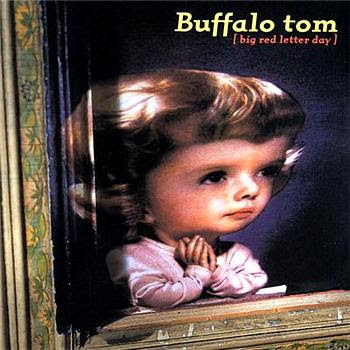
The following year the band released Big Red Letter Day (1993) which consolidated the little bit of commercial success they had had with Let Me Come Over. Big Red Letter Day is an audience friendly record, cleanly recorded and delicately performed with big hooks and attractive choruses. But there's something missing from the album and I can only think that it's the slightly scrappy edges that were still there on Let Me Come Over and which make the sound of the band so personal. Big Red Letter Day sounds like an extremely classy rock record, but it doesn't sound like it was particuarly made for you. The songs are ace, grand, classic songwriting stuff, and Janovitz particuarly had developed into a formidable songwriter, but there's something strangely disengaged about the album. That's not to say that it isn't a fine album, it certainly is, it just doesn't hit the mark in the way its predecessor had. A couple of the songs from the album were released as singles and the B-side of 'Tree House' is a nice acoustic version of the album's 'Late At Night'. The band clearly knew that they had overstepped the mark, production-wise, and when they reconvened for a new album in 1996, what they released was considerably more homespun and downbeat, much less cleanly produced. Sleepy-Eyed is another album of fine classic songwriting, but this time it's more inviting, more engaging, and although it's a very different record to Let Me Come Over, more mature, more cautious perhaps, it's probably their next best work. There's something of the aging process at work here and again it's as if the band are unafraid to discuss it quite openly without fear of sounding like some crusty old rock outfit. Some of the best songs Janovitz has written to date are on Sleepy-Eyed ('Summer', 'Rules') and the whole album is a demonstration of just how to write songs that address emotional issues without either descending into mawkish sentimentality (or middle-age nostalgia) or overplaying your hand and sounding like the work of teenage emo kids. It's a delicate balance and Buffalo Tom absolutely perfected it on Sleepy-Eyed.

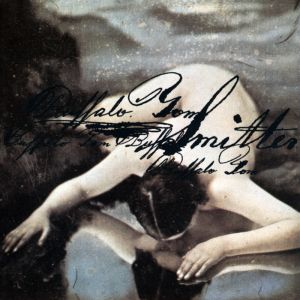
Once again though, when the formula is working just right, they overplayed their hand on the follow-up and 1998's Smitten is, if anything, too sophisticated, too mature and as a result it feels dull. It's sort of weighed down by its own smarts somehow and although there are some really lovely songs ('The Bible', 'See To Me') it seems to drag and feels weirdly colourless. In fact, when the piano chimes in you might find yourself thinking Bruce Hornsby... I think, again, the band felt the problems themselves and that was it for the band for a long time. It was another nine years before they were to record again, but in the meantime two compilations were released, one of the singles and another of various of the single B-sides. The Besides (2002) compilation shows what a curate's egg a B-sides compilation can be, containing some odd and unsuccessful cover versions ('All Tomorrow's Parties', 'Cupid Come') and some fairly irrelevant tunes ('Butterscotch', 'The Spider and the Fly'), together with some absolutely sterling stuff ('Sally Brown', 'Clouds'). Despite having had a great time seeing them play again in London (with the lovely Vicky Ball and Honey and Fawad) a couple of years ago, I haven't picked up the two albums they've released in the last few years.

And that's it for today, the Buffalo Tom perfectly filled the day.

Wednesday, 4 April 2012

LaRM day 56 (Brunettes-Buffalo Springfield)

The third Brunettes album Structure and Cosmetics (2007) is weirdly not as good as it should be. It's a smart bit of boy/girl indiepop, but maybe that's the problem, perhaps it's too smart. There's something not quite engaging about it, a little off putting. It's strange though because it has some great tunes and a great attitude, but it's oddly distanced, maybe even self-satisfied. It's a supremely sophisticated record and it suits a sunny day perfectly and if you can allow yourself to give in to it's cool edginess, it's great. But it feels like it doesn't want you to be its friend.

Next up is Lindsey Buckingham's first solo album, Law and Order (1981). Bearing in mind the miracle that is Fleetwood Mac's Tusk, it's sort of amazing that he followed up with Law and Order. It's an incredibly slight record, produced rather nastily (and bearing in mind the production was a key element of why those Mac albums sound so amazing the fact that Law and Order sounds ropey it's terrible) and the songs, nice though some of them are ('Trouble' is particularly good) feel almost like demo versions of songs that would be knocked into shape later. In fact you can hear that some of these songs would have sounded great once they had been re-recorded and given a serious once over, but instead what's released is kind of half-baked. It's not a terrible album by any stretch (once you get past dismal opener 'Bwana') but it's a crushing comedown from what he'd made just two short years before. Moving on 27 years and innumerable Mac reunions later we have Gift of Screws, another solo album Buckingham released in 2008. Strangely in many ways Gift of Screws sounds more of an appropriate successor to Tusk than Law and Order does. It's a strange record but it shows off much better Buckingham's little-discussed oddities of approach. There are some extremely peculiar vocal arrangements, and some dense over-dubbing with some frankly lunatic guitar work going on, but when you dig beneath the surface of Tusk there's not dissimilar stuff going on there too. It can get a bit overwhelming ('Time Precious Time' is clever but it's basically a mess) but when it works it's oddly impressive.

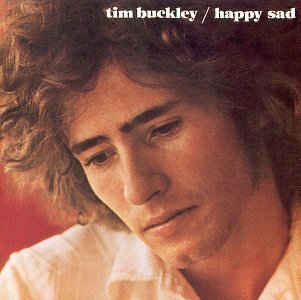
I've never really got Tim Buckley (and I've certainly never understood the cult of his son. I think those Jeff Buckley records, and yes, I'm including Grace, are awful) and even when the songs are great, or nice, as they often are, they're sort of ruined by a wilful jazzy erraticism. I think that maybe people love the records these days because they're a very shorthand way of getting into the mindset of the time. Happy Sad (1969) is a great case in point, because its boho jazziness is precisely what makes it unique and also crushingly boring. Half of the songs are great, atmospheric bits of avant-jazz pop ('Buzzin' Fly' and 'Dream Letter' are fabulous) and the other half are naval gazing jazz explorations that even the reborn jazz-blues era Spinal Tap wouldn't go near (the 11 and 12 minute 'Love from Room 109 at the Islander' and 'Gypsy Woman'). The ups are way up but the downs make you wonder whether you're ever going to wake up.

Roy Budd's soundtrack to Get Carter (1971) is probably one of the most renowned British soundtracks of all time, and with good reason. It's a blistering mix of late night jazz, Hammond workouts, David Axelrod experimentalism and atmospheric freakery. For someone who was to all intents and purposes a straight down the line jazz man, Budd really pulled out all the stops for Get Carter and produced one of the most scintillatingly eclectic soundtracks ever known. For all its genre hopping it never once breaks mood or theme, and with the requisite snippets of dialogue, it really does create exactly the kind of slightly disconcerted feeling that watching the movie leaves behind too.

Which just leaves the 1973 Buffalo Springfield compilation, drawing together various tracks recorded and released between 1966-1968. I have mixed feelings about Buffalo Springfield in as much as some of my least favourite Neil Young songs were Buffs tunes, and I've always been a bit ambivalent about Stephen Stills. Or at least that's what I thought until listening to this again. It's strange, I guess I must have been on a Neil Young jag when I got the Buffalo Springfield record and thought it didn't match up. It's doubly weird because I'm sufficiently familiar with all of the Buffs tunes but somehow just never thought they were up to scratch. There are some songs that don't work ('Nowadays Clancy Can't Even Sing' which is a classic bit of early Young to most people, in fact sounds like something that Michael Nesmith would probably have rejected). However, the vast majority of it is superb countrified rock music of the highest order, with a strong emphasis on classic pop melody. Neil occasionally gets to do his fuzzy guitar stuff (most notably on his superb 'Mr Soul') and Stills really gets the melodic stuff bang on. I can't think why I had expected less.

That's it now until after Easter, so it's a six day break, then back to kick off with a Buffalo Tom marathon.

Tuesday, 3 April 2012

LaRM day 55 (Broken Social Scene-James Brown)

The third Broken Social Scene was eponymous and was released in 2005. It's a much more coherent record than You Forgot It In People but it's not as inventively unpredictable. It's a more strident record, very sure of itself as a rock album. It's still fairly quirky but these are big songs played with serious intent, and although there's nothing along the lines of 'Anthem for a Seventeen Year Old Girl', it is full of blistering songs that you can't help but be dragged along by. It was initially released with a bonus EP called To Be You and Me, and although an interesting addendum to the album it isn't particularly essential, being composed largely of low key ambient workouts, with a couple of more solid tunes that clearly didn't make the cut of the album. The various members of the band spent the next few years concentrating on their other projects, but reconvened for 2010's Forgiveness Rock Record. This is an even bigger and more ambitious album than Broken Social Scene, but in some ways it sounds as if they've gone beyond their ambitions and ended up sounding like they want to be U2. And as we all know that is so not a good thing to want to do. There are some fantastic tracks on Forgiveness Rock Record, but it's mainly the lighter, more moderate songs that work best, while the stadium reaching rockers are the less successful.

It's time once again to get funky people, because here is the almighty "Godfather of Soul" (is that a registered trademark? Is it intellectual property? Could I call myself the Godfather of Soul without fear of legal reprisal?) James Brown. I've got disappointingly little by the Godfather so we're starting with 1968's Live at the Apollo, Volume 2. Now Live at the Apollo from 1963 is rightly legendary, but not so Volume 2. I'm not sure why not though because this is powerhouse stuff. Every note is, of course, perfect, but there's not a wasted moment either. Even a 13 minute 'It's a Man's Man's Man's World' is spectacular. It's an inspired mix of the downright funky and the brain meltingly smooth. The one-two of 'I Feel Alright' and 'Cold Sweat' gets a particularly powerful outing and there's some beautifully restrained playing on 'Try Me' and 'Prisoner of Love'. It's all great stuff. As is, but for different reasons, 1973's The Payback. The Payback is a massive album that relies on looping rhythms and improvisation around repeated motifs. It works fantastically well, despite being pretty light on the hard funk. It's a more soulful record despite having some seriously weighty themes being bandied about. The title track is an immense piece of restrained funk and there are some really successful soul numbers like 'Forever Suffering'. Because of the nature of their structure the tunes are all quite long but they never seem to ramble, and on the whole, the sheer power of the record makes it one of the great statement albums of the 1970's.

All unusually lengthy records today and been a bit tied up, so that's the lot for now.

Monday, 2 April 2012

LaRM day 54 (Edie Brickell-Broken Social Scene)

So, after those first two albums Edie Brickell married crusty old Paul Simon and it was a few years before she made another record. Picture Perfect Morning (1994) shows worrying signs of the influence of her aging husband (I'm not just being rude, she's now in a band with his son who is the same age as her). It's a somewhat sappy, sentimenal record, with too much additional instrumentation (sappy keyboards a la Still Crazy, accordions a la Graceland, minor chord workouts a la Hearts & Bones). Any traces of her own rather quirkier songwriting style are effectively buried beneath the weight of Simon-isms, which suit his own records, but ultimately wreck his wife's. There are a couple of nice tunes ('In the Bath' is quite sweet), and it's a cool, relaxing listen, but on the whole it's a pretty empty record.

Before launching the greatest American indie label and starting my favourite band of, like, ever, Mac McCaughan was in a number of tiny Chapel Hill outfits, including Bricks. Bricks also had in their line-up, on occasion, the delightful Laura Cantrell who we'll meet up with again later. The Bricks tunes were far removed from either Superchunk's power-punk pop music or Cantrell's cool Americana, being totally lo-fi, press play and record type stuff. Living room messing about in other words, but in amongst the tooling around are some great, great little indie rock songs.
The Getting Wet Part 7" has two great songs in 'A History of Lies' and 'Smoking Hooch with the Flume Dude'. Both tunes show how Bricks were the foundation for Mac's solo outift Portastatic (incidentally, we're going to be having a lot of his records under various guises along the way) in that it's scrappily recorded, scrappily performed and utterly charming stuff. In 1992 they released a compilation of pretty much everything they had recorded between 1988-1991, called A Microphone and a Box of Dirt. Both tunes from The Getting Wet Part are on here together with another 16 tunes of varying quality. Stuff like 'You Shouldn't Have Smashed Your Guitar' and 'Spy Kitty' are worth the price of admission alone though.

I love a bit of proper British folk revivalism and Anne Briggs was one of the key figures in the revivalist movement of the 1960's. She only made one record in the 60's though and it wasn't until 1971 that she released her first two albums (one more followed in 1973 and that was the lot). The second album, The Time Has Come, is a truly wonderful bit of folk classicism, despite the fact that Briggs wrote most of the songs herself. She was so well versed in the form though that you would never know that these weren't traditional tunes, she's that good. It's absolutely beautifully performed too and although she herself was apparently always unhappy at the quality of her recorded voice, I can't imagine it could be any better or any more perfect. Her voice is direct, unadorned, occasionally faltering but always absolutely captivating. 'Standing on the Shore' for instance is transfixing, a stunningly beautiful piece, on an album of varied riches.

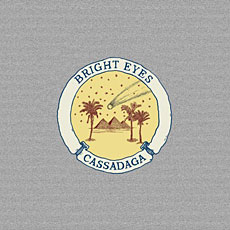
Now I don't have anything against either youth or ambition per se, but there's something so very, very tiresome about Bright Eyes records. The rather tragic sincerity of youth is writ large across his records, and as he gets older he has less and less excuse for being so terribly earnest it seems to me. Anyway, I think the height of this rather desperate dedication to "truth" really reached its peak on Lifted, or The Story is in the Soil, Keep Your Ear to the Ground (2002). In terms of the songs we drift along from one 8 minute dirge to the next. People were keen to see Conor Oberst as some kind of inheritor of Dylan's legacy, but frankly that would be like going into any sixth form common room, picking a spotty boy at random and saying that he's the true inheritor of folk's historical legacy. Because that's what all this essentially is - the heartfelt shouting of a young man who thinks he's so much cleverer than he really is. Not much better is 2997's Cassadaga. It's musically a bit lighter and the band seem brighter, more engaged, but lyrically it's more of the same of that kind of tedious equivalent of Catcher in the Rye set to music. At least the songs don't go forever this time around and you have a chance to dig out some melody in amongst the self-serving angst. But not enough to make it worth the effort. I've a horrible suspicion that Oberst thinks he making radical combinations of Dylan and Gene Clark's No Other. If he does, he couldn't be further from the truth.

And now to something of an entirely different outlook, it's the compilation of singles between 1984-1990 by Bristol's finest, The Brilliant Corners. Creamy Stuff (1991) charts the rapid development of the Brilliant Corners from lo-fi rockabilly to out and out jangly indie pop of the first water. Now, I remember Davey Woodward from our days back in the early 90's working in the Tube, the student nightclub on Frogmore Street in Bristol, and he was a decent chap, would always play a good set. Is the Tube still there? I assume it isn't. And while I'm mentioning the Tube, props to the lovely Joe Salter and his wife Emma. He was one of the most charming and likeable chaps you could ever hope to meet, and he put up with a huge amount of rubbish from the staff with astonising tolerance. Anyway, what was I talking about? Oh yes, the Brilliant Corners. 'Brian Rix' was a great tune, in fact they had a way with a good C86 type of indie pop the likes of which are sadly seen all too little of these days. If you're ever of a mood to dig out some old Wolfhounds, Woodentops, Shop Assistants, etc, etc, you would do well to remember to throw in the Brilliant Corners while you're at it.

Now we've got a handful of records by massive Canadian musical collective, Broken Social Scene. I really like the stuff that's come out of this bunch and although there are other bands that have come from the central hub of BSS that I prefer (Stars for one) I rate the Broken Social Scene records quite highly. Second album You Forgot It In People (2002) is particularly fine. I think it sort of acts as a showcase for the various individual talents within the group because there is absolutely no stylistic consistency here at all, but it really doesn't seem to matter as one tune joyously and exuberantly bursts into the next. Even the occasional downbeat tunes seem to glide gracefully into their surroundings and it all motors along really brightly. There are some massive stadium rockers, some experimental workouts, some romantic little quiet numbers, there's all sorts of stuff and it's the lack of predictability that I really love about You Forgot It In People. The later albums have a more strident sense of themselves, but this is the one that charms.