Tuesday, 9 October 2012

LaRM day 151 (Finishing School-Flaming Lips)

Sasha Bell, possibly the most personable of the many members of the Essex Green / Ladybug Transistor / Guppyboy nexus made one solo album under the name Finishing School called Destination Girl (2003) and it's really, really special.  A rolling, jauntily melancholic stroll through a world of low-key influences, from 60's jangle-pop to British folk, it's an absolutely charming set of songs which despite their gently wistful feel are full of summer air. For the most part its pretty close stylistically to her other bands, but considering that the Marlborough sound is a fairly distinct synthesis of those folk and 60's influences, that's not a bad thing by any stretch of the imagination and Destination Girl is thirty minutes of beautifully understated songwriting and performing by someone who deserves a lot more attention.


The Finn brothers from Crowded House got together to make an album under their surname and it's pretty patchy.  I've got a single from it, 'Suffer Never' (1995), which is however absolutely great.  It's a glorious song which makes the most of both Tim's idiosyncratic and Neil's "classic" approaches to songwriting, understated and graceful with a melodic purity and a slightly dark edge which are second to none.  The other songs on the single are fairly charming demo versions of songs, two from the Finn album (the dodgy 'Strangeness and Charm' and the lovely 'In Love With It All') and one from Crowded Houses' Woodface LP.


After Crowded House split for good (not as it turned out) Neil Finn spent a bit of time out before making his first solo album, Try Whistling This (1998).  Unsurprisingly it's packed full of fantastically meticulous songwriting and the usual fastidiousness about melodic supremacy.  There's too much of it, being the best part of an hour long, and not all of the attempts to add interest to the Crowded Houseness of it all by jamming in little bits of electronics and fuzz-bass and so on, add very much in truth.  Nevertheless these are minor quibbles because, although Finn's songwriting is for many the byword for pedestrian, middle-of-the-road rock, there's no denying that he is one of the best songwriters of the old-school around and Try Whistling This is full of demonstrations of the fact.  His devotion to the Beatles model is writ large across 'She Will Have Her Way' but it's when he gets away from that obvious template and uses his own approach that things really work best ('Souvenir' is a fabulous piece of sweeping songwriting with the kind of chorus that seemingly only Finn can come up with).  It's all very mature, and very adult and although for some that means boring, I can't help but love the fact that there is someone still writing superb songs without becoming truly bland.


Finn's second solo album, One Nil (2001) is a little less experimental, returning to the more straightforward recording approach that worked for him with Crowded House.  Again it's overloaded with material, too much of which doesn't quite match up to his usual standard, but the stuff that does work is absolutely wonderful.  That odd air of nostalgic melancholy that occasionally surfaces in his work is here in spades and it makes for a warm and oddly comforting listen.  All of Finn's usual melodic tricks are in full effect, and it may be that the songs that don't quite work only fail because he overplays his hand.  Even so, although less immediate than Try Whistling This, it's probably a better record, less determined to prove itself apart from his previous work and able to accept, possibly reluctantly, that this straight down the line, melody rich, songwriting is really where his strengths are, and considering those strengths are much stronger than most other people's why not make the most of them?


Next should have been the free-form indie-jazz experimentalism of Eleventh Dream Day / Yo La Tengo members side-project Fish and Roses and their album We Are Happy To Serve You (1989), but it's another one that I've only got on vinyl and can't find any of on the internet's the internet, so we have to skip it.  It's a great record by the way, but by God it's not an easy listen, think Beefheart at his most impossible with an indie sheen.


Now we've got an uncomfortably lengthy period of time in the company of Wayne Coyne and his Flaming Lips, starting with 1993's breakout album, Transmissions from the Satellite Heart.  As an indie record determined to show off its quirks, there's nothing better than Transmissions from the Satellite Heart, but as a decent record there are many, many better.  There are some decent pop songs (the reason it became popular was because of the unexpected success of novelty pop number 'She Don't Use Jelly' (they even went on 90210 because of it) and 'Be My Head' is great) but, like Coyne's personality, it's soooo desperate to show off how excitingly not normal as an indie rock record it is that it actually falls into that terrible trap of seeming like someone standing in the corner at the party shouting about how "mad" it is.  It's a shame because bearing in mind that Mercury Rev's Jonathan Donohue had been in the band for the previous album, you would have hoped that Coyne might have learnt that less is more when it comes to being "wacky", as demonstrated by Mercury Rev's debut album, which was released soon after Transmissions.  Nevertheless, Transmissions is good fun, and it has some truly great songs but it's just trying so, so hard that you can't help but end up getting a bit annoyed by it.


Follow-up, Clouds Taste Metallic (1995) is less ragged, less wilfully quirky for it's own sake (although God knows it still acts up enough) and in some ways the end result is a less immediately arresting record.  In fact, despite its whimsical re-writing of the indie rulebook, it's actually pretty boring.  There are a few nice tunes and when Coyne can get his hyperactive need to show off like the class clown under control, there are some truly lovely moments, but on the whole, even though it's not nearly as frustrating as Transmissions from the Satellite Heart, Clouds Taste Metallic, like most Flaming Lips records, is still strangely less than the sum of its parts.


The most mystifying thing of all about super-smash hit album Yoshimi Battles the Pink Robots is why nobody ever mentions the fact that opener 'Fight Song' is a rip-off of Cat Stevens mawk-fest and Boyzone fave 'Father and Son'.  Because it is. Anyway, the fact that a 70's MOR riff is one of the best moments on the album speaks to just how insanely over-rated it is.  An absolute bona fide indie hit, Yoshimi Battles the Pink Robots is in fact a series of thoroughly uninteresting squelchy sound experiments occasionally punctuated by an ironic indie-pop song.  As Dan has pointed out, the degree to which the album's pop elements are actually just simple crowd pleasers, hardly any different to Will Young records at their cynical heart, is the fact that 'Do You Realize??' could make an easy X Factor winner's cover song.  It seems to me that in the middle of all the tiresome nonsense about aliens and free expression is the overarching desire to have a field full of festival goers swaying along with their eyes shut to songs that, just like Coldplay's frigid tunes, mean the same thing to absolutely everybody because of their innate meaninglessness.  Anyway, I'm probably just being contrary because everybody seems to love Yoshimi - there are some nice songs on it, it's true, but there's something that seems just so not right about it all....


Next up is the soundtrack to Coyne's, I quote, "fantastical film freakout" (jeez...) Christmas on Mars (2008), which is nothing more than another excuse to muck around in the studio and come up with some fairly pointless sound experiments.  If the idea was to create a kind of soundtrack to outer space, then he did OK, but frankly it's simply a very anaemic imitation of Eno's Apollo and as such is almost wholly redundant.


And so to possibly the worst of the Flaming Lips many studio albums, 2009's Embryonic, which seems to me to have been a deliberate attempt to frustrate anybody who had joined the band since they became indie darlings.  It's a densely produced mass of horrible fuzzy noise obscuring some pathetically thinly written songs and it drags on for an interminable 70 minutes.  Occasionally a nice phrase will rise up through the murk but for the most part listening to Embryonic is like sitting in a bath of cold baked beans while someone you don't like talks rubbish at you through a handkerchief and a megaphone.  Which I suppose is in some ways exactly what Coyne wanted it to be like, because I assume from the title that the sound is supposed to be akin to hearing from the womb.  In any event, if that was the idea it was a crap one because this is truly horrible stuff.  It wouldn't be so tough to take if there was any hint of an effort to write a tune, but there's none, just endless self-indulgence, with the occasional guest star (Karen O doing animal noises is either charming or vomit-inducing depending on your taste and what you had for lunch).


Monday, 8 October 2012

LaRM day 150 (Fields-Filur)

I absolutely adore Everything Last Winter (2007) by Fields, but I have a feeling that I may be the only person in the whole world.  I made a bunch of people from work come with me to see them play at the Water Rats and everybody else seemed to be totally underwhelmed but I thought they were great. The album is a whole load of melodramatic, sweeping indie rock with a somewhat overstated "yearning" quality, but to be honest I love all that kind of nonsense (maybe it's because I didn't realise that Big Country were total crap when I was younger).  Anyway, I think Everything Last Winter has some great songs on it and a really interesting kind of intensity that puts it a serious cut above most other po-faced indie and in some ways it sounds a bit like shoegaze gone rock which, again, I've got no problem with whatsoever.  There are some nice vocal harmonies and some dramatic riffs and in many ways I think it's exactly the kind of thing that would have been all the rage for the indie kids if the blight of Britpop hadn't arrived and swept the board clean of anything interesting.


Speaking of interesting, the Fiery Furnaces have always a point of not making things easy for the listener.  Debut album, Gallowsbird's Bark (2003) is a mess of styles and structures, and as with the rest of their output, you're never sure at what point you can settle down and just listen because the restlessness of the album makes for an uneasy experience.  I guess that's kind of the point but I do sometimes wish that I actually enjoyed listening to their records for fun once in a while rather than for the lecture in post-modernism that it feels like you're receiving.  The trustafarian white college boy blues that underpins it all is hyper-ironic and acts as little more than a jumping off point for a bunch of stylistic leapfrogging, from a kind of free-jazz to cock-rock and everything else in between and the whole thing is so intellectually frenetic as to be both frustrating and exhausting.  When things do settle into a more straightforward pop structure ('Tropical Ice-Land' being the most obvious example) it feels a little bit as if you're being mocked by the band for being so boring as to wait for the boring pop song.  I don't mind game-playing and I also don't mind being looked down on but I can't help but feel that the Fiery Furnaces adopt this mocking stance to really cover up the fact that what they're creating is actually rather hollow.


And that sense is merely increased by the follow-up, Blueberry Boat (2004), a double album's worth of snide shape-shifting which asks simply too much of the listener.  Where Gallowsbird's Bark had at least a sense of adventure that you could share in to an extent, Blueberry Boat is an exercise in experimentation that couldn't care less whether you're there or not.  It's a bold record, and it's certainly a clever and imaginative one, but it is also the most extravangant exercise in self-indulgence and although there's always room in rock for pleasing yourself before an audience the Fiery Furnaces too often seem like an experimental theatre troupe performing to their unquestioning mates rather than a band out to push boundaries to see what useful things can be found.


After a few stripped down solo albums, Kristen Hersh went back to the band format that had worked so well for her in Throwing Muses, but this time out she was in no-holds-barred mode with power-rock outfit 50 Foot Wave.  The first self-titled mini-LP (2004) still has plenty of her superb songwriting skills and unusual guitar work in evidence, but it's all shown through a fog of blistering noise.  Thudding, thumping, juddering rhythms and exhaust-spewing guitar noise are what Hersh felt would best show off her mood at the time and the wall of sound is really pretty breath-taking, but it's the fact that the songs, which really are as strong as ever, if a little less ornate or quirky, still make themselves felt which really impresses.  I don't think Hersh will ever equal the work she did in the Muses, and it would be a tall order for anybody to reach those creative heights, but the take no prisoners attitude of 50 Foot Wave I find a lot more exciting than her solo work.


First full-length album Golden Ocean (2005) is more of the same thumping, pounding noise and although it has some superb songs on it it's telling that three of the tunes from the debut mini-LP are reprised on the album.  Nonetheless this is still brutal, and brutally emotional stuff (the latter is what you would expect from Hersh in any event) and it's a demonstration that it doesn't matter how many knocks you take in your life or how long you stick at it, some people can come up with gold all the time.


The following year 50 Foot Wave released a free internet only EP called, appropriately enough, Free Music.  It's a little more dense, a little less straightforwardly furious sonically and recalls the rougher edges of the Throwing Muses more than the other 50 Foot Wave records, but in many ways this faint softening of the edges makes it even easier to how just how adept Hersh is with an unconventional melody and how absolutely in control she is of her material.  It's powerful stuff, in every sense.


Ha, that's funny - I had just finished writing the Filur bit (below) and remembered that I had forgotten Fila Brazillia's Jump Leads (2002).  That tells you pretty much everything you need to know doesn't it?  Inoffensive, clever-clever, garb-bagging electronica with a dance edge, it's all pretty nice but there we are...


Finally it's a compilation of material by Danish house-lite duo Filur.  In Retrospect (2009), which covers material from the preceding ten years of its release, serves in many ways as a reminder that although most dance music of the 2000's ranged from the anodyne at best to the absolutely abysmal at worst there were some pockets of creativity.  It's nothing to get too excited about but Filur were working in the surprisingly fruitful and oft-neglected space between the building-it-up, bringing-it-down crap-house of the clubs and the tedious ambient-pop of Morcheeba and the Aloof, and although each end was rubbish, the space in the middle had some serious potential.  Filur managed for a short while to make charmingly unambitious pop music with a quiet house tinge and in the end they made the kind of records that Royksopp were too desperate to show how interesting they were to make.  In Retrospect isn't going to set the world on fire and never was going to, but for a genre that was so bankrupt in so many ways it's nice to be reminded that it wasn't all total garbage.


Friday, 5 October 2012

LaRM day 149 (Bryan Ferry-Field Music)

Tally-ho, it's all off on the hunt with the Countryside Alliance's favourite Nazi-fashion lover, that daft old clown Bryan Ferry, kicking off with his debut solo album, These Foolish Things (1973).  Released while Roxy Music were still only two albums old (and preceding the release of the third by just a month), These Foolish Things is essentially an opportunity for Ferry to both demonstrate his knowledge of the development of the popular song, and also to camp it up to the max.  In many ways it sounds like Roxy Music doing cabaret, and although Ferry's inimitable croon can occasionally seem off-kilter for the songs, on the whole it's a great demonstration of how much better it is to do cover versions without being too reverential or slavish.  As a result of the tongue-in-cheek and the determination to bring something specifically Ferry-ish to the tunes the end result is a hugely enjoyable 45 minutes of vampish camp, turning such po-faced material as Dylan's 'A Hard Rain's A-Gonna Fall' into overblown knockabout pomp-rock.  None of it should work and it all does - it's great.


On his solo albums Ferry has pretty much mixed up in equal measure original material and covers, but 1977's In Your Mind is all new stuff and it's a curiously mixed bag.  Although it sounds like a lost Roxy album the songs just aren't as strong as those on the band albums.  Opener 'This is Tomorrow' is fantastic and 'Tokyo Joe' is amusing, and it's true that the sound (most of Roxy guest, as usual) is really good, but there's just not enough character to the songs to really pull the album through.  It's a good effort, slightly seedy (and the cover of a sweaty Ferry in shades is a good indicator of the feel of the record) and it's a shame it falls short because it feels as if it could easily have been that little bit better than it is.


Next up is the lead single from Ferry's next album, 'Sign of the Times'.  Now, this is the real deal, 'Sign of the Times' is one of those definitive Ferry tracks, propulsive, sleazy, and charged with a fantastic melody.  It's not a surprise that it's become a mainstay of the Roxy story and is often assumed to be a Roxy track not a Ferry solo effort.  B-side 'Four Letter Love' is a fairly throwaway bit of brass-led fun, and while it's the kind of bright, cheerful stuff that Ferry could do in his sleep, it's hardly essential.


Next up should have been Italian mega-composer Nico Fidenco's soundtrack to grubbily mucky 70's exploitation flick Emmanuelle Nera (or Black Emmanuelle's Groove for us in the UK), but as I only have it on the superb DagoRed vinyl reissue and the only way to find any of it on the internet is via youtube, accompanied by clips from the film (which I am certainly not going to be playing at work), we'll have to skip it.


And move on instead to the whimsical indie-pop of the greatest of the Sarah Records label bands, the Field Mice.  It's interesting that both Sarah and the Field Mice have a reputation that casts them as purveyors of the wettest indie ever made, because although both were pretty seriously wet a large proportion of the time, they each also were far more adventurous than their reputations suggest.  Having released a heavy number of singles, EP's and mini-LP's, the first Field Mice full-lengther was a compilation called Coastal (1991) which collated a wealth of material from 1988-1991.  The majority of it is, admittedly, full of ringing acoustic guitars, jangling electrics and sappy, bloodless vocals.  But there's the thing of it you see, this stuff is brilliant.  While Felt were knocking out the definitive upbeat jangle pop, it was down to the Field Mice to pretty much create the elegaic, nostalgic version and it's all absolutely lovely stuff, with some truly top-notch indie songwriting ('September's Not So Far Away', 'Sensitive' and 'Couldn't Feel Safer' are gorgeous) and there is plenty of evidence that they weren't tied to the formula - one of their most popular songs (and covered delightfully by St Etienne) is 'Let's Kiss and Make Up' which is much closer to a kind of indie-electro than the whimsical acoustic soppiness they are often accused of, and brings to light the New Order influence which is actually surprisingly detectable in all of their work.


The only proper full-length studio album the Field Mice released was 1991's For Keeps.  In many ways For Keeps, while not the definitive Field Mice record, is the one which best surveys their various approaches to indie songwriting.  It has the requisite jangle guitars and flowing basslines ('Of the Perfect Kind', a song which has a strangely Stone Roses feel about it, and the perfect pop of 'Coach Station Reunion'), but it also has some funny drone stuff ('Tilting at Windmills' is pretty early shoegaze style) and jaunty noise experimentation (closer 'Freezing Point').  Although there is a certain unevenness of tone, it's one of those great lost indie albums of the 90's, of which there are just so many...


According to everybody everywhere who fancies themselves a musicologist, Field Music are a blend of Beach Boys and XTC in a clever-clever post-punk world.  OK, fair enough, I get those two (to a degree XTC, I suspect the Beach Boys reference is simply because of bouncy multi-tracked vocal harmonies) but I think it does a disservice to the strangeness of the arrangements and the wilfully ragged foundations of Field Music's songs.  They twitch about in a way that's far more to do with abstraction than kineticism and as such are not really like XTC either.  I think they've taken their cues from a much broader array of sources, and I can hear bits of Robert Wyatt, bits of Talking Heads, and, like the Dirty Projectors, I think the unpredictablity of the vocal melodies is as much to do with modern classical composition as it is rock bands from the 60's and 70's (mind you, having been po-faced I also think there's some 10cc here too - the chorus of 'Got To Write a Letter' sounds like unadultered 10cc).  The first, self-titled album released in 2005 was a low-key breath of fresh air, taking the piano, drums and bass (and occasional guitar) set-up away from the cloying sanctimony of Ben Folds Five and the anaemic insipid earnestness of Keane and creating instead a bright, angular and extremely clever (rather than smart-arse) set of songs filled with hooks coupled with melodic disjunctions which is a joy to listen to.


Possibly rather arrogantly, the next album Field Music released was a compilation of B-sides and early songs by pre-Field Music bands.  Write Your Own History (2006) covers songs recorded between 2000-2006 but the title is telling in that it sites the band as something of a post-modern operation, deliberately obfuscating their own history as a way of implying that the listener's job is to take an active rather than a passive role.  Anyway, the 9 songs on Write Your Own History are similar to the content of the debut (and I'll admit that opener 'You're Not Supposed To' starts with a glaringly obvious tribute to the Beach Boys and their harmonies), the only differences being an occasional fluctuation in production quality depending on the age of the recording and a slightly less frenetic air to the songs.  Otherwise it's all the same jumpy, jerky, massively melodic indie-pop, and it's all quality stuff, and on top of which it's all over in 25 minutes.


Second studio album, Tones of Town (2007), slows things down a little but adds even greater sophistication to the already dense and complex arrangements.  There are some lovely songs on Tones of Town and the introduction of elements that could never have fitted in previously, such as an unshowy string arrangements on 'Kingston' and the superb 'In Context', add to the sense that Field Music have grown more confident than ever.  The idea that the first two albums are relatively short makes sense bearing in mind how much is going on in the songs, it can be a bit exhausting to listen to the endlessing shifting sands of the vocal arrangements, tempos and melodic phrasing, but it's exhausting because it's exhilirating, not because it's a chore.  Personally I prefer the urgency of the debut album but while there's no massive difference between the two there's no denying that Tones of Town is the more mature and musically sophisticated of the two.


More instruments, more songs, denser arrangements than ever and an almost unimaginable self-assurance are the order of the day on third album Measure (2009).  There's a bit of a classic rock tinge to the glitchy indie-rock this time around and although it's another step away from the super-twitchy style of the debut it's another step into almost astonishing skill and invention.  The only downside, and it seems absurd to say it, that because Measure is a double album there's almost too much of a good thing.  Although there's scarcely a wasted moment, it does get to the point where you're craving a reason to be jolted back into listening to the album, because by about the two-thirds mark it's hard to stay entirely focussed.  Silly, minor carping though, because rare indeed is the album this smart, this assured and this unconcerned with expectation or fashion and it's really something of a triumph.  So why haven't I got the new album? No idea. I probably will at some point.  See you next week!


Thursday, 4 October 2012

LaRM day 148 (Feist-Fennesz)

A few albums by Leslie Feist to start us off today, beginning with second album (first offically released), Let It Die (2004).  It's a mixed bag is Let It Die, moving seemingly with no concern between beautiful low-key melancholic croony tunes to faintly shameful Bee Gees pastiches and camp gloomy cabaret.  When it's not trying too hard it's really lovely (the title track, 'Lonely, Lonely', the cover of Ron Sexsmith's 'Secret Heart'), but when it is trying too heard it's rather appalling (the Bee Gees cover 'Inside and Out', 'L'Amour ne Dure pas Toujours').  I've never really understood what makes people fall over themselves about Feist, and her determination on Let It Die to use tricks from musicals and cabaret stylings may make it interesting but it also undermines what little strength there is in the songwriting and makes for a really uneven record.  It's all pleasant enough, but it's messy and occasionally even jarring.


There's a strange sense of pointlessness about the remix and duet album, Open Season (2006) which collates a number of different peoples takes on tunes from Let It Die.  Once again it's mostly perfectly pleasant but the fact that some people strip the songs down to their bare bones and others plaster them with beats and keyboards means it's another frustrating and faintly irritating listen.  Four versions of the OK song 'Mushaboom' is too many for anyone no matter how differently they're remixed and the fact that they all made the cut gives a clue to the real problem with Open Season - it sounds like a bunch of mates being given free rein to do what they want, whether it's any good or not (why is there even a version of Peaches' 'Lovertits' on this, let alone the anodyne mess of this one?).  There are high points: this time out the Bee Gees' 'Inside and Out' is rendered by Feist with just her voice and acoustic guitar and it's transformed from a camp joke into a truly lovely song (so true of so many Bee Gees tunes, if they'd let other people record them they wouldn't seem nearly so stupid), and the Postal Service's remix of 'Mushaboom' is great.  The overall mood of Open Season for the most part is a gently low-key drift, but on the whole it's just not enough to get either excited about or to see a full justification for.


2007's The Reminder is a vast improvement and marks Feist's first serious attempt at making a record I think.  Although too long, it has some beautifully stripped down songs which finally serve as a framework for her surprisingly supple voice ('The Water' is really fabulous).  There is a consistency of tone, and the fuller sound, both in terms of the band and the production, makes the album seem like a much more serious proposition.  The brisker, bigger songs can occasionally sound suspiciously like the Broken Social Scene (obviously unsurprising considering that both Feist and some of her band are part-time jobbers in BSS), but they really sweep the album along.  Some of the bigger slow tunes don't quite work ('The Limit to Your Love' is too in thrall to a kind of post-70's singer-songwriter grandstanding which neither suits her voice nor the band, but it's a nice try I guess), and the whole thing works really wonderfully when it's kept more basic (the cheery singalong of '1234' is charming and is an object lesson in simplicity for instance, and the graceful 'How My Heart Behaves' is absolutely beautiful).  The essential fact seems to be that Feist just doesn't really have either the vocal or the songwriting chops for ornate sophistication and when she strains for it, she falls short.  Nevertheless, considering the singularly uninspiring material that preceded it The Reminder is a very pretty, fine record with some outstanding moments.


Next is one of the greatest concept albums of all time (although it's rarely recognised as such), mainly because it's of a genre for which the very idea of a concept album would usually be anathema.  Felix da Housecat's Kittenz and thee Glitz (2001) is a blisteringly good bit of sleazy retro dance which is equal parts John Carpenter soundtrack, Giorgio Moroder tribute and scummy Stock, Aitken & Waterman cast-off and those things put together create one of the most inspiring "dance" albums ever made.  Apart from anything else it's astonishingly smart, and not only musically; you can hear just how much thought and craft have gone into putting it together, and you can also hear that it's the work of a supremely clever cultural magpie putting all of his spoils together and arranging them so perfectly that the line between parody and innovation becomes almost invisible.  For instance, he even has the brilliant sense to include a note perfect replication of Space's lost to most people's memories 70's electro smash 'Magic Fly'.  Ostensibly a collection of highly disciplined late Detroit techno tunes, it's actually as much a bitingly satirical look back at a brutally desensitized cultural milieu of the late 80's, and musically it's equal parts bang-up-to-date electro and hilariously retro dance-pop, and the storyline, such as is it is, is a kind of version of Hogarth's Rake's Progress, with a female lead character trying whatever it takes to be famous and hang out with stars and be noticed, for whatever reason no matter how sleazy or abusive (the video for the Miss Kittin vocalled 'Silver Screen/Shower Scene' delivers a suitably unnerving demonstration).  The whole album is opulent and sleazy, seductive and queasy, and although it is very much a product of the early 2000's, I can't see how it could be any better.


Something very, very different now, with Lawrence and his Felt.  It took me a while to get to grips with Felt, not least because I found Lawrence's laconic speak-singing a bit hard to take.  And he seemed like a bit of a dick to me too.  Anyway, the music was never a problem because I'm quite happy with super-jangly indie rock and Felt were probably the last word in jangle-pop, with ringing twelve-string guitars and muted drums, jaunty basslines and a little bit of reverb on the lot.  Many of the jangle-pop set that are around today (Pains of Being Pure at Heart, Grouplove, etc) took a lot from Felt.  1984's The Strange Idols Pattern and Other Short Stories is a great little half hour, as one shimmering guitar pop gem follows another, each of them over in the blink of an eye.  It's a record that has little ambition outside of its own parameters and as such it takes a close listen to hear just how intricate much of the guitar really is and although it sounds like a simple bit of jaunty pop, there's some pretty tricky stuff going on. There are some really highlights on The Strange Idols Pattern, not least 'Sunlight Bathed the Golden Glow' and 'Crystal Ball' which almost serve as templates for all jangle-pop to follow.


Felt upped the ante a bit on 1986's Forever Breathes the Lonely Word, adding in swirling keyboards and a heightened production to bring out every delicate arpeggiated guitar string.  It's a lush and enveloping sound, as jangly as ever, but even more engaging in its melodic structures and although Lawrence's vocal delivery remains as deadpan, even seemingly unengaged, as ever it's a wonderful album full of shining examples of how to write an indie-pop song, with two more superb highlights in 'Rain of Crystal Spires' and 'Gather Up Your Wings and Fly'.  As an interesting aside, it's worth noting the striking similarities throughout their careers of the guitar and bass sounds and melodies of Felt and the Smiths.


Austrian experimentalist Fennesz has made a load of albums of differing quality but all with the same basic structure - a kind of fractured ambient electronica built out of jagged instrumental samples.  Some are very serene and quite beautiful, others are viciously antagonistic, but they are all composed of the same essential elements.  The compilation Field Recordings: 1995-2002 (released in 2002) is something of a curate's egg, containing good and bad examples of both sounds.  Collecting a selection of tracks from EP's and various artist compilations, there are some wonderfully involving bits of drone sampling (most of the material from the 'Instrument' EP, all of which is included, is pretty hypnotic), but there are also some fairly pointless bits of spiky electronica.  Taken as a whole it simply doesn't work as an album because the pieces are too obviously unrelated and many of them clearly either an opportunity to clear house or to try something new which often hasn't worked.  There are some beauties, but it's hardly worth the effort when compared to Fennesz's studio albums.


Get your croon on, we've got a whole load of that stupid old Tory lady-botherer Bryan Ferry to kick us off tomorrow...

Wednesday, 3 October 2012

LaRM day 147 (Fanny-Bill Fay)

YAY! Back in the game. And to kick off we're going to dig some Fanny.  Now, Patrick, myself and the woman from Echobelly who was working in the Music & Video Exchange in Greenwich had a good long laugh about Fanny.  And who wouldn't?  But the reason I bought Fanny was because one of their albums was produced by the mighty Todd Rundgren, and not because I either knew or particularly cared what they sounded like (or that they were called Fanny).  As it goes Fanny's second album, Charity Ball (1971), is a really good slab of 70's rock, and the fact that they were "the first all-girl rock act" (patently untrue, but the claim that Warner made of them at the time) means that there's an added level of interest to the straight-ahead rock that they traded in.  Charity Ball actually has some great songs, 'Cat Fever' and 'What's Wrong with Me' especially, and as an exercise in serious 70's rocking, it's pretty cool.  What makes it unusual and in some ways puts it above a lot of other similar stuff of the time is the fact that all the rocking is tempered by an occasional slow number, and it's these that demonstrate just how sharp Fanny's songwriting actually was and 'Thinking Of You' is a particularly great song.


The fourth, Rundgren produced, album, Mother's Pride (1974) is more of the same, but with both the rock and ballad elements played up, so the big numbers are great stomping rock-outs and the ballads are real weepies.  The slower songs are better than ever and the rock numbers are good fun but the album sounds a little tired despite it's grandstanding production and I reckon that being banned from playing in the UK for being, no joke, too sexy, and not achieving anything like the record sales that had been anticipated for the band meant that Fanny started to come apart (there's nothing that I can write that won't sound somehow filthy).  Anyway, Mother's Pride is a good record and it's really something of a surprise that Fanny don't have a larger part in the story of 70's rock.


When Americana pioneers Uncle Tupelo split I don't think anybody expected Jeff Tweedy to be the one to make a big name for himself and the huge success of Wilco came as a surprise to everyone.  But the other surprise was that Jay Farrar didn't have any big-time success at all.  As the more likeable one of the pair, and the one whose songs were more immediately engaging in Uncle Tupelo, and had ignited the alt-country genre, the smart money would certainly have been on Farrar's career taking off, but it wasn't to be.  It's a shame, but it's understandable when you listen to Farrar's post Uncle Tupelo records.  They are uniformly great, but they're too whimsical, too prone to uncertainty and they certainly don't have any big songs on them and in a way they're almost too low-key for major attention.  Although his band Son Volt have made some great country-rock albums, even they don't seem to have the requisite determination to really stand out.  Farrar's first solo album, Sebastopol (2001), is a lovely record which takes his one-time groundbreaking alt-country approach and adds various layers of other earthy sounds and styles.  There's a folkish element to a lot of it, and although the nasal, melancholic tone to Farrar's voice remains unchanged that's exactly why there are times when you imagine how well his songs would fare with a vocal counterpart.  There are little sound collages and instrumental experiments dotted between the leftist tales of hard lives, and on the whole it's a charmingly clear album with little commercial ambition but lots of interesting touches.


That willingness to experiment with funny noises and little experiments takes more precedence on the follow-up, 2003's Terroir Blues.  Almost half of the album's 23 tunes are these odd footlings, and although they occasionally seem redundant, many of them demonstrate Farrar's discomfort with just releasing records composed of straightforward country-rock.  Although having said that, the straightforward country-rock songs on Terroir Blues are some of the best he's written (making them, by default, some of the best of the genre) and as a album taken in toto it's really a rather special bit of understated invention.  The tragedy of Farrar's work is that having almost single handedly created a modern genre, his work often sounds like he's just another practitioner of it, and it's sometimes hard to remember that although he hasn't changed his style all that much, he still pretty much devised it himself.


Last up for Farrar is his 2009 collaboration with Death Cab for Cutie's Ben Gibbard, the soundtrack for a doc about Kerouac called One Fast Move Or I'm Gone.  While this should have been an interesting match-up instead it plays to both of their weaknesses and ends up being a perfectly pleasant but singularly uninspiring set of moody country-tinged indie-rock songs.  At no point is it anything other than decent but at no point is it particularly great either while it rolls past gently and unobtrusively it does feel a bit like something of a missed opportunity.


Hmm, yet again Blogger seems to be ballsing up.  I assume this looks odd now.  Never mind. I can't concentrate on any negatives now that I'm on to possibly the greatest single released in any European territory, let alone its native Holland.  That's right, I'm talking about the pinnacle of the career of one of the great geniuses (don't get all Saxondale on me, I swear the plural is geniuses) of the modern age, Father Abraham's 'The Smurf Song'.  What's missing from 'The Smurf Song'? Nothing surely: profoundly philosophical lyrics ("Do Smurfs like to dance and croon? Yes, but only to this tune"), challenging musical complexity ("Hey, you're Smurfing out of key!"), a blistering key change, and a performer with a massive beard and thick Dutch accent.  There's nothing missing. Nothing.  B-side, 'The Magic Flute Smurf' stinks like a corpse though.


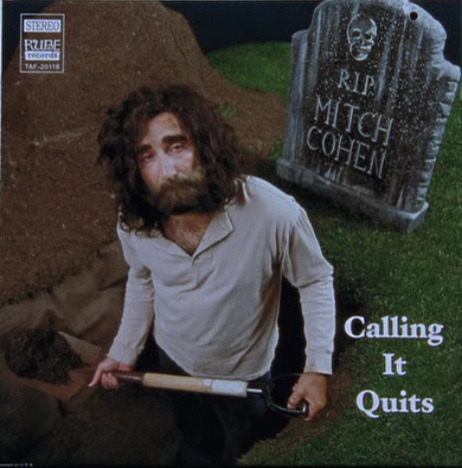
Finally for today it's Britain's premier prog-folk mystic miserabilist Bill Fay and his eponymous debut album from 1977.  Overblown, astonishingly pretentious, abjectly silly and utterly brilliant, the Bill Fay album is awash with skipping strings, sawing cellos, rambling piano and delicately arpeggiated guitars coupled with lyrics of such mystifying meaninglessness as to make you genuinely question if you're missing something.  It's a masterpiece of self-indulgence, played out as if Fay's life depended on it.  Of course nobody bought it at the time and that commercial failure seems to have led directly to a collapse of Fay's confidence (in humanity if nothing else it seems) and led to second album 'Time of the Last Persection', the front cover of which surely was the inspiration for Mitch Cohen's Calling It Quits in the stupendous A Mighty Wind....


Friday, 28 September 2012

Brief pause

Hello everybody / anybody - Things are a bit hectic at work so there's a necessary hiatus on listening to Fanny, Jay Farrar and Father Abraham's 'Smurf Song'.  Back in action next week hopefully, but I definitely haven't stopped this nonsense for good.  Thanks every(any)body!

Tuesday, 25 September 2012

LaRM day 146 (The Fall)

Only one thing today and that's the 7 hours of the Fall's Complete Peel Sessions 1978-2004 box-set (released in 2005).  What a lot of stuff there is here, 6 CDs of wildly varying quality, but some of it is absolutely sterling.  It's fascinating to be able to briskly chart the development of the Fall's style, from the avant-poet's ramshackle backing act to a full-blown art rock/pop outfit and back again.  The first CD covers 1978-1981 and has some great versions of Live at the Witch Trials material, with blistering versions of 'No Xmas for John Quays' and a truly vitriolic reading of 'New Face in Hell'.  It's all pretty abstract and tottering stuff, as if it's constructed of flimsy sticks and Smith is at his most youthfully nasty.  CD 2 is 1981-1983 and shows some signs of a slightly more clear design in song construction, particularly by the last session which heralded the arrival of Brix Smith and her pop melodic sensibilities.  Earlier on the disc though Marc Riley's often overlooked guitar work is at its best on 'Look, Know' and an uncharacteristically lovely version of 'Winter'.  The third disc covers the sessions the band did when they were truly at their creative and musical peak, from 1985-1987 and there are versions of songs from This Nation's Saving Grace and The Frenz Experiment which occasionally surpass the studio versions.  There are superb takes of 'Gut of the Quantifier', 'Cruiser's Creek', 'The Man Whose Head Expanded', 'Athlete Cured' and a supremely vicious 'Australians in Europe'.  In fact the levity and humour with which Mark E Smith had started to introduce into his bilious outbursts really elevate these songs, even more so in the session takes than the studio album versions.  CD 4 (1988-1992) is still pretty top quality stuff, but it's by this point that a sense of pop melody had really taken hold and there's a grounding of the keyboards and electronica ideas that had started to shape the Fall's sound.  There's still a lot of good material here, particularly 'The War Against Intelligence' and 'The Mixer' but it's not as immediate or creatively inspired as the previous couple of year's worth of stuff.  The big pop and the complete takeover of the keyboards is the main thrust of the fifth disc, covering 1993-1996.  It's a mixed-bag by this point with some spirited pop music (mainly thanks to the brief return of Brix) and some hilariously knockabout covers ('Hark the Herald Angels Sing' and 'Jingle Bell Rock', reduced to rubble), a great 'Spinetrak' and the ever enjoyable baiting of 'Hey! Student', but there's a lot of fairly nondescript stuff too.  Interestingly disc 6 (1998-2004) still has the keyboards, but has them playing the role of jittery noise, just like the other instruments, and it means that the Fall sound strangely similar to band they were some twenty years before - it all sounds on the point of collapse again.  The songs aren't really up to much by this point but it's fascinating to hear the whole thing come full circle.  All in all the whole box-set is a superb demonstration of the endless invention of a man who does the same thing over and over again.  It's inexplicable, but it's brilliant.