Thursday, 22 March 2012

LaRM day 47 (Blumfeld-Boards of Canada)

Today starts with fine German indie rock outfit Blumfeld and their second album L'Etat et Moi (1995). Blumfeld were a sadly overlooked band by the indie scene, primarily I suspect because they wouldn't write any lyrics in English. They were great and this album is particularly good, being a kind of Pavement by way of the Gang of Four arrangement. Some of the songs are fantastic and they had a killer way with a hook. They didn't make another album as stylistically successful but they were always a decent band and L'Etat et Moi is really, really good.

Now we have what promises to be a bumpy ride, it's a whole bunch of Blur albums. Luckily I gave away my copy of Leisure years ago so we start with Modern Life is Rubbish (1993). I've always had a soft spot for Modern Life is Rubbish, probably partly because the music press were so keen to give it a kicking at the time. The best parts of it work really well, and those parts are the ones which give themselves up to pop songwriting rather than slavishly aping other people's work. 'Star Shaped', 'Blue Jeans' and 'Chemical World' are great tunes which suggest that the band might be able to move past their influences and create their own style. On the other hand, the tragic copyism of Damon Albarn's still lingering Barrett fixation is all too evident ('Miss America' is a truly pathetic attempt to pay homage) and the Elvis Costello by numbers of 'Sunday Sunday' is a shame. When not worshipping at rock's various altars though, it's a solid album with a handful of really great tunes. The "oi-oi"-ness of it all can get a bit wearing, but if you can ignore the barrow-boy delivery that Albarn had to work so hard to get over, it's a really enjoyable album.

Speaking of ripping people off though, the guitar riff to Tracy Jacks from Parklife (1994) is IDENTICAL to a guitar riff from an XTC song. See if you know which one. Stand back in awe at Coxon and Albarn's sheer audacity eh? Still if you're going to steal, steal from the best. Parklife is a better album than it should be in many ways though. It's got a lot of ideas (plenty of them other people's but never mind) and a lot of vigour. The dedication to Englishness as a musical concept is stronger than ever and the Kinksian world still informs a lot of what goes on here (songs called 'Bank Holiday'? Still being pretty obvious about it all). But songs like 'End of a Century', 'To the End' and 'This is a Low' are really good and there's plenty of other songs that still seem unexpected and interesting amongst the self-conscious playacting. Things go weirdly awry with The Great Escape (1995). The production is strangely glossy and it makes the songs sound even more as if they aren't much more than parody (I mean, 'Country House'? Really, must try harder). I think there are some fabulous songs on The Great Escape (I really love 'The Universal' despite its British Gas ad ruination) but the whole feel of the record does the good songs no favours and a lot of the album is little more than frippery at best and redundant at worst. I wonder if the concept of a kind of late Tory, rising New Labour, England as a plastic, shiny, venal and vapid thing was too successful, making the album sound like a celebration of the same rather than a critique.

Too much commercial success (ironically) coupled with some critical savaging seemed to make the band retreat and regroup. 1997's Blur album was titled as something of a statement of intent, suggesting a restart. The sound is much more low-key, much more in tune with the individual band members personal musical tastes (I think this is where Coxon really started to assert himself as a songwriter). As a result it's a much warmer and seemingly much more sincere record. All Blur albums are too long and need shaving down a bit and this one is no exception but it has some really great songs on it and it really does feel like the ironic distance has been abandoned in favour of something less guarded. Better yet is 13 (1999) which I think cements Graham's role as Albarn's equal. His painting is on the cover, songs that are clearly his are much more evident and it's finally a Blur album that feels like, for the most part, something genuine is happening. I like all their albums really, but until 13 a lot of the time it feels like they were a band trying on different outfits and never once wearing their own clothes. 13 has some terrible longueurs ('Trimm Trabb' may only be five minutes long but it feels like an eternity) but also some wonderful songs on it ('No Distance Left to Run' for instance), but it was the last gasp as far as I'm concerned and what followed didn't interest me much.

Last for today is Scottish ambient experimentalists Boards of Canada's second album Geogaddi (2002). Everybody loves Music Has the Right to Children, and rightly so, it's a fabulous record. But Geogaddi really does leave me cold. There's virtually none of the melodicism of the previous album and it sounds to me like a lot of navel gazing electronica, which can work sometimes but can also just be stultifyingly dull. It's not that bad, but I don't really feel that there's any great purpose to it being around. To be completely cruel about it, it's simply a good example of a genre that is absolutely bloated (and already was by the time it was made) and is full of good examples. In other words this record has been made so many times I can't tell the difference between one and another. Which is a shame because Music Has the Right really is a fine record.

Loads and loads of Bongwater tomorrow which I'm very much looking forward to.

Wednesday, 21 March 2012

LaRM day 46 (Blue Aeroplanes-Blue Nile)

After the critical success of Swagger, the Blue Aeroplanes made another album in a similar big style, which was preceded by the 'Yr Own World' single (1991). It's a great rock song with a lovely chorus and a good hook, and it was a canny choice for a lead off single for another big rock album. The other 3 songs on the single are also really good, one of which is a beautiful and much more sedate acoustic piece which harks back to the more experimental, lo-fi and low-key days of the band. The album, Beatsongs (1991) is a less successful attempt at creating an arty minded huge rock album. It's very much based on the Swagger template, but this time something doesn't quite come through as clearly as on that earlier album. It's still a fine record and it has some great songs on it but it just doesn't quite cohere and it doesn't have Swagger's sense of purpose. In some small ways there are hints back to their older records (a couple of the songs have a folky violin line for instance). All of the songs are perfectly decent at worst (with the sole exception of a disastrously ill-advised and inexplicable cover of Paul Simon's 'The Boy In the Bubble') and when it's good, it's as good as the band ever got.

I think the band were a bit full of themselves at this point and there were interviews with the music mags in which they talked about their own songs with unbecoming reverence, and they thought that the songs on the singles weren't getting the attention they deserved and in 1992 the band released a second compilation of B-sides and rarities called Friendloverplane 2. The difference between the two compilation albums is startling. The second is full of straight down the line rock songs, all well produced, well recorded and well performed and it's totally lacking in the excitement, the unpredictability and most importantly the enigmatic character of the first Friendloverplane. Once again, there are some fine songs, but this time around it feels like an unnecessary release. Likewise the 'Up in a Down World' EP which has four non-LP songs, two of which are pretty good rock songs, but there's a live reading of 'Breaking In My Heart' which isn't nearly as good as the one of the first Friendloverplane, and a demo version of an earlier album track. I stopped following the band at that point, but I did pick up one of their much more recent albums, Altitude (2006) just to see what had happened over the years. It's still following the cleaner, more straightforward rock approach. But the star having fallen seems to have allowed the band to relax a bit and Altitude feels much more comfortable than Beatsongs, much less like they were pinning their hopes on it. It's not an amazing record but it's definitely decent and it's nice to hear that they never really lost it.

Next up is the Blue Nile starting with their debut A Walk Across the Rooftops (1984). This is a fabulous piece of work, atmospheric, brooding, melancholy, enigmatic, it creates a crepuscular feeling with ease usuing the simplest of instrumental settings - keyboards, synthesised drums and bass. But perhaps the most important element of all is Paul Buchanan's plaintive vocals which create a warm and nostalgic setting for his emotive lyrics, which are for the most part a hyper-romanticised depiction of everyday (or rather every evening) life. All the Blue Nile albums feel like they were designed specifically to be listened to on rainy days, but none more so than A Walk Across the Rooftops. I think it's a gorgeous record and a genuinely moving one too. The first sign of the band's work rate was evidenced by the five year gap before second album Hats (1989) which shows absolutely no development of the sound or the style whatsoever, which for once is a great thing. Hats is another highly emotive record, full of open spaces and twilight moods. Every song is a beautifully romantic vignette. While stylistically quite different, I've always felt there's a strong affinity between the Blue Nile and the American Music Club, both telling small stories of individual lives and making them somehow grand scale. A Walk Across the Rooftops and Hats are easily two of the best albums of the 1980's for me, and bearing in mind it was an awesome decade for independent record releasing that's saying something. (I also have the 'Downtown Lights' 7" which has a lovely B-side called 'The Wires Are Down'.)

Another gap, this time of seven years before another album, Peace At Last (1996) was released. Interestingly the pristine production this time makes the album actually sound over-produced (the horrible sounding 'Holy Love') and the introduction of more actual rather than synthesised instrumentation detracts from the mood of the songs, making them less open. The best songs on Peace At Last then are the ones which are the most sedate ('Family Life' is really lovely), focussing on piano and atmospherics, as the earlier albums did. The songs for the most part are as strong as ever and it's another really good album, but it feels as if Buchanan has had to work hard to achieve that strange melancholy romanticism that seemed so easy before. Likewise the last album, High (2004), which had an eight year gestation period. High suffers from the same problems as Peace At Last but even more so. Once again it's certainly a long way from being a bad record, but it's one that doesn't seem particularly remarkable. Four albums in 28 years is a pretty impressive workrate. The next one I suppose should be with us around 2014.

Tuesday, 20 March 2012

LaRM day 45 (Blondie-Blue Aeroplanes)

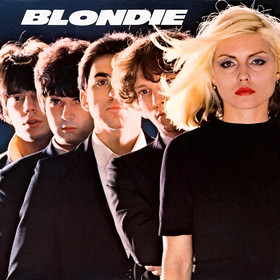
Blondie's eponymous debut album (1976) is a decent example of how updating an older musical style can bring mixed rewards. When it works the album is superb, and I should imagine it was a fairly unexpected sound at the time, especially as it was straight up pop music from a punk milieu. 'X Offender', 'In the Flesh' and 'Rip Her to Shreds' are all great songs, but it's no surprise that they are the most well-known from the album because it suffers from too low a strike rate. Songs like 'In the Sun' and 'A Shark in Jets Clothing' are, despite being whip-smart, just not engaging enough and they disappear from the memory the second they're over. Second album Plastic Letters (1977) suffers from precisely the same problem. Once again the best songs are the ones that everybody knows (but I've always had a soft spot for 'Contact in Red Square' and 'Detroit 442' as well). There are too many non-songs (and some duds - opener 'Fan Mail' is terrible) and the album has a somewhat careless air about it.

The enlisting of glam rock champs Chinn & Chapman led to a complete reinvigoration of the band and the release in 1978 of Parallel Lines completely changed the band's fortunes critically and commercially and they became absolutely huge. There isn't a dud on Parallel Lines, it's one of the most perfectly constructed pop records ever made, lyrically it's silly, dirty, flirty and musically it's pristine, clean pop with a slightly nasty edge. It's all great stuff but it would still have failed if the songs weren't so great. It's got a couple of great one-twos ('Hanging on the Telephone' and 'One Way or Another'; '11:59' and 'Will Anything Happen') and the rest of the songs are brill in their own right anyway. Even the spacey experiment 'Fade Away and Radiate', which should be terrible, is ace. The next couple of albums were more pure pop and to my mind throwaway which is why I've made do with the Best of Blondie comp from 1981 to cover those albums. The best later tunes are 'Union City Blue' and 'Call Me'. I know it was very smart of Debbie Harry to have cottoned on to rap as the future of music very early, but we have to be honest the song 'Rapture' is truly terrible, no?

Now we've got another lengthy session in the company of one band. I've always really loved the Blue Aeroplanes, partly because of and partly despite the fact that they are desperately pretentious. Perhaps precious is a better word. It takes a peculiar kind of arrogance to assume that your poetry is good enough for other people to listen to and to set it all to rock music (and to wear the terrible jackets and shades that Gerard Langley always sports). But then this is a band who had no concern about trying all kinds of musical stuff in the name of art. First album Bop Art (1984) is too clearly in awe of post-punk and Soft Machine so despite having a couple of decent tunes, for the most part it's experimental musical tinkering about in a not particularly interesting way. The follow-up Tolerance (1986) is much better and can be seen as being in a sense the first true Blue Aeroplanes album (Bop Art was made up mostly of demos and recordings by their previous incarnation as the Art Objects). Tolerance still has the clear post-punk influence in its rhythmic drums and elastic bass ('Rare Flower' is pure Gang of Four), but there is a clear sign that a kind of folk tradition is influencing the music as well and there are mandolins and banjos augmenting the standard rock instrumentation. In fact this is one of the most remarkable things about the Blue Aeroplanes - no instrument was out of bounds and all were utilised in a totally logical way. Tolerance also has Langley's first successful use of someone else's poetry cast into music (Auden's 'Journal of an Airman'). Tolerance isn't the best record in the world but it does show that from very early on, despite being a steadfastly arty art-rock band, the Blue Aeroplanes had no confidence issues. It also has hints ('Warhol's Fifteen' for instance) of the soaring guitar techniques they would use a lot later.

Better yet is 1987's Spitting Out Miracles. It's a disjointed album because there are a lot of different styles being tried out. They're all relatively subdued pieces though and any change of pace or style doesn't jar. This time out we've got mandolins, banjos, balalaikas, violins, dulcimers. Nothing sounds out of place though and I think this is partly because of Langley's spoken word delivery which helps make anything sound like an appropriate backing. There are even a couple of nods to pop structure ('Bury Your Love Like Treasure' which has a special place in my heart thanks to its loving evisceration by the mighty Allegros). The best songs though are the most sedate: 'Season Ticket to a Bad Place' is a lovely piece of melancholia which is vaguely reminiscent of Richard Thompson's guitar work, and the Louis Macneice poem set to music 'Do the Dead Know What Time It Is?'. It's a great, slyly bold record whose experimentation passes by almost unnoticed, so successful is it, and the album demonstrates just how adept the Blue Aeroplanes were at creating odd, shifty records without them sounding like anything unusual is going on at all. Fire Records followed Spitting Out Miracles with the album that gained the band their most attention up to that point, which was ironically a compilation of rare singles tracks between 1984 - 1988 called Friendloverplane. This is the first Blue Aeroplanes record I heard and I remember buying it on a whim in Plastic Surgery Records in Maidstone, taking it home and just loving it. It's the definition of eclectic, there's all kinds of stuff going on here, from straight rock songs to noise experiments and every shade in between. Lots of it doesn't work but that's the glory of the whole album, the stuff that doesn't work is fascinating anyway and the stuff that does is just great. I remember not knowing what to make of it at the time, but just thinking it was brilliant.

The three years following the release of Spitting Out Miracles saw line-up changes and the band were clearly developing a new sound during that time, as evidenced on the 'Jacket Hangs' single. It's a big song, it's a very guitars song, it's a serious (in every sense of the word) rock song. Gerard Langley's spoken word poetry schtick remains intact but his presence is at the very forefront of the massive sound. Signing to a major label obviously meant lots more money for recording and the production values (this is Gil Norton's work after all) are extremely high. The other three songs on the single are similarly big and urgent (although the cover of the Kinks' 'Big Sky' isn't strictly necessary). The single was the announcement of the next album, Swagger (1990), whose name is no misnomer. This is a seriously big and seriously intended rock album of the first order. Gone entirely are the lo-fi acoustic poetry slams cum avant-folk tunes, gone is the eclectic instrumentation. In their place are massive songs and huge slabs of rock. Unsurprisingly this is stadium rock of a kind that could never work in a stadium, it's too clever, too arch and too uncompromising (ie, monolithic album closer 'Cat Scan Hist'ry'). It's a really fantastic album and although both the production and Langley's style date it slightly, it's still mightily impressive. I think it was supposed to be a statement of intent that was never really capitalised on because despite efforts to replicate it, they never made an album as good again. By the way REM fans, don't forget that Stipe is doing his typically peculiar backing vocals on it, having been impressed by the earlier albums before REM became huge themselves. The Swagger chapter ends with the Loved EP (1990), which has four non-LP songs, the lead of which, '(You Are) Loved' is as good as anything on the album, but you can hear that it wouldn't have fit properly. There's a decent cover of Richard Thompson's 'You're Going to Need Somebody', a pointless cover of 'Sweet Jane' and an acoustic version of one of the album tunes.

Tomorrow finishes up the Blue Aeroplanes and moves on to the Blue Nile. Let's get melancholy.

Monday, 19 March 2012

LaRM day 44 (Bjork-Bloc Party)

The final bit of Bjork is last year's Biophilia, which is another fairly challenging but brilliant piece of work, chopping up and mixing some beautiful contemplative songs with industrial noise and post-grime breakbeats. Many of the songs kind of sabotage themselves from within, brutal jugged juddering rhythms ripping through the tunes, turning them from stunning pieces of music into vicious shards of noise. The songs on which this technique isn't employed are just beautiful throughout but on the whole it's another experimental album full of ideas and superb execution. The albums theme of the relationship between mankind, technology and the natural world is one which requires careful thought to avoid seeming cheap or juvenile. Cheap and juvenile have never had any relationship with Bjork's work though, and unsurprisingly Biophilia is a remarkably cerebral take on a concept fraught with moral complication. As is so often the way, it's not the easiest album in the world to love, but you can't help but deeply admire it.

Cilla Black and Dusty Springfield made a single in 1993 called 'Heart and Soul' about how great it was to be a successful pop singer in the heady days of the 1960's. I was given this by my great friends Karen and Alison-Jayne (man I wish I knew where they are now) when I was at college. It's not a joke worth going into now, but it was a good one. The record, of course, is shit.

When not giving it melancholy in the best slowcore band ever, Low, the decidedly peculiar Alan Sparhawk also has a couple of other bands, one of which is his grungy blues-rock outfit the Black-Eyed Snakes. Their debut, It's the Black-Eyed Snakes (2002) takes the template that the Jon Spencer Blues Explosion created and makes it feel more authentic yet. The record sounds like it was recorded live at a super-sleazy blues dive in which the kind of white trash that populate David Lynch films are hanging out. It's a great record, dirty, scuzzy and fuzzed up with some fantastically propulsive tunes.

Next up are a few records by Juliana Hatfield's Blake Babies. The first mini-LP, Nicely Nicely (1987) is a charming little bit of indie rock, with a delicate bit of a pop sensibility. Hatfield's jazzy, choppy chords and uncontrolled mid-register voice make for sprightly bits of invective fuelled rock music. Hatfield was never given any props for her songs (people were too interested in her ill-advised comments about feminism and her relationship with Evan Dando) and it's a shame I think because she wrote some great tunes. Nicely Nicely isn't the best thing the Blake Babies did by a long shot but it's a charming introduction. The first proper album, Earwig (1989) is more of the same, but it's better recorded and structed and the songs are more confidently arranged and performed. The angry lyrics are still hidden by the jaunty, choppy tunes and Hatfield's slightly "girly" delivery, but it's a lovely album, and one that always brings back great memories of the summer of 1990.

The best record that the band made came next. Sunburn (1990) is the point at which the heartfelt and often frustrated concerns of the lyrics are crystalised and the tunes are taken in hand properly and given a serious considerate structure. These are pop songs that have been crafted rather than enthusiastically bashed out and although the whole thing lacks the rush of energy that Nicely Nicely and Earwig have, it's a really good pop/rock album and Hatfield seems like she could be a really great songwriter at this time (opener 'I'm Not Your Mother' is ace). It wasn't to be for the band though, and disagreements about the direction the band were heading between guitarist John Strohm and Hatfield led to the band's split in 1992. A compilation album, Innocence and Experience (1993) came after containing songs from all the albums, but focussing mainly on Sunburn. There are a few previously unreleased gems (Hatfield's widely reported eating disorder is dissected in the guilelessly open 'Boiled Potato'), but it's not exactly essential stuff.

For some reason that I can't quite fathom they reunited in 2000 and released God Bless the Blake Babies in 2001. As an album it's fine, quite a mature version of the earlier records, still quite lively, still a bit angsty, the ingredients really all still the same. But it's got very little energy and it even sounds like it was probably quite a chore for the band to make and while it has a handful of great songs, it also has a fair share of duds, and the band split again. Hatfield has always been something of an indie fanboy crush for me throughout the years, so there will be plenty more of her records to come later...

Finally for today it's a record that I didn't like much, it's Bloc Party's Silent Alarm (2005). I think maybe I particularly didn't take to it because everybody was saying how great it was. Nothing puts me on guard like uniform praise - it just means something must be wrong. It sounds better to me now that the fuss is all in the distant past but it still isn't a particularly great album. It's OK, there are a few nicely 4AD rip-off sounding angstathons but for the most part it's pretty forgettable filler material. It's telling that every song that has anything really memorable about it was released as a single. Some of those songs are really strong in a kind of generically indie disco friendly kind of way, but there's really nothing here to have got everybody so wound up...

Tomorrow has lots of Blondie in store. Some terrible, most good, some great.

Friday, 16 March 2012

LaRM day 43 (Bjork)

Next up are the four live albums that were released individually and as a box-set called Livebox (all 2003). The recordings cover the whole of her career up to that point and were meant to loosely recreate the running orders of the studio albums. The first, Debut Live, is essentially all taken from the MTV Unplugged performance in 1994, and it’s absolutely fabulous. It truly demonstrates just how creatively she and her collaborators think, reworking keyboard parts on harps and other stringed instruments totally successfully. Her voice is fine and the whole show is really very special. The Post Live album is slightly less successful as it focuses much more on the electronic components of the compositions and brings out the relative blandness of the songs as well as being often more faithful to the recorded versions of the songs. An accordion and tabla combo don’t help things, but when the show does work it works brilliantly. A couple of Post songs are missing and are replaced with reworkings of a few Debut songs, but it also includes a stunning live version of the Japan only released ‘I Go Humble’, and most of the recordings are from the Post tour in 1997. Homogenic Live is more mixed up, missing a few Homogenic songs and replacing them with tracks from singles and songs from both Debut (weirdly Anchor Song gets the most outings over the course of the four albums) and Post. The songs are taken from a number of different live songs throughout Europe and maybe that explains the strangely disjointed feel of the album. It’s a relatively muted, sedate set and while at times it passes by unnoticed there are some truly fabulous pieces. The version of ‘5 Years’ really brings out what a beautiful song it is, there’s a blistering outing of ‘Bachelorette’ and ‘Joga’ is just wonderful, a rare example of a recorded live version of a song being desperately moving. The violin being to the fore for many songs is a real boon and the relationship between the electronic and the live instrumentation is absolutely perfect throughout. The Vespertine Live disc cannot hope to match up to the original album, but it is still quit stunning, delicate and restrained, with beautiful instrumentation and choral backing vocals. Again, a couple of the songs from Vespertine aren’t included but there are a number of singles tracks and two from Selmasongs. The whole thing is a gossamer version of a live performance and you can imagined how graceful the whole experience must have been for those lucky enough to see the shows.


It’s possibly telling that between the release of Vespertine and her next studio album Medulla (2004) Bjork’s relationship with artist Matthew Barney was cemented by the birth of their daughter. The sound of Medulla is more immediately warm and the central conceit of the only sounds on the record being created by the human voice may be related to the idea of the voice being so powerful an influence on a developing foetus. Total conjecture, but there is definitely something changed in the way she approaches sound, recording and song structure and whether it’s to do with being challenged to up the ante artistically by her husband or spiritually by her daughter is unimportant. The record is another step towards the pure intellectualisation of popular music and although it has a couple of immediately accessible songs (‘Who Is It’ is a lovely, relatively straightforward song, and ‘Triumph of a Heart’ although that’s maybe the low point of the album) for the most part it’s a fascinating and mostly successful fusion of sound as art and song as communication. If you’re prepared to make the effort and meet it halfway it’s a fantastic and very rewarding record.

A further step into abstraction is evident on the soundtrack to her husband’s multi-media Drawing Restraint 9 project the following year. There are scarcely any songs here, mostly atmospherics, and challenging ones at that. Accompanying what is apparently ostensibly the story of a stricken whaling ship, the tunes on Drawing Restraint 9 are a mixture of styles and forms, from beautiful harp pieces to electronic clankings, with some Medulla style vocal pieces composed of gasps and moans and wails. It’s very hard to really get a handle on the album as a whole and many of the pieces sound like their sense would become clearer when coupled with the artwork (although from what little I’ve seen of Barney’s work that may be optimistic). It’s bold stuff (the ten minute ‘Holographic Entrypoint’ is an old Japanese man making noises and knocking a block of wood) but it’s hardly the place to start if unfamiliar with Bjork’s work. And neither is 2007’s Volta, which is less deliberately and purposefully abstract but is still a tough work to really get to grips with. It received fairly mixed reviews on release and I tried to love it but failed. Listening to it again now I have no idea what it was I was missing. It’s a fine record, full of stunning touches and a real sense of purpose. It’s possibly too dense, too much fussy noise in the background, but the songs are really special. It is something of a step back to the kind of Homogenic template, but there is more going on here than at first appears and it turns out it’s a fantastic record, not the dud I had thought at all. Nonetheless it does have that indefinably complicated air about it which makes it hard to really get a handle on.

Last year’s Biophilia tomorrow morning and we’re all Bjorked out.

Thursday, 15 March 2012

LaRM day 42 (Bis-Bjork)

I thought Bis got an unfairly rough ride back in the day. To my mind they wrote really great, catchy little pop songs and it was all done in an endearingly hapless but hyper-energetic kind of way. The real problem was that the schtick would get a bit wearing over the course of a whole album, which is way they worked so much better on their singles. The first five all have their livewire pop-punk moments, with Manda Rin’s Glasgow accent charmingly prominent throughout. The first 7”, Transmissions from the Teen-C Tip (1995) is a bit too weak on the whole but the song ‘Caustic Sofa’ best shows off just how good they actually were as songwriters from the very start, a fact often overlooked. The next two singles, Disco Nation (1995) and Secret Vampire Soundtrack (1996) were the records that got the band noticed (their performance of ‘Kandy Pop’ on Top of the Pops is notorious for being the first time an “unsigned” band were on the show) but the songs are a bit too frantic and shrill. The next one, Bis vs the DIY Corps (1996) is better and two of the three songs on it are great pop songs. Finally the Atom Powered Action 7” (1996) is another bunch of high-energy keyboard/guitar power pop salvos, but you can sort of feel the enthusiasm waning a little and the release of the first full-length album would put an end to the relatively high profile they had enjoyed for a while.


The choppy, rocky Bitch Magnet’s second album, Umber (1989) is a fantastic lesson in post-hardcore/pre-emo rockmanship. Guitars that sound like they’re trying to writhe out of the players grip and time signatures that seemingly switch at will make for a gripping record of quite unusual smarts. The occasional quieter moments only serve to underscore the drama of the more intense numbers and in many ways Bitch Magnet distilled a lot of the more bombastic stuff going on in the indie-rock world at the time and stripped away the nonsense, leaving something like a harder, more considered version of Squirrelbait with the punk taken out. In any event, Umber is a fine album.

Well alright, deep breath, it’s time for another marathon. We kick off with an eponymous debut album from 1977, made when the artist in question was all of twelve years old. Now, I know Stevie Wonder was twelve when he made his first album, but to be frank while Stevie Wonder wrote some great pop songs over the years he certainly never grew up to be the artistic powerhouse that Bjork has become. Not that you would have any clue from the album Bjork. This is a bizarre piece of work, clearly conceived and designed in the calculating minds of some label managers and producers who thought a cutesy kid might sell a few records. Although it’s hardly kiddie fare, it’s a markedly odd record, sometimes seemingly trying to blend a kind of nursery rhyme type of melodic structure to discofied mock-Arabian music and at other times sounding like a theme tune to some weird European children’s cartoon. It’s basically rubbish and of course Bjork’s voice is not the soaring, swooping thing we know it to be today, it’s the voice of a twelve year old girl. Still, the whole thing is a fascinating curio. As is the next record to be released under her own name (actually under the name Bjork Gudmonsdottir and Trio Gudmundar Ingolfsonnar, but I can’t be bothered to quibble about it so it’s coming under the Bjork section), Gling-Glo (1990). After her debut solo Bjork spent the next few years in various punk and rock bands (including the Sugarcubes of course), but in the downtime following the panning that the second Sugarcubes album received, she got together with some old-fashioned jazzers and recorded Gling-Glo in two days. It’s a lovely and surprisingly successful fusion of traditional Icelandic songs and trad tunes all performed in a straight and unchallenging classical jazz fashion with Bjork’s voice in full throat. The whole record sounds like everyone involved was having a great time, and it becomes clear why she decided to record ‘It’s Oh So Quiet’ later in her career, as this whole album is like a more relaxed, sunny, traditionally jazzy and cheerful (and less annoying) version of that recording. With the sole exception of that one song, there is nothing else like it anywhere in Bjork’s other work and although it’s an unexpected anomaly, it’s a really lovely one.

After one more moderately successful Sugarcubes album the band called it quits and Bjork started work on her “real debut” solo album. Debut (1993) is a record that personally I never quite understood. I certainly never saw why everyone had gone quite so nuts about it, and I have never been much of a fan of the kind of club beats that are utilised throughout it. I think that ‘Violently Happy’ and ‘Big Time Sensuality’ are easily the weakest points on the whole record and there are some much more interesting and better songs on it. Listening to the whole thing now it sounds so much better than it did at the time. The audacity of it all seems much clearer now and with the exception of the slightly dated house stylings, if it were released today it would still seem like a remarkable and unusual record. There’s just so much going on in it, from the volume drop out and old-style brass samples in ‘There’s More To Life Than This’ to the . The songs that got the least notice at the time seem to have become the real stunners: ‘Crying’ is a fantastic pop song, better than any of the singles, ‘Life Someone in Love’ as a vocal and harp combo was incredibly daring and is absolutely beautiful and ‘One Day’ is spectacularly sensual. Follow-up Post (1995) is in my opinion the weakest of her albums (and that’s a back-handed compliment because I think her worst is better than most people’s best). There aren’t enough songs or ideas to really get you pulled in on Post, and although it has two of the best songs she ever wrote (‘Hyperballad’ and ‘Isobel’) the rest isn’t quite strong enough. ‘The Modern Things’ and ‘Enjoy’ drift by without making their presence felt and the completely inappropriate inclusion of ‘It’s Oh So Quiet’ breaks what flow the album has drastically. It all starts so superbly as well with ‘Army of Me’s driving, crunching rhythm, followed by the absolutely breathtaking ‘Hyperballad’ (whose lyrics I think are some of the most moving ever written, and the whole song demonstrates just how far above “pop” music she really works even when she’s writing “pop” songs). The rest of the album can’t hope to live up though, and it works best when it sounds like even the album itself is in agreement and can relax (‘Possibly Maybe’ sounds like a sigh of relief).

1997’s Homogenic was a considerable step up. Although ostensibly similar in tone and structure, the songs are much stronger on Homogenic than on Post and the album feels much more confident and sure of its own artistry. Where Post often felt like there was a hesitation in being experimental, Homogenic throws that caution entirely to the wind (listen to the jabbing noises and distorted vocal howls at the end of ‘Pluto’ for instance), and the programming, sampling and live instrumentation blend absolutely seamlessly this time around. The songs themselves are fabulous, moving from the stridently aggressive to stunningly graceful and in ‘Bachelorette’ and ‘All Neon Like’, there are two more of her absolute highlights. Where Post felt like a succession of potential dead-ends, Homogenic is full of cues as to where she could and would take it all next. Taking a break from recording to star in Lars von Trier’s audience baiting film Dancer in the Dark, it wasn’t until filming was nearly over that he asked her to record some songs for the film and the result was the mini-LP Selmasongs (2000). This is an interesting but slightly difficult record in that it’s not easy to love despite not containing anything particularly challenging. The songs seem to be designed to match each other rhythmically rather than melodically (to match the rhythms of the factory and the railway line that Bjork’s character in the film increasingly notices as she goes blind) and although they are propulsive, it’s hard to catch on to the tune in the songs. They sweep and swoon and skitter about, and they are incredibly intricately pieced together, but somehow something just doesn’t quite work. In some ways it’s the first sign that her work would occasionally be too clever to really fall in love with.

And so finally for today on to one of the best records ever made, certainly one of the purest, and one of the most perfect. Everything about it is glorious, sensuous, from the cover onwards. For a record composed and recorded almost entirely via a laptop and made up of spacious and glacial atmospheres it's a miracle that it's so warm. It's entirely down to Bjork herself, her voice, her style of songwriting, this is all inclusive, inviting, yet utterly personal (clearly to her, but also to the listener). It is simply magical and every time I listen to it I'm thrilled and astonished by it all over again, and as someone who finds the world a difficult and unpleasant place to be, it makes me feel absolutely wonderful about being alive. If you can't quite tell, I really like it. No, I can't even feel comfortable joking about it, it's just a truly wonderful thing to have happened.

More Bjork tomorrow.