Tuesday, 22 May 2012

LaRM day 81 (Clash-Cocteau Twins)

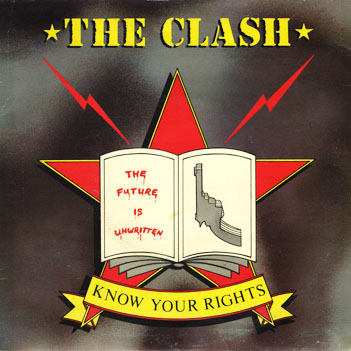
More of the Clash, starting with the 'Know Your Rights' 7" from Combat Rock (1982). Now I liked Combat Rock a lot when I was younger, and I haven't heard it in years and years, but judging from 'Know Your Rights' (and the ubiquitous 'Rock the Casbah') it's rubbish. Overblown, self-important and essentially absurd, 'Know Your Rights' is like watching someone lonely in action at Speakers Corner from a distance, and the B-side, 'First Night Back in London' is a dismal dub experiment that, contrary to most people's opinion, suggests that the Clash didn't understand dub or reggae at all. Then it's the appallingly bad final Clash album, Cut the Crap (1984) which is truly miserable and serves as a really rather tragic coda to a hugely important (if bloatedly culturally overstated) career. In many ways Cut the Crap is a brilliant summation of precisely what was wrong with UK punk - nobody actually meant it. Cut the Crap is composed of a stream of bewildering samples and drum machines with some hideously compressed guitar thrown in, and it often sounds like Sigue Sigue Sputnik BUT WORSE!! It's absolutely monstrous and I think reveals a lot about what had happened in the Clash's musical expression throughout the previous eight years that people are loathe to admit (a huge number of great songs, many, many more dreadful). I suppose they had got away with it before Cut the Crap because their manager, the utterly disgusting Bernie Rhodes, hadn't had anything to do with producing the records before. Thinking about it, the fact that someone as repellent as Bernie Rhodes was their manager in the first place kind of proves that nobody meant it. Punk in the UK really was a sad, sordid little pub-rock business and I thank the lord that they did it properly in the US. Btw, I think the Manics' early career was cribbed entirely from Cut the Crap - imagine that.

More great Australian indie rock, this time from Cloud Control and their debut album Bliss Release (2010). This is a really special album, and it's no surprise that it won a bunch of awards in its homeland. It's a great summation of the disparate elements that Australian indie rock has used over the years, and it makes a big deal of the kind of mysticism that Ed Kuepper has occasionally exploited along the way. It's a rolling piece of mildly psychedelic rock, chock full of great tunes which are always serious but never po-faced, and where other bands might sound forced, or even trite, Cloud Control always sound like the songs they're playing matter. It's really great stuff. They were absolutely charming when I saw them at last year's Field Day too.

Eno's collaboration with Germany's Cluster may have left the Germans feeling cheesed off (Eno turned up for a few days, recorded some stuff, then cleared off taking all the tapes with him and never bothered getting in touch with them again apparently) but what they came up with is pretty magical. It's the kind of languid, pre-Thursday Afternoon type of gear that Eno would make his stock in trade but there's something gently sinister going on in Cluster & Eno (1977) which makes for a nice sense of unease in listening. In some ways I think Eno may well have learned more from Cluster than vice versa as their penchant for repetitive loops was something that he would explore in much more depth after this project. In any event it's ten gentle melodies which unfurl themselves slowly and gracefully making for a truly beautiful record.

Jarvis Cocker's first solo album, Jarvis (2006) is a really great record, sorely underrated. I always felt that the less showing off he did the better his songs were and to my mind This Is Hardcore was Pulp's best album by miles. There's much less of the arch pretence about the Jarvis album and if anything it sounds rather like he had become so fed up at the state of things personally, professionally and, more importantly, politically that he had no choice but to "mature" as a songwriter. That's not saying much bearing in mind he has always been one of Britain's sharpest pop songwriters, but there's definitely a sense of purpose about Jarvis that was lacking in most Pulp records and I suspect it's the desire to say something that actually matters rather than something that rings true. The songs on the whole are very good but there's a determinedly mid-tempo pace to the album. It's all very much in the style of late Pulp, but I think filtered through a kind of 70's singer/songwriter lens. In any case, it's a very fine album indeed, but the considered, unaggressive sound seems to have meant that it's been consigned to pop history already.

And so now on to a very lengthy Cocteau Twins marathon, starting with debut album Garlands (1982). Garlands is a difficult album to love, particularly if you came to the Cocteau Twins slightly later, as both 4AD and Garlands were tied very much to an arthouse version of goth at the time. In fact 4AD were pretty exclusively an avant-goth label when they started, and although there are some clear signs in Garlands of the shimmering other-wordly beauties to come, it definitely fits the same general style as other 4AD acts like Xmal Deutschland and the early Wolfgang Press in that it's a dark record, bass-heavy, oppressive and claustrophobic. This is in large part due to original bass player Will Heggie's melodic but brooding, creepy and heavily foregrounded lines but Robin Guthrie's effects pedal wizardry was in its infancy too so there's not much variation in tone throughout the album. It's decent but it doesn't really demonstrate quite what remarkable imagination and aesthetic commitment was to come.

A little leap forward comes with the first of their many non-LP Ep's, Lullabies (1982) which although still having the same basic set-up (drum machine, metallic guitar, distracted wordless vocals from Liz Fraser) doesn't have the same obvious goth menace to it. The lead track, 'Feathers-Oar-Blades' is probably as vigorous as the band ever got (it's almost got a kind of pop song melody to it) and the other two are nearly as engaging. Part of the change relates to Heggie's bass being buried a little deeper in the mix and therefore not dominating to the same degree as on Garlands. On the whole Lullabies still has that goth charge but it's not so obvious and there are the seeds of a unique sensibility. At the same time as the records were developing, so too were 4AD and their in-house graphic design team 23 Envelope, whose work would define the records almost as much as the sound, and the cover of Lullabies is the first indication of quite how symbiotic the relationship would become, particularly for the Cocteau Twins. The next release was the Peppermint Pig EP (1983), which the band have often described as their worst record. I can sort of see why they were disappointed with it but not why they actively hated it so much. It's a pretty tuneless affair and all three songs are gone pretty briskly. There's none of the excitement of 'Feathers-Oar-Blades' and it's all a bit scrappy. Great sleeve though. Peppermint Pig was Heggie's last appearance and I suspect that the record sounds the way it does because things were getting fractious within the band.

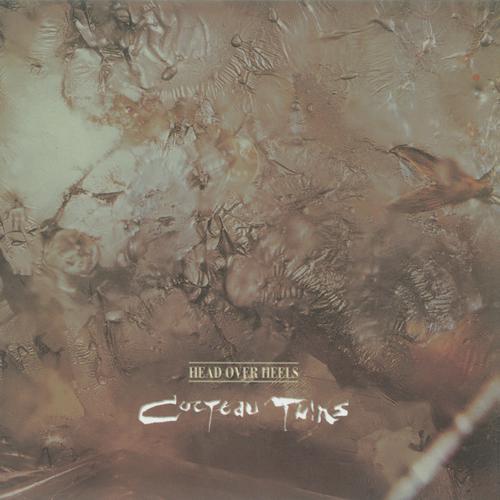
There's an immediate change in sound on second album Head Over Heels (1983) with the introduction of new bassist Simon Raymonde, whose smooth, pulsating, propulsive basslines are still foregrounded, as Heggie's were but rather than dominating the songs, they let them expand and develop in a much more airy way and the result is that the sound is much less dense, much less frenetic. It also allows both Guthrie's guitar work and Fraser's increasingly remarkable vocals room to develop as well. The songs on Head Over Heels are strictly melodic which is in itself a development. One of their earliest works of true brilliance, 'Sugar Hiccup' appears on Head Over Heels, and that song pointed very clearly the direction in which the band should and would go. Although it's still a relatively tinny album, and that brooding goth element still lingers in the background, it's a wonderful record. 'Sugar Hiccup' was chosen to lead the next EP, Sunburst and Snowblind (1983) but the other three songs on it are almost as fine. 'Hitherto' and particularly 'From the Flagstones' are as good as, if not better, than everything on the album. In many ways Head Over Heels and Sunburst and Snowblind were the turning point for the band, the first records on which their trademark glacial grace really appeared and the last on which the goth influence appeared, and, once again, the work of 23 Envelope is pefectly matched to the sound.
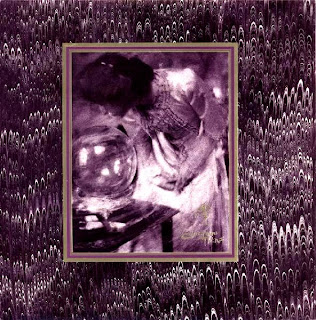
It was the following year that saw the Cocteau Twins consolidate their sound and refine it into something utterly unique, precious to some, but to me absolutely untouchably wonderful. The first really astonishing release was the Spangle Maker EP (1984). The three songs on this EP are each truly wonderful, and the real key to the change was that the whole band had discovered that the music they were making didn't need to only be an intellectual exercise, it could be an emotional one as well, as this is avant-garde pop music acting as emotional catharsis, it's simply beautiful stuff. The absolute crowning glory of their art was 1984's Treasure, an album so full of beauty, grace, charm, emotional clarity and artistic poise that it baffles me every time I listen to it. The breadth of experimentation in Guthrie's guitar work (thanks to a multitude of effects pedals, admittedly), the confidence and sheer beauty of Fraser's voice (which by this point had become as remarkable an instrument as a voice can be), and the graceful drive of Raymonde's discreet bass make for a record that's remarkably varied stylistically while never veering for a moment from its central sound and that shows an astonishing willingness to experiment in a constrained form. It's just a fabulous record both in terms of brilliance but also its otherwordliness, it sometimes sounds like something that happened rather than that people made. Too much to link to the whole album? I don't think so.
Loads more ethereal whimsicality tomorrow.

Monday, 21 May 2012

LaRM day 80 (Clap Your Hands, Say Yeah-Clash)

The massive indie-blog fuss about Clap Your Hands, Say Yeah's eponymous debut album (2005) pretty much passed me by and I picked it up some time after the backlash had happened. I suppose it means that I didn't have an opportunity to get carried away by the hype and I have to say I have never understood what on earth got the indie kids so excited about it. I can only imagine it's because the indie kids are as ovine as everybody else and after the "grass roots" success of the Arcade Fire they wanted another "grass roots" success story and it just so happened that of the hundred million post Arcade Fire bands who were also desperately ripping off the Talking Heads, Clap Your Hands, Say Yeah were the one the won the lottery and got picked. Musically it's a charming album and there are some fantastic flashes of indie rock imagination but let's not pretend that when a band gets together the bass and drum players don't cast "what the hell is he doing" glances at each other when the singer starts singing in a voice that has no relation whatever to his speaking voice. The David Byrne-isms throughout the album, not only in terms of inflection but melody also, are intensely irritating and in the end the album just runs out of steam.

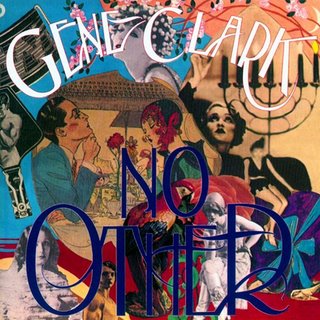
After Gene Clark left the Byrds he tried his hand at various things, sharing writing and recording duties with other people (the Gosdin Brothers, Doug Dillard) and contributed bits and pieces to the Byrds without rejoining them officially but it wasn't until he got the chance to record his first proper solo album, White Light (1971), that his remarkable and completely unique version of roots-folk and country-rock got another proper airing. It's a fantastic album, if a little maudlin, and it effectively set the template for the rich seam of introspective Americana that has burgeoned over the following forty years. The songs are wonderful, taking Gram Parsons reverent view of the history of country and completely remoulding it in the shape of modern rock - in many ways this is truly revolutionary stuff, but it's so quiet and delicate about its own achievement you almost wouldn't know. 'With Tomorrow', 'For a Spanish Guitar' and '1975' are lovely, deeply affecting tunes, that make no apology for little stumbles in performance, and as a result are incredibly personal. Anyway, it's a fine, fine album. But no match for the absurd grandstanding that was to follow with 1974's legendary No Other album. Reissues of White Light have a few bonus numbers, including a couple of real winners in 'Opening Night' and 'Winter In'.

No Other is a true landmark in American music, albeit one almost entirely ignored on its released and for many years afterwards. It's the most extraordinary fusion of country, folk, soul, R&B and gospel and although the country element is firmly to the fore the combination is absolutely seamless, there's no telling the joins, and there is nothing forced about it whatsoever. The songs are huge, both in terms of status and structure and with the massed orchestra and vocals (and a budget that went waaaaay beyond what records usually cost at the time) it's a monumental piece of work. The ostentation and the ambition (and the lunatic expense) meant that the label, Asylum, were not only furious at Clark and his cohorts, but also were disinclined to promote the record and it pretty much sank, only to resurface in the early 90's as a touchstone for Americana and indie acts. And rightly so, it's quite, quite brilliant.

Total change of mood now with Sonny Clark's awesomely smooth piece of hard bop, Cool Struttin' (1958). Four songs of around ten minutes apiece, each one a laid-back demonstration of the casual brilliance of Blue Note studio collectives. Art Farmer and Jackie McLean give superb brass backing to Clark's causal but intricate piano lines, and the whole thing is testament to the sheer intelligence of the Blue Note stable, even when there's nothing too desparately challenging about this stuff.

Moving on eighteen years we have jazz of a very different hue in Stanley Clarke's School Days (1976). Now afficianados of fusion say that this is a high water mark for the genre. I say it's hilariously corny. Bass solos, particularly jazz ones are inherently funny anyway, but when the lead instrument throughout is Clarke's fantastically technically adept slap bass playing it just gets funnier still. I'm sure it's a brilliant record in truth but all I can hear is the seventies at its absolute corniest. Clarke's time playing with Chick Corea certainly wasn't wasted as this amazing piece of ridiculous showing off to no effect amply demonstrates.

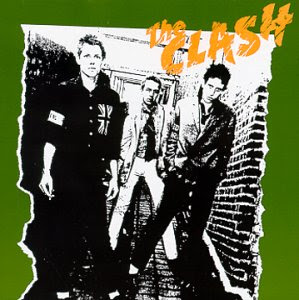
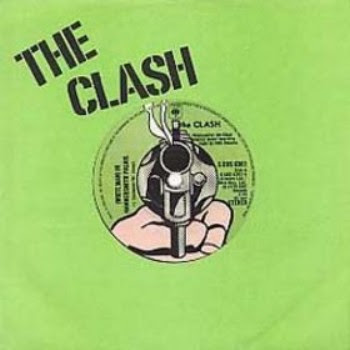
I have never really totally understood the Clash, I know how important those records were and by God they leagues ahead of the Sex Pistols in terms of having any reason whatsoever to exist, but it's still just all a bit to po-faced for me. There are, of course, some blistering tunes and there's no denying that the eponymous debut album from 1977 is a great bit of UK punk, but I have to admit I always end up comparing what was happening in the UK and the US and UK punk always comes up wanting for me, always sounds a bit like a more slapdash pub rock (I mean that's absolutely all the Sex Pistols were, and who else was there? Sham 69? 999? the UK Subs?). Anyway, the Clash is a great album and I would never try to claim it wasn't but I just don't hear the world shatteringly radical work that people often claim for it. To be honest I prefer '(White Man) in Hammersmith Palais' (1978) as a song to anything on the first album.
Of course it's against the law to say anything other than that London Calling (1980) is a truly great album. And it is. But....it's got 'Koka Kola' on it. And it's got 'The Right Profile' and 'I'm Not Down' on it. The thing is, right, I really think that the most brilliantly and succesfully eclectic album to come out the UK punk era is a single LP version of London Calling. But that was never made and instead it's a double, and there's too much going on and too much that just misses the mark by a whisker for it to be the mindblowing piece of creative genius that people claim for it. It's absolutely brilliant, no question, and there are some really astonishingly good songs on it and it's got the balls to be an outright pop album for most of its running time, but still....Anyway, that's probably the one that's most likely to get people annoyed so far so I'll leave it there.

Friday, 18 May 2012

LaRM day 79 (Cinerama-Clannad)

More Cinerama for the morning, starting with 2000's Disco Volante. This is pretty much more of the same but the sophistication of Gedge's songwriting has improved yet further and there are some great songs here. The underpinning of the gently arranged strings once agan anchors the tunes and gives them a solid structure. Lyrically the concerns are the same as they've ever been, the complications and frustrations of relationships, the workaday mundanity of being with someone, but the whole album is full of really great tunes and it's a pleasure to listen to.


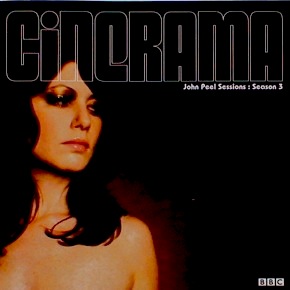
Then we have the three volumes of Peel Sessions covering 1998-2004 and released respectively in 2001, 2003 and 2007. Not much to say about these really, as session stuff goes it's really solid, but then Gedge had been recording Peel Sessions fairly constantly since 1986 so it's no surprise that he knows what he's doing. The songs are taken from the two albums and various singles and there are a couple of covers (including an excellent if silly version of Groovejet's 'If This Ain't Love').

I love Circulus, I love the fact that it's impossible to tell whether they're being serious or not despite the fact that they clearly aren't. When it comes to prog-folk this is as good as it gets and debut album, The Lick On the Tip of an Envelope Yet To Be Sent (2005) is phenomenal. It's absurd, laughable, utterly ridiculous and completely awesome. Every track is a barnstorming piece of idiocy and brilliance combined, from 'Power to the Pixies' to 'The Scarecrow' and 'Candlelight', it's all great overblown prog pomposity. With wimples. The finest tune is 'My Body Is Made of Sunlight' which encapsulates everything that's great about Circulus and attached is the official video which I think proves that they may be the best band ever.

The Civil Wars first album from last year, Barton Hollow, is a nice little bit of gloomy Americana and although it's not entirely convincing throughout, there are some fabulous songs along the way. It's all pretty rootsy and sometimes it can feel a little bit forced, but when it's good, and particularly when their vocal harmonies work, it's really very good indeed.

Finally, and weirdly, it's a couple of records by Clannad. Now the reason for this is that I loved Robin of Sherwood when I was a kid. I thought it was the best TV show, like, EVER. And it was. But anyway, the music was part of why it was so brilliant so I had to have the soundtrack. And that meant that I also picked up another one along the way. Fuaim (1981) is a cloying, irritating and essentially unlikeable bit of Irish folkery which sounds too much like a parody of Irish folk to be possibly taken seriously. Legend (1984) is the Robin of Sherwood one, and despite the fact that it's deeply, deeply naff and totally rubbish, I love it. So there.

Thursday, 17 May 2012

LaRM day 78 (Church-Cinerama)

Back in the days when I would buy anything that was ever referenced in connection in any possible way with REM I picked up a few albums by Australia's greatest post-paisley indie rock outfit, The Church. The first one I picked up was Conception (1988) which is basically a compilation of the best bits of their first two albums from 1981 and 1982. There are some great songs on Conception, including probably the most famous of their tunes, 'The Unguarded Moment'. It's all chiming guitars and slightly fey indie rock songs. There's something slightly off-beat about it all though and I wonder whether it's a cultural thing, Australian acts always seem to me to be specifically distinguishable from UK or US bands (apart from the dismal INXS but then they don't really count as a band, they're too shit) but I can't really put my finger on quite what it is. I can hear why people pretended that there was any relation between the Church's sound and REM's, but it's hugely inaccurate in truth. I think it's just that kind of Rain Parade type of thing that tied any band with a jangly guitar sound together. Apart from Steve Kilbey's faintly irritating vocals it's all pretty great stuff.

As is, to my mind, their best album, 1988's Starfish, which is really lovely. It's pretentious, overblown and possibly a little unintentionally silly, but the tunes really are great and they manage to stay just the right side of turning into a prog act. There's a lot of space in these songs too which is nice, and creates a broad landscape in terms of the sound - it sounds like wide open spaces. Perhaps that's what marks Australian bands out, this sense of dense open environmental spaces - the Triffids records for instance are explicitly about the landscape and it kind of fits. Anyway, Starfish is a big but gentle rock album which is thick with reverb and broadly produced acoustic guitars and chiming Rickenbackers and although, once again, Kilbey's vocals (and portentous lyrics) are sometimes a little grating, on the whole it really is a nice record. More pretentious yet though is follow-up Gold Afternoon Fix (1990) which does move back and forth across the prog line and set out the musical framework that the band would increasingly follow. There are still some great songs on Gold Afternoon Fix ('Fading Away' is nice, and 'Russian Autumn Heart' is a decent rock-pop song) and overall it's a pretty decent album, but when it doesn't work, it really doesn't work. And check out the cover - it's terrible, the band look hilariously po-faced with some of the naffest styling ever seen on an album sleeve.

Cibo Matto's Pom Pom (2007) is a compilation essentially of most of debut album Viva La Woman and a lot of second album Stereo*Type A released between 1996-2000. The stuff from Viva La Woman is great, sample heavy knockabout pop music, a lighthearted version of the kind of stuff Solex started knocking out in the mid-90's. It's basically two Japanese women doing some shouty singing over rolling, funky beats and samples and it's great, great fun. The material from Stereo*Type A is more serious, less focussed on the samples, and with much greater emphasis on songwriting and performing. Yuka Honda's singing voice turns out to be really quite charming and the songs are really strong (despite the fact that by this point Honda's partner Sean Lennon was in the band), with a seriously funky and occasionally jazzy foundation. It's all good stuff and interestingly although when they were released they seemed like very different records, the fact that Pom Pom has them all mixed up makes it clear that it was actually a pretty natural progression from one album to the next. Great record.

Last up today is the first album by David Gedge's Cinerama, Va Va Voom (1998). After the Wedding Present split up Gedge set up Cinerama as an outlet for the more classically structured songs that he had been writing and as such it's a much more stately and grandly elegant affair then the Weddoes ramshackle jangling or their later crunching indie rock. The songs are all threaded through with a peculiar kind of nostalgic feel, a sort of 60's by default type of sound, with politely orchestrated strings and gently rolling songs, yet it's still very much Gedge's rough, untutored northern voice and his trenchant observations of the mundane in life that he had made his own in the Wedding Present. And these are still indie rock records despite the trappings. It's really all pretty clever and more importantly it's all very pretty, they're charming songs and I really have a soft spot for Gedge's rather expansive view of the everyday.

Wednesday, 16 May 2012

LaRM day 77 (Alex Chilton-Chris & Carla)

Well, what can you say about Alex Chilton's High Priest (1987)? I mean, it's Alex Chilton, you can't slag off Alex Chilton can you? As good-time knockabout rock and roll records go it's a perfectly good time. If anything, if you're having a nice summer afternoon in the garden with chums round it'll be a great soundtrack. As a record to sit down and listen to, well, there are better records around. I suspect the intention was that it be nothing more than a booze sodden good time and as such it does its work fairly admirably; the mood is up, the songs are old-fashioned and despite the feeling of imminent collapse throughout, it doesn't suffer from a lot of Chilton's other later solo work's curse of a milignant sense of misanthropy. It's just some blokes playing some good old tunes with some old equipment and that's pretty much that.

It never made much sense to me why more people didn't try and rip off Scrawl. I think Scrawl may be one of the truly great lost bands. Their Velvet Hammer album is a truly extraordinary piece of psychological evisceration, a despairing howl from one abused gender to another and it's a work of unbelievably subtle power. Anyway, one of the few bands that did try to replicate them was San Diego's Chinchilla who made one album, 101 Italian Hits (1996) and as an effort to be someone else it's surprisingly successful. You can hear how hard it must be to make this sound, and I guess that's why Scrawl were amazing, they made it sound effortless. Anyway, 101 Italian Hits is a grinding piece of indie-rock with the requisite surprising time changes (there are hints of math-rock and Sleater-Kinney in here too), the clashing female vocals, and the sense of fighting against something oppressive is palpable throughout. It's a great record and it's a shame that there wasn't more from them.

Next is Chris & Carla from the Walkabouts side project and their second album Swinger 500 (1998). This is an extremely subdued piece of subtle Americana, whose wintery cover gives an accurate impression of the sound. It's a stately, graceful and extremely understated record, which takes real attention to get to grips with. The songs are beautifully arranged and they take their time to reveal themselves and while sometimes it seems like not much is happening, the structures of the songs are working themselves out extremely cleverly. It's lovely stuff to listen to, and their voices are in fine, spectral form. There's less of the wilful eclecticism of the Walkabouts here, it's all about mood and it's a lovely mood at that.

And what with stuff going on in the afternoon, that's the lot for the day.

Tuesday, 15 May 2012

LaRM day 76 (Chicago-Chia Pet)

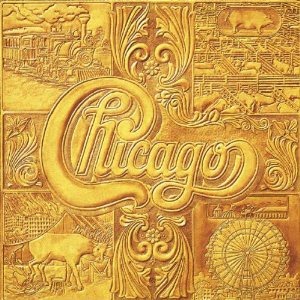
So the final Chicago album we have to contend with is 1974's Chicago VII. This is an abysmal piece of work, truly horrifying. It's another double album, this time the whole first side is composed of some astonishingly sub-standard free-form jazz instrumentals. Everything about them is second rate from the creeping basslines and horn stabs on the 10-minute nightmare 'Devil's Sweet' to the pretence at avant-gardeism on 'Aire'. It's simply ghastly. The rest of the album isn't quite so awful simply by dint of there being a handful of pop songs (Chicago's rubbish pop songs aren't nearly as rubbish as their rubbish jazz, which is rubbish par excellence). In any event it's all appallingly bad. The only thing to commend it is the inexplicable presence of Al Jardine and Carl and Dennis Wilson doing their typically wonderful backing vocals on 'Wishing You Were Here'. Otherwise it's best to pretend this hellish mess of AOR pop and shit jazz never happened.

Now for something much better - it's a bunch of records by the ultimate traditionalists, the Chieftains. The first eponymous album released in 1963 was intended to be a one-off release, an opportunity for a bunch of excellent semi-professional traditional Irish folk musicians to spend some time in the studio and knock something out. As members of Sean O'Riada's Ceoltoiri Chualann, they recorded the Chieftains album as a sort of side project. As a result what we get is an entirely unadorned set of performances of traditional tunes played superbly and with gusto, but with absolutely no studio work at all - it's just some musicians playing their tunes, and it's lovely. There isn't so much of the sense of folkloric mysticism about it all that came to be a fundamental part of the Chieftains character in later years, it's just some great tunes played straight by some great young musicians. There's real democracy in the performances on the first album, but the tunes which feature Paddy Maloney's Uillean pipes at the fore are superb and demonstrate that it's no surprise he would come to dominate the band's sound.

Second album, Chieftains 2 (1969) is a real step forward in terms of the band being a recording outfit. With Sean O'Riarda's failing health, the band took another turn in the studio but this time out you can hear a clear sense of purpose to the record, and it's clear that when O'Riarda died the band knew they would have a new outfit to focus on. The material that they've chosen for Chieftains 2 is even better suited to their revivalist approach and the reels and jigs are great, but the ballads are particularly fine. The pipes are given preference over the fiddle and the trademark Chieftains sound is clear for the first time. The focus in terms of the performances is fantastic and the use of the studio as a recording tool rather than a facility is evident - the production is incredibly clear for a relatively primitive recording. It's a beautiful album and it really gives the lie to the notion of traditional folk as a naff and ultimately navel-gazing music. Chieftains 4 (1973) is more of the same, but this time some real extra depth is introduced by a more pronounced role for the bodhran, and especially with the arrival of the mighty Derek Bell and his harp. Bell's impact on the sound of the Chieftains was immense and he really brought that strange sense of folkloric mystery with him, despite looking like a troubled bank clerk from the 1950's. I don't think the choice of tunes on Chieftains 4 is as good as on 2, but the album as a whole is better.

Better yet is Chieftains 5 (1975) which consolidates all the players strengths, and they really bring out the best in each other. There's such a determination, such passion in this stuff, it really raises the spirits. The whole thing is so fluid, and yet so cohesive and it acts as a real reminder that revivalism is as much to do with the joy of experiencing any music today as it is with re-enacting the past. It's glorious stuff, alternately surging forward and serenely drifting along. Again, a lot of it is to do with the calming influence of Bell's beautiful harp playing but the whole band are in fine form, Maloney marshalling his troops with absolutely clarity and conviction. Finally we have Chieftains 6: Bonaparte's Retreat (1976). As a concept album this chimed weirdly with the prog rock crowd in the US who I guess had spotted Paddy Maloney's guest spot on Mike Oldfield's Ommadawn. It's grossly inappropriate to suggest that Bonaparte's Retreat has anything really to do with prog, it's another superb revivalist folk album, but admittedly it is built under a 15-minute centrepiece which has a number of time changes and structural peculiarities, but I think that's just a traditional way of playing folk, fusing a number of melodies together and creating a larger whole. Although not as accomplished as Chieftains 5, Bonaparte's Retreat is an easier listen, it's essentially undemanding on the whole and is probably the most likely of the early albums to garner winces from unbelievers. There are phrases which do veer dangerously close to corny, but to my mind they sail clear by dint of such unswerving skill and dedication to the notion of folk as a living musical form, not a dead one that they're digging up. It's lovely stuff. It is also quite a surprise to hear Dolores Keane singing on the title track, as up to this point all of the Chieftains albums had been strictly instrumental.

Next we have some classic 80's New Zealand guitar pop from the Chills, starting with the Lost EP from 1985. The band had made a couple of singles prior to Lost, and their nous for a great little pop melody was already pretty clear. Lost has six tunes varying from the dreamy 'This is the Way' to the lo-fi punk pop of 'Never Never Go'. It's cheap, scrappy and brilliant pop music, and the influence of the Chills alongside other Dunedin bands has always been drastically underrated. Lost was followed by the 'I Love My Leather Jacket'/'The Great Escape' double A-side 12" single in 1986. Two great little pop nuggets, very lo-fi and in truth a bit silly, but superb nonetheless, Martin Phillipps' brilliant way with a three chord trick as effective as it would ever be.

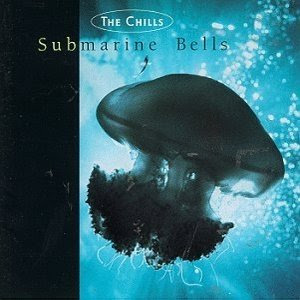
Their second album was preceded by the 'Heavenly Pop Hit' single, but I can't find the B-side on the internet so it's straight on to the actual album, Submarine Bells (1990). This album came to be the benchmark for the "Dunedin sound", pop music structured on a slightly off-key and teetering musical framework. It's great stuff, a bit like a less studio savvy XTC, trying out various takes on guitar pop, and mostly coming up trumps. There are swaggering, dreamy pop songs, there are piledriving pop songs, there are angry pop songs, delicate pop songs, but everywhere you look there's the sound of a band who care about why pop music is important, how it can sound great, what it can do. Phillipps' voice is an acquired taste when he's being serious, but the songs are just undeniable.

To finish we go back a step, I forgot to check youtube for the Chia Pet 7". The B-sides aren't to be found, but the A-side of 'Hey Baby' is there. It's rubbish. I was so looking forward to hearing it again because it was a central part of my riot-grrrl phase. It's like Le Tigre but way, way worse. Still, the fact that it was the work of the editor of Sassy means it's still got some curiosity value I guess....

Monday, 14 May 2012

LaRM day 75 (Don Cherry-Chicago)

The week begins with some decent free-form jazz in the shape of Don (father of Neneh) Cherry's Hear and Now (1976). It's a funky, subtle kind of freak-out, there's no big show-off numbers here, it's all pretty laid-back. Cherry's trumpet complements nicely with the super-cool guitar solos and he even breaks out a flute occasionally. There's a very casual kind of vibe to the whole album and each tune works itself out in its own time and although there are sometimes bursts of noisy fusion (the last third of 'Mahakali' for instance) its mainly pretty smooth and undemanding space-jazz.

The much missed Vic Chesnutt made some great records along his melancholy way but none so great as The Salesman & Bernadette (1998). One of the reasons this album is such a success is because the majority of the musicians on the record are from Lambchop, and in many ways it sounds like a Lambchop album with Chesnutt singing. Chesnutt's songs are as gloomy as they've ever been but this time out they're played with a joyous verve that puts a completely different spin on them. The only criticism of the album could be that it's maybe too long, but on the whole the songs are great, with Lambchop's trademark odd take on Americana and old-school C&W providing a fantastic framework for Chesnutt's frail voice and broken songs.

Next up should have been the 'Hey Baby' 7" by Chia Pet, but I can't find it easily on "the internet" so we'll have to skip it and go straight on to another disastrous 5-album box-set freebie from work. Now, why I picked this one up is a total mystery but I did, so here goes with the first of five Chicago albums.... Chicago Transit Authority (1969) is a bloated double album of the most extraordinary blues-rock come fusion jazz. People who like this nonsense say that it's a groundbreaking blend of previously incompatible musical styles. Groundbreakingly rubbish. It doesn't work at all, as opener 'Introduction' demonstrates, moving from grinding blues-rock to New Orleans jazz to prog and back again completely incongruously and in the blink of an eye. For the most part the album is kind of post-Hendrix hard blues rock with horns, it's inoffensive but it's a total waste of time. Besides which are some remarkably egregious elements (like uninteresting 6 minute feedback blowout 'Free Form Guitar') which rub up horribly against the blues-rock. By the time 15-minute closer 'Liberation' ends you're left wondering whether you really like music after all.

Second album, Chicago (1970) is another double album of jazz come blues-rock and it's much cleaner, more coherent and focussed than Chicago Transit Authority. The jazzy horn section fits better into the mix, but that's only because the whole thing is becoming even more anodyne. It's smoother and there's no chance of any mammoth freakouts happening here. Which of course makes it even worse than the first album. It's like listening to the inside of an estate agent's head in 1970. This is exactly the kind of stuff that happens to all interesting music - dismal versions of it tarnish the memory. It's simply awful. Thankfully Chicago III and the FOUR ALBUM live set Chicago IV aren't included in the box set. On Chicago V (1972) the pop elements that would come to dominate the band's work were starting to really come to the fore. Of course, once again, it's even worse than its predecessor, although, to be honest there is something less dislikable about it because I think the band were realising where their strengths really lay (writing crap pop-rock songs with brass flourishes) rather than pretending and failing to be a kind of mash up of psychedelic rock, blues-jazz and hard rock. Chicago V still relies too heavily on jazz breaks which are even more horrible than the pop songs that they interrupt, and on the whole it's another pretty grim record. As, of course, is Chicago VI (1973), but at least Chicago VI has the good grace to come in at under 40 minutes for the first time. This time round they sound like the Average White Band. It's that bad. It's really that bad.

See you tomorrow for our last dose of the Cag, and then a whole bunch of Irish mayhem.