Tuesday, 19 June 2012

LaRM day 98 (Curve-Dakota Suite)

More Curve for the morning, starting with debut album Doppelganger (1992), which highlights the best and worst aspects of Curve's approach. The big, sledgehammer songs are in some ways the worst and underscore how underwritten their songs often were, and it's left to the subtler, gentler tunes to carry the album. 'Horror Head, for instance, succeeds in taking a more Cocteau Twins than Sisters of Mercy basis for the dense layering of sound and it's all the better for it. For the most part though it's business as usual and although some of the songs are great, it does have something of an air of diminishing returns about it. They released a remix of 'Horror Head' as the last single from the album, and it has a couple of decent B-side tracks (including the blatent MBV rip-off of 'Mission From God') and one absolutely terrible one in 'Falling Free', easily the worst thing they recorded to that date and a sorry sign of where they would end up.

However, the keyboards taking a larger role didn't disrupt second album Cuckoo (1993) and in some ways it's a better record than Doppelganger. It's quieter, more considered and has much better melodies (the second side is really restrained and has some genuinely lovely stuff on it). There is a fairly delicate balance struck between the kind-of sinister dance beats and keyboard washes (the Nine Inch Nail-isms...) and the wall of guitar feedback and Halliday's voice sits directly between the two. In retrospect I think Curve were doing something surprisingly complicated and all the gothisms and heavy make-up maybe distracted from what they were actually up to. I like Cuckoo a lot, and although I'll get no hip points for saying so, I think Curve were, for a short time, a very good band.

Hurray for OMD! And so say loads of young bands, including Australia's Cut/Copy who use the 80's pop template to cast their new brand of electronic dance-pop. Third album Zonoscope (2011) is a fantastic bit of over-the-top, shimmeringly pristine fun and although slightly overlong at an hour, it still manages to be, for the most part, completely engaging. It's what pop music in a post-everything age should be, completely facile and dazzingly shiny, and when it's on fire, it's absolute magic. On the face of it, it's not exactly rocket science to think of blending Daft Punkish dance backing with Cyndi Lauper basslines, but when it comes off it really does sound great.

Now, not everybody likes impenetrably dour Scottish poet Ivor Cutler's harmonium/outsider poetry combo. In fact I think a lot of people find it a bit difficult, troubling even. Personally I think it's wonderful stuff, funny, moving and singularly improbable, and the fact that he made records at all, let alone so many, is a triumph of an age in which record companies weren't only after the cash but were proud to acknowledge difference. Cutler had knocked out a few bits and pieces in the preceding fifteen years by the time Dandruff was released in 1974. It set the template for the rest of his albums, consisting of 45 tracks, the majority of which are miniature poems, read out by Cutler in his gloomy, low voice. The rest are poems half-sung, half-spoken, and accompanied by Cutler playing his harmonium. Often there is scarcely a semblance of a tune, but once in a while a jarringly lovely melody appears out of nowhere and vanishes again ('An Old Oak Tree' for instance). Cutler's bizarrely acute observations of the absurdities of human psychology, behaviour and experience are either deeply penetrative or else whimsically facile, but personally I'm convinced they are the former. 1976's Jammy Smears is more of the same and is equally remarkable and idiosyncratic and has some lovely songs ('Beautiful Cosmos' is a wonderful song and Kathryn Williams covered it superbly many years later). It mixes stuff up a bit with more lively songs and some performed on piano (superb opener 'Bicarbonate of Chicken' is particularly brisk).

And that's the end of the letter C. Obviously I've bought plenty of rubbish while we've been going through this torment so I have to go back over any A-C's that I've bought. It's only two surprisingly, the first of which is Air's appallingly titled Talkie Walkie (2004). Today has actually been the first time that I've listened to it so my opinion is pretty sketchy. At first (at work) listen it seems pretty decent to me. I know everybody talked about it being a return to form and bearing in mind I've always found their form to be flexible at best, that's not tough. There are some lovely things going on ('Cherry Blossom Girl' is an unsurprising choice for a single) and there's some nonsense too (the cod classicisms of 'Mike Mills' are pretty grating for instance). On the whole though I reckon a few listens will make it a winner for me.

Pop. Music. I love pop music sometimes. It has to be the kind of pop music that either everybody cool honestly hates or everybody cool pretends to like. Everybody cool pretends to like Annie and there's good reason as far as I'm concerned - her records are bang on. This is just what pop music should be, slippery, sleek, bright but with a darkening edge - it's great stuff. And just as Anniemal was grand, so too is 2009's Don't Stop. This is all brilliant pop music, the kind of thing that Pixie Lott and Little Boots bastardised and made sloppy and second-rate. Annie is just too smart to make lazy records like that though, and Don't Stop is a monsterous slab of unforgiving pop music and it's simply ace. In some ways Don't Stop is less self-aware, less self-conscious and tricksy than Anniemal. It's the same template but it's more unashamed, more prepared to simply stand or fall as pop music. And it stands.

Just time for the first D, Dakota Suite's Signal Hill (2000). Not quite slowcore, not quite Americana, Signal Hill is a strange, gloomy, sedate affair. It's a lovely album but good lord it's a downer and not in the obvious Smog or Simon Joyner, oh boo-hoo listen to how sad I think life is kind of way (which, don't get me wrong, I love sometimes), but in such a low-key, unobtrusive kind of way that it's almost not even there. In many ways it's a testament to the skill involved, but considering that it employs a wide range of instrumentation and stylistic touches you would kind of hope that the whole thing would be more engaging, but it lingers with such icy detachment that it's a hard record to really get to love I think.

Monday, 18 June 2012

LaRM day 97 (Cure-Curve)

More gloomy fun with the Cure, starting with Faith (1981). Effectively a continuation of Seventeen Seconds' insular examination of outsider alienation, it adopts a similar musical framework with ostensibly gloomy, minimal bits of cryptic introspection. Faith does have a stronger sense of cohension though and although essentially a little bit of a bore, it has a more modulated structure and makes more sense as a single work than Seventeen Seconds. Smith also had figured out it might be worth mixing the drum machine a bit deeper in which helps. It still sounds dreadfully of its time though, and although speaking quite seriously and adroitly about the interior life it also manages to sound like the template for the contemplative end of goth that would start flooding out shortly after Faith's release. The CD reissue I've got has a host of other stuff, mostly demos and out-takes and a few live tracks, some of which are fantastic, most not but it also has the Carnage Visors soundtrack which is a fascinating curio - a langourous, doleful 27 minute plodder which has the attitude of drone but the musicality of goth. It's not great but it is compelling.

While making nihilistically gloomy albums, Robert Smith was also writing some relatively cheery pop songs that were released as singles, separate to the album releases. Three of these were collected on the Japanese Whispers (1983) album. Of the lead tracks, 'The Walk' and 'Let's Go To Bed' are great, jaunty numbers, but it's 'The Lovecats' that sticks out most as being jarringly at odds with what was happening on the albums. It's positively lively is 'The Lovecats', and, if anything, it's carelessly throwaway, a true pop song. It's also a fantastic pop song and it proved that Smith was neither all doom and gloom, nor entirely humourless. The other songs on Japanese Whispers are the B-sides to 'Let's Go To Bed' and 'The Walk' only, and they're not quite as good or as much fun, but they do keep the surprisingly upbeat pace and tone going throughout.

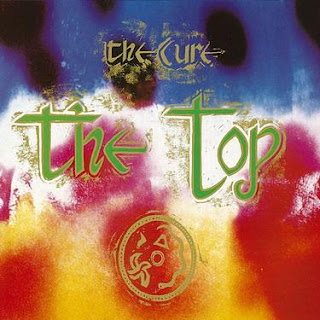
Things change markedly with 1984's The Top, which is a messy, sprawling psychedelic workout of an album compared to the glacial gothery that preceded it. That's not to say that there's a lack of goth about The Top, quite the opposite, but it's an expansive version rather than the shambling, mumbling kind. The demo versions of the songs that are included in my copy are revealing, Smith obviously feeling at the time that he needed to get away from the critical stereotyping that he felt he was getting after the release of Pornography. It was a justified stereotyping to be honest, but The Top is an interesting reaction to it. There's all kinds of unexpected instrumentation and the variety of songwriting is occasionally bewildering; it's a long way from the icy minimalism of Seventeen Seconds. There are some lovely songs on The Top as well, but they tend to be subsumed in the mass of sonic stuff going on. It's a decent stab at moving on, but it isn't the Cure's best album by a long shot, but it certainly freed Smith up to make better records later.

Coo-ee, how we were all told to hate and despise Curve. They were the absolute target for a year or two, accused of all kinds of things but primarily and most damningly of being "fake". The thing about it was, for a band specialising in thudding, juddering dark gothery it was seen as telling that the two key members had been respectively a session bass player for the Eurythmics and a failed chart pop singer, and that they were the first (and I think possibly only(?) signing to Dave Stewart's pretend indie label). How times change, and we all (rightly) love the Sleigh Bells records, but I digress. Having never been that bothered about seeming to be naff, I bought the Curve records and really liked them. Listening to them now I can still hear a really decent stab at trying something slightly different to the indie kid orthodoxy of the early 90's. This stuff is taking its cue from the Sisters of Mercy rather than the MC5 and I respect the boldness of trying that at that time. The songs themselves are a bit underwritten it turns out, relying on massive drum machine thuds and slabs of guitar scree, but this is what Garbage could have sounded like if they had been less desperate to have hits, and again Curve were unlucky to try this stuff at just the wrong time. First EP, 'Blindfold' (1991) has four tunes of varying quality. The lead track ('Ten Little Girls' is great until the menacing rap, which is not (the rap element is something they thankfully didn't try again). Part of the success of Curve's sound (and one of the key evidences for the fakery claims) is Toni Halliday's voice, which while breathless and fairly light is aggressively sexual and I do wonder whether her suggestion that the fact that she was a bit older than the usual indie girl made the boy critics a bit scared of her and made them kick out. 'I Speak Your Every Word' and 'Blindfold' are OK, but final track 'No Escape from Heaven' is ace.

Much better is second EP, 'Frozen' (1991). All four of the songs on 'Frozen' are great, lead 'Coast Is Clear' is a pile-driving bit of sampled guitar noise and drum machine, and it's on this EP that Halliday started working out some actual melodies. 'The Colour Hurts' is a slow, grinding number which has a great, sinister vocal melody and musically is little more than superbly orchestrated feedback. 'Frozen' is more restrained, and comes frighteningly close to having a pop melody and if anything it's the one song from the early records that sounds most like the time it was made. Third EP 'Cherry' (1991) is slightly less engaging, the songs being a bit weaker again. It tries to compensate with the pile-driving bass and wall of noise but although it's still an impressively dense sound, you do want the songs to back it up. The first single to promote an album was 'Fait Accompli' (1992) which is a decent enough song, but in fact the two songs that back it are more interesting. 'Arms Out' sounds like a better version of something that His Name is Alive might have recorded - it's really engaging, a drifting, twisting song that feels strangely slippery, it has much more subtlety than Curve's usual blocks of sound approach. There was an accompanying 12" with an extended remix of Fait Accompli which, like most extended remixes is pretty pointless, and has a couple of live versions of other older songs backing it.

Friday, 15 June 2012

LaRM day 96 (Crowded House-Cure)

Neil Finn had recorded the majority of his third solo album with various session musicians by the time he and Nick Seymour got together to go through the Farewell to the World tapes, but they took the view that the stuff he had recorded should come out under the Crowded House name. I think this is partly because the songs sound more like Crowded House than Finn's solo albums, but also because the whole of Time on Earth (2007) sounds like an extremely sincere tribute to Paul Hester, whose death seems to be infused in every part of the album. It is a great record, a sad one for sure, but not melancholy and the craft of songwriting that Finn has always specialised in is at a peak. It's not an insistent record, it's more a gentle reminder of the value of well-written songs. The most recent album, Intriguer (2010) takes the craftsmanship perhaps too far finally and has some of Finn's least memorable songs. It's a shame because you can hear how hard they must have worked on the album, it's beautifully put together, but it just doesn't have much of an emotional pull and in the end sounds sadly workmanlike.

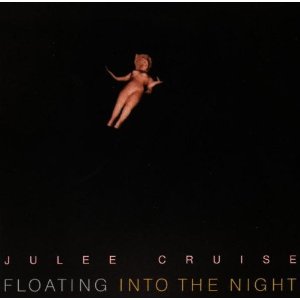
I loved Twin Peaks. I loved it so much. It was just exactly right for a pretentious teenage boy and I picked up everything I could that was related to it. I think I've still got the impossibly arousing Radio Times article and cover. Anyway, the point is that I also bought, as well as the soundtrack, the Julee Cruise album that was associated to the show, Floating Into the Night (1989). I had forgotten just what a wonderful record it is, dark, moody but achingly beautiful and full of a cryptic mystery. Cruise's faint vocals are charming and Angelo Badalamenti's music is simultaneously creepily old-fashioned and strangely modern. It's a languid trip through a musical version of Lynch's psychological abstraction and it's really, really lovely.

Were CSS really cool, or were they just a bit shit? I think I thought they were cool back in 2006, now I have absolutely no idea. Listening to CSS (2006) for the first time in a while I'm struck by how casual and clear and confident it sounds, but also by how thin the songs are. Does it matter? Is it all about attitude? God knows. It's still good fun and Lovefoxxx will also be cool no matter what (even despite going out with a bloke from the Klaxons), but I'm not totally convinced that the album's mash-up of late disco, fake-rap, proto DHR noise and too-cool-for school stance was really that great. Sure, they had the titles ('Meeting Paris Hilton', 'Let's Make Love and Listen to Death from Above', 'Art Bitch') and some of the tunes are fantastic ('Off the Hook' and album closer 'This Month, Day 10' for instance) but I don't know if there's anything really going on after all. Pretty much everybody agreed that after the fun and scrappy tunes of CSS, follow-up Donkey (2008) is a let-down. Everybody, as usual, is wrong though. Donkey is a much better album, and it's partly down to the fact that it's massively polished production-wise in comparison, and where that would normally kill an interesting band, it actually smooths out some of the kinks and proves that CSS can write some great, fully-fledged songs. It does all sound a bit mature and it's true that some of the quirks that made CSS interesting have gone in the process but it's nice to hear them actually play chunky post-new wave songs that have some real substance. It's a game of two halves, the first being some seriously solid rock numbers, the second being much more synth-led, but they're all great. Not shit after all.

Ah, the wonderful Cub. Now this is how you play cutesy punk-pop. Lo-fi, super-scrappy and charming as all get out. Cub were just fantastic, great peppy songs, spirited delivery and just pure unadultered fun. Absolutely brilliant. Largely forgotten now, it would surprise many to learn that Neko Case's first foray into the indie-rock world was as Cub's first drummer. However, by the time the split single with the Potatomen was released in 1995 she had moved on to start researching her country career. 'The Day I Said Goodbye' is prototypical Cub, jaunty, sassy, knockabout and completely transfixing. Indeed, everything they made follows the same formula and their second album, Come Out Come Out (1995) is chock full of 2 minute punk-pop gems that fizz and buzz along with buckets of energy and charm to spare. It's hardly worth singling out any songs but we may as well mention that of the classics on Come Out Come Out we have 'Everything's Geometry', 'Tomorrow Go Away', 'Voracious' and the mighty 'My Flaming Red Bobsled'.

Third and final Cub album, Box of Hair (1996) is again more of the same, but this time they had a bit more time to put the record together and it has a more leisurely pace (as in, less frantic) and the cutesy melodies are given room to breathe and brings out just how great they are. There are even overdubs (!), meaning we get some nice 60's handclaps and even a muted accordion on super-cute 'Magic 8 Ball', and a lovely violin part on 'Riverside'. Of all the Cub records it's probably the least immediately fun or accessible but it is probably the best in terms of the songwriting and performance. In any event, it hardly matters, they're all great.

The Cult were (are, incredibly) one of the most laughably absurd bands, like, ever, but I ask you, is it possible not to love 'She Sells Sanctuary'? Surely it isn't possible. It's one of the flat-out greatest massive dumb rock songs ever written, with a riff to die for, an attitude of leather-trouser wearing idiocy that puts all others to shame and a truly lunatic self-confidence. It's simply a fantastic song. 7" B-side, 'No.13' isn't.

Finally before the weekend, let's dig some super-gloom courtesy of the Cure's second album Seventeen Seconds (1980). While Seventeen Seconds is for the most part a hit-free zone ('A Forest' is the only successful single and the one even vaguely spritely moment on the album), it does have a distinct subtle grace. It's glacial for sure, and for some stretches simply rather dull, but there's a clear vision to it and Robert Smith clearly used it as a way of speeding up the process of defining a sound (he wrote it in two days, recorded it in three and spent about 3 grand on it). It's main flaw, besides steadfastly maintaining a frigid pace, is in the cheap recording, because whereas the Cocteau Twins used a drum machine as a key part of their diverse sound, on Seventeen Seconds it just plods away, alternately thudding and cracking, far too high in the mix, and it contributes largely to an unnecessarily tedious feel to the album. It's a shame, because underneath the pedestrain pace is a record of burgeoning discomfort and spooky outsiderishness which is quite compelling.

Thursday, 14 June 2012

LaRM day 95 (Crosby, Stills, Nash & Young-Crowded House)

So first today is Deja Vu (1970) by Crosby, Stills, Nash & Young. Deja Vu is a great record and is very much the product of the four members tempering each others worst excesses. So, although Nash's 'Teach Your Children' and 'Our House' are so wet they're positively dripping, you have the counter of Neil Young's spare, blasted and wonderful 'Helpless' and 'Country Girl'. Stills and Crosby also counter each other with Crosby's laughable 'Almost Cut My Hair' squared off by Still's 'Carry On'. In some ways Deja Vu's reputation inappropriately precedes it, it isn't quite the miracle of the Laurel Canyon sound that is often claimed for it, but it is a superb snapshot of the time and of the culture that it was created in, and most of the songs really are good. Again, I do have to come back to 'Almost Cut My Hair' though. It's really rubbish and I've never been able to work out whether it's a joke (Crosby's frowning blues-rock backing lyrics about letting his "freak flag fly") - I don't think it is.

Now I'm quite happy to dig some serious "songcraft" now and again, and there are few journeymen songwriters as "craft" based as Crowded House's Neil Finn. I know there's a serious "I'm going to wear a T-shirt with Crowded House written on the front of it" element to the band, but there's no denying they made some decent records. The first eponymous Crowded House album (1986) is a pretty decent piece of solid songwriting, and it has some big numbers on it ('Don't Dream It's Over', 'Something So Strong') but it does have some seriously mediocre stuff too ('Hole in the River', 'Love You 'Til the Day I Die') and it's very unven. The production is also something of a problem, as it always is when Mitchell Froom is at the mixing desk (it's amazing that anybody hires him really, he's ruined a huge number of Richard Thompson albums among others for a start). It sounds terribly dated, with keyboard swathes blanketing everything in a really inappropriate way. Nonetheless, the decent songs survive their treatment and two-thirds of Crowded House is decent. People tend to think that second album, Temple of Low Men (1988) is a marked improvement. I can't really hear it myself. I suppose the songs are stronger on the whole, but it all sounds weirdly disjointed to me. There's a gloomy tone to the album too, which is interesting but not wholly successful. And once again, Mitchell Froom makes it sound fairly dated with his heavy handed production (those keyboard washes are still there, booming over-dominant drums, it's all terribly crisp and clean). It does have some lovely songs ('Into Temptation' and particularly 'When You Come') but it sounds like a grab-bag of songs rather than a coherent album to me.

To my mind the really artful stuff came with 1991's Woodface, which combines a studious compositional focus with an emotional engagement, so these songs aren't merely cleverly constructed, they're actively engaging too. The album was announced by the release of uber-smash hit 'Weather With You' which is a slyly lovely song, and the brilliance of it has been done a disservice by familiarity. The record doesn't get off to a great start with the corny rock of 'Chocolate Cake', but as soon as 'It's Only Natural' starts you can hear the delicacy that infuses most of the album. Many of the songs are built around simple, melancholic guitar lines and then grow outward and the effect is to make the album seem to be gently shifting around. It's lovely really. There are some terrible moments (the string-laden torch song 'All I Ask' is awful and 'Tall Trees' doesn't make much sense in the context of the rest of the album) but on the whole the songs are gently pursuasive and have a real emotional heft, partly because Neil Finn seems to have been able to rein in Froom's worst tendencies and left the album with a faintly unfinished, scrappy feel which really works.

For me the peak of Finn's work came with 1993's Together Alone. Ditching Mitchell Froom from the producer's chair at last meant that someone truly sympathetic to the songs and the sound could get to work and producer Youth did a bang-up job of bringing out the real melancholic delicacy of Finn's writing. Gone are the studio tricks, the self-consciousness and the silly noises and instead we have a deeply serious record which is absolutely loaded with superbly written songs. There's a true beauty in the odd gloominess of Together Alone and it sounds very much like a band deciding to finally do this stuff properly. Some songs are better than others but there's nothing off about any of the album, each song plays a clear purpose and at worst ('Locked Out') there just isn't much to write home about. At best ('In My Command', 'Private Universe', 'Distant Sun', 'Catherine Wheels') it's absolutely fantastic.

With the decision of drummer Paul Hester to quit the band late in 1994, there wasn't much for them to do and they split up in 1996 following the release of a greatest hits album and the 'Not the Girl You Think You Are' single. It's a nice song, Finn's blatant and acknowledged tribute to his beloved Beatles, and it's a rather low-key and charming swansong. Another compilation, this time of rarities and B-sides was released in 1999, entitled Afterglow. I think this was kind of an offering to hardcore fans who had been clamouring for some of this material, a lot of it recorded for Woodface but never released, and as such it's a mixed bag. The fact that most of it is great is testament to Finn's songwriting and the band's approach in general though. There are some dismal things here (Paul Hester's deeply irritating 'My Telly's Gone Bung') but the majority is pretty decent, and there are some wonderful songs (the pre-CH song 'Recurring Dream' and Finn's direct tribute to his wife 'I Love You Dawn'). In 2006 they released Farewell to the World, a live album of the band's final concert in 1996. Paul Hester rejoined specifically for this final show. It was both a charity gig and a specific farewell, as it was understood that the band had already split and this would be their last perfromance. As live albums go, they rarely have the same emotional basis and you can feel the audience's joy and sadness throughout the whole two hours. It's not a particularly fantastic record, but it is a superb demonstration of not only how professional and committed the band were, but also how much they genuinely saw themselves as serving an audience, not the other way around. The whole thing is given an added emotional charge when considering that it was released not only as a ten year anniversary of the concert (and the band's demise) but also as a one year anniversary tribute to Paul Hester who had committed suicide in 2005.

Wednesday, 13 June 2012

LaRM day 94 (Creedence Clearwater Revival-Crosby, Stills & Nash)

So, today kicks off with a bunch of superb Creedence Clearwater Revival albums. I haven't got the first two, so we start with 1969's Green River. What timeless records Creedence made. In many ways between Creedence and the Band, this is where the Americana movement starts, with John Fogerty's rasping old-time voice and lodestone touching country songs. Where the Band traded in mysticalm, mythical evocations of America's rural past though, Creedence where more concerned about a more prosaic take on southern roots styling. Green River is a fantastic example of how an intellectual commitment can lead to some truly electrifying music. Of the massive hits Green River has the title track, 'Lodi' and most impressively 'Bad Moon Rising'. The lyrical concerns throughout are pretty gloomy (a lifetime of playing in small-town dives and sundry other literal and metaphorical apocalyptic visions of wasted futures), but the music is as bright and rootsy as it gets, the blues as filtered through a white southern sensibility, and the whole thing is as fantastic as everybody remembers. As is fourth album, Willy and the Poor Boys (the third Creedence album of 1969), which continues the basic sound and themes of Green River but with darker and more langourous musical edge, and an even sharper focus on superlative performances. There's less emphasis on the potential smash hit on Willy and the Poor Boys too, and as a result the album feels more cohesive. It also has the least dated and probably best of the zillions of protest songs written in the 1960's, 'Fortunate Son'.

The first of two albums from 1970, Cosmo's Factory is the more accessible but possibly the less accomplished. It does have what are undeniably some of Fogerty's best songs (the sprawling 'Ramble Tamble', 'Up Around the Bend', and to my mind the best thing he ever wrote, 'Who'll Stop the Rain'), but it also has an eleven-minute jamming workout of 'Heard It Through the Grapevine' which is very far from essential and clogs up the second side of the album terribly. In fact three covers are surprising low-points on the album and although this does underscore just how great a songwriter Fogerty was by this point, they do also knock the album down a bit. At the very end of 1970 Creedence released Pendulum, which was apparently an attempt by Fogerty to disprove critics claims that the band were just a knockabout singles act. As a result Pendulum is a pretty serious listen, missing the lively side of their southern roots music, but instead replaces it with an earnestness of intent which isn't misplaced. Pendulum is a great record, it may not be as immediate as its predecessors, but it's got some fantastic work on it (and it's got 'Have You Ever Seen the Rain', one of the greatest songs of the 1970's).

After the creative restrictions that were imposed on him in the Byrds (ie, he couldn't be a stupid hippy writing songs about threesomes), David Crosby found himself free to express himself as he pleased, man, in Crosby, Stills and Nash (and Young). This meant, of course, being a stupid hippy writing soppy songs about threesomes. Anyway, in amongst all the close harmonies and half-baked saving the world by sitting on your fat arse, Crosby released a solo album, If I Could Only Remember My Name (1971). It's an album that put a lot of people's backs up, I think simply because it's such a drippy record (Robert Christgau for instance said that Crosby should be ashamed of himself and look to his Byrds days to remind himself what he was like before he went shit. However, Christgau himself is, of course, a total and utter dick ("self-appointed 'Dean of Rock Criticism'" - he's such a clueless tool he gives new Madonna albums good reviews)). However, I think people took it the wrong way and it doesn't surprise me that it's had such a critical renaissance. It's superb. In some ways it's a kind of shattering hangover after the 60's party, full of dread and unspecified paranoia, and the fact that it drifts dreamily along is entirely appropriate. It's a fuzzy, frayed, spaced-out comedown and it's full of fantastic songs. 'Cowboy Movie' and 'Traction in the Rain' are mini-epics of the post-60's collapse and in 'Laughing' Crosby produced one of the best songs of his career, and one of the best songs to come out of the morning after the night before.

Slightly less astonishing is Crosby and Graham Nash's first dual post-CSNY outing, simply entitled Graham Nash David Crosby. Crosby only came up with four of the eleven songs for the album, principally I suspect because he had used his best material for If I Could Only Remember My Name. Therefore it's more Nash's show and I think, contrary to Crosby's experience, he may have been high on the success of his 1971 album Songs for Beginners, and his trademark soppy melodies and vocal style are in full show, but they are, as always, tempered by Crosby's rawer, more spacey delivery. The songs are all pretty good, and the mood of the album veers interestingly between Nash's usual upbeat outlook and a rather more melancholic viewpoint (Crosby's 'Whole Cloth' is an unusual bit of spooked-out misery). It's a successful album partly because of this conflict of outlooks and also because both were still capable of writing songs full of interesting and smart contradictions.

Finally it's the bloated Carry On box set (1991) which is a two and a half hour abridgement of the super-bloated Crosby, Stills & Nash compilation covering pretty much everything between 1969 - 1990. Obviously there's a varied assortment of quality on this bunch of stuff, starting with plenty of early classics that everybody in the whole world knows ('Woodstock', 'Our House', 'Marrakech Express', 'Teach Your Children', etc, etc, etc) but as we slowly work our way through to the second disc we start hearing some interesting (and awful) new things. Now I used to have for instance a copy of the original CSN album which was a curate's egg to say the least, featuring as it does, the great 'Cathedral' and the utterly abysmal 'Shadow Captain'. And that sets the tone for the rest of their career and the contents of Carry On. For every 'In My Dreams' we have a 'Drive My Car', for every 'Find the Cost of Freedom' we have an 'After the Dolphin'. In between Crosby's stupid hippy lyrics, and Nash#s stupid hippy delivery, Stephen Stills was often the grounding between the two. So, it's fair to say that although the soppy, sappy hippy-drippiness of it all can be a bit wearing, in truth Crosby, Stills & Nash really knew what they were doing, at least most of the time...

Tuesday, 12 June 2012

LaRM day 93 (Christina Courtin-Creation)

Christina Courtin's eponymous debut for Nonsuch records is a lightly folky, jazzy charmer which has a delicate tone to it, without being too coffee table to bear. The opener, 'Green Jay' sets the basic mood with a fluttering jazzy backing to Courtin's quietly confident alto voice, and most of the songs follow the same template. There are highs and lows ('Foreign Country' is an irritating bouncy jazz number which veers far too close to Madeleine Peyroux territory for my liking, whereas 'February' is an excellent mordant, gloomy piece which is superbly menacing with a brooding string arrangement) and the general tone is perhaps too casual to completely engage with, and one's attention can wander, but on the whole it's a fairly lovely record, which is at its best in its second half, when it drifts away from its jazz underpinnings and towards a more sedate melancholy.

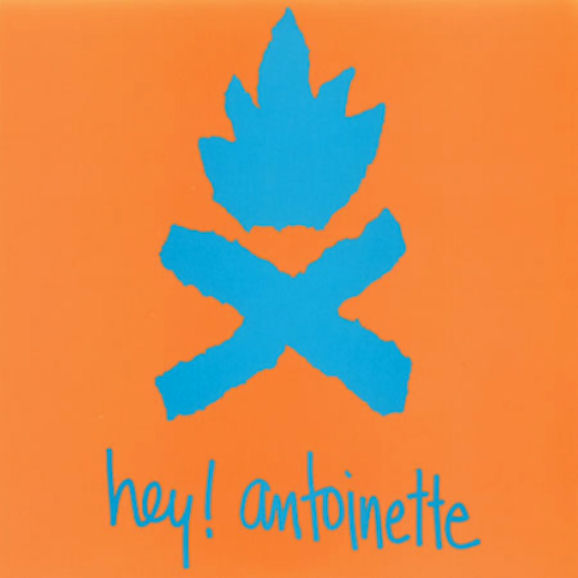
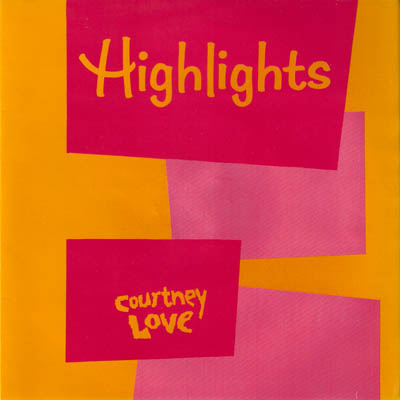
The wonderful Lois Maffeo has made a number of great records, and some of the best were the singles that she made under the name Courtney Love. As a gag it's not bad as Maffeo's gentle acoustic pop songs are about as far away from the real Love's aggressive antagonism. Maffeo's work has always followed a simple template, lovely ramshackle 2 minute indie-pop songs based around her warm voice and jauntily strummed guitar. It's all endearingly amateurish-sounding (although having seen her play a couple of times, it was clear that it took a lot of skill to sound this off-hand) and the Courtney Love singles are great. Lead song from the 'Hey! Antoinette' 7" (1991) is a wonderful little indie-world dissection and of the other two songs 'My Last Night' is a charm. The 'Highlights' 7" has three more great songs, the lead being particularly good and 'Shaniko' a close second.

The mighty Don Covay seems to have been relegated to a soul also-ran these days, which is a total mystery considering the blistering early output by Covay and his band. Their first three albums are superb pieces of raw and direct soul and R&B of the like that was rare at the time and rarer since. The 2007 compilation Platinum Collection covers strictly that early part of Covay's career (1964-1969) and highlights just what remarkable stuff he was putting out. What is particularly extraordinary about his work is that the kind of blues based R&B and soul that Covay specialised in was being recorded in a lush, string-laden style, particularly by Covay's label Atlantic, but there's none of that here. This is Covay and his band blasting out this fantastic stuff with no messing about, it's completely direct and, with the exception of the occasional appearance of a brass section, it's just what it is. In some ways it's therefore no surprise that Covay worked, and often wrote, with Steve Cropper who was a fan of this unfussy way of recording and playing. There are, of course, a handful of dud tunes (and Covay lost his way dreadfully in the 70's), but that's just the nature of the catch-all approach that everybody took at the time, and in fact the uncommonly high quality of not just the performances but the songs is another reason to give the early Covay records much more in the way of props than they get.

Next up is the folk curio of Julie Covington's eponymous album from 1978. Covington had done some work on the folk circuit but by 1978 she was known for her work in musical theatre and it seems strange that the album was made at all, let alone in the way it was. The calibre of the people involved in the album is astonishingly high, with Richard Thompson, John Cale, Trevor Lucas, Steve Winwood, Simon Nicol, Andy Fairweather-Low and Chris Spedding playing on it, and Joe Boyd producing. What's surprising then is how mediocre the record is. The opening cover of Richard & Linda Thompson's 'I Want to See the Bright Lights' is lovely, but it's followed by a weirdly inappropriately upbeat version of Sandy Denny's 'By the Time It Gets Dark' (and as we've already seen, nobody should try and cover Sandy) and a gratingly theatrical 'Sip the Wine'. It's a shame because the song choices are diverse and on the whole great (everything from Kate Bush to the McGarrigle sisters by way of Lennon) and the musicians should have guaranteed quality. I think unfortunately it's just that Covington herself is sadly inherently a bit naff.

The breakthrough album for the Cowboy Junkies (at least breaking through into the notice of some indie kids) was their second, The Trinity Session (1988). Recorded in one night with the absolute minimum of instrumental complexity, it's a crepuscular drift through an early Americana take on country rock. Skeletal, sepulchral and morphine slow it's a thoroughly arresting example of how less can be so much more. Margo Timmins' voice is quietly stunning and indeed it's the hushed tone of the whole band that makes the whole thing so captivating - you keep wanting to turn it up to hear just how it was possible to make such a quiet noise. It's a confident mix of covers and original songs, and amongst the covers are the notorious version of the Lou Reed's 'Sweet Jane' and Patsy Cline's 'Walkin After Midnight' (which is transformed into a totally desolate country blues), but in many ways its the muscle flexing originals that are most diverting.

Cranes were a kind of post-Cocteau Twins ethereal dream-indie outfit who vehemently refuted any attempts to call them goths. They were goths though really. I always found them a bit difficult to like, mainly due to singer Alison Shaw's peculiarly high childish voice, but their 'Tomorrow's Tears' EP I really liked, and still do. The lead song is a quiet, slow, delicately phrased tune with a repeated piano motif and a sort of lullabyish feel to it. The other three songs are a bit truer to their standard output, dark, gothic indie-rock with a heavy emphasis on repetition and percussion, but nonetheless 'Casa Blanca' is a great song.

Anarcho-punks Crass knocked out a couple of typically aggressive albums before surprising the hardcore punk crowd with the release of 1981's Penis Envy. The vocal and lyric writing duties had passed to Eve Libertine and as a result the macho front gave way to an entirely different take on the role of politics in punk. Penis Envy is a great punk album, and one of the few British punk albums that actually uses the form to discuss politics in a serious and committed way. What also came with this new approach was a determination to add a valuable musical dimension and the previous banging about with a handful of chords and four-four rhythms is replaced with a marked increase in musical complexity. That's not to say that this is some kind of prog-punk, but it is certainly engaged with the whole process of actually bothering to make an effort to make a whole song mean something rather than just being a messy post-pub rock musical backing to someone shouting (there's even a nascent Stereolabishness to 'Health Surface'). It's not an easy record to love (it's not exactly a great record) but it is an honourable one, and bearing in mind they were very few and far between in the UK punk scene, I think it's worth its weight in gold.

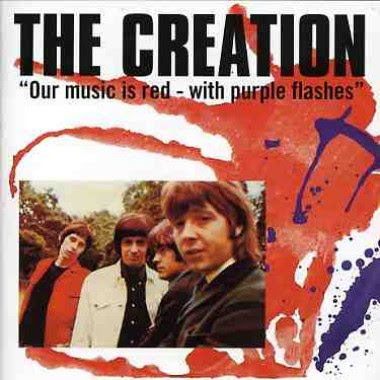
Our Music Is Red - With Purple Flashes (1998) is a compilation of all the 7" A and B-sides that the Creation released in their short-lived career from 1966-1968, together with six other rarities from the time. It's interesting to note how much they crammed into their two years, stylistically speaking. They had a go at everything contemporary, with a remarkably high level of success. So we've got original songs in the mode of the Who, the Rolling Stones, the Kinks, etc, and there's a nice dose of psychedelia thrown into the mix for good measure. It's all great, highly stylised 60's fare and it's pleasingly at the rough end of performance - the Creation had a good deal more in common with the Kinks in that respect than sops like the Beatles.