Friday, 20 July 2012

LaRM day 115 (Nick Drake-Dressy Bessy)

Ah, now we're talking - a morning of everyone's favourite troubled genius, Nick Drake. Although we start with the bootleg, Tanworth-in-Arden (for which big thanks to Alex) which although a genuinely fascinating curiosity, is essentially a basic insight into what informed Drake's taste and songwriting rather than a marvellous listening experience in its own right. These are basically press-play-and-record home tape recordings that Drake made in 1967/1968 before Joe Boyd brokered his record deal. A mixture of Drake's less impressive original compositions and variously famous and obscure blues songs, it is extremely revealing about Drake's development, particularly in terms of his rather ornate and singular finger-picking guitar playing style (which was already extremely accomplished, by the way) and light, slightly fey, shy vocals. Bearing in mind that the debut album built on Drake alone singing and playing guitar, Tanworth-in-Arden is an enlightening document, and despite it's necessarily very rough sound it is of course a lovely thing, but it certainly isn't something that you can imagine Drake himself would be particularly pleased about being available for us all to hear.

Five Leaves Left (1969), Nick Drake's first album, is a masterpiece of studied introspection, a languid and faintly melancholy work which draws both folk and blues influences together and completely remoulds them both to create something quintessentially English. The gentle beauty of the album often serves to obscure just how clever and unusual it is, with Drake's quiet distracted vocals drifting over the guitar and piano accompaniments. Pretty much every song on the album is a true wonder but each one lends itself so perfectly to notions of isolation that you can't help but feel that Drake's sad fate was written in the stars. The other thing that is genuinely remarkable is Drake's utterly unique and scarcely replicable style of guitar playing. It's alternately jagged, forced and fluid but it never sounds any of those things, it sounds completely relaxed, at ease, and it's both astonishingly complex and astonishingly clever. Is it worth pointing out highlights on an album that grazes perfection throughout? If forced I suppose the delicate melancholy of 'Cello Song', the calm grace of 'Time Has Told Me' and the sinister folkisms of 'River Man', but honestly there's not much point in singling anything out.

Second album, Bryter Layter (1970), despite the terrible name is in some respects better, in some worse, than Five Leaves Left. There's a jazzy tone to some of the album which lifts it wholly out of the folk genre, but it's this element that I personally find doesn't always entirely fits with Drake's songs and general approach. Nonetheless, the songs that are good are beyond exceptional here, with the innate discomfort, the innate sadness at the heart of Drake's work bleeding through everything and giving it the most astonishing intimacy. Some of the songs are structured in a way that's not entirely divorced from classic pop songwriting, but the mood, the tone, the performances are entirely dissimilar. This is folk music played with a jazz tinge, but with no ostentation, no pretension, no adornment, and it's quite, quite beautiful. The really astonishing highlight for me is the three song run that closes off side 1, 'At the Chime of the City Clock', 'One of These Things First' and 'Hazey Jane I', but that's because I prefer the gloomier end of Drake's work. The brisker, jazzier numbers are still superb but there's something that doesn't seem quite right about them to me. In any event, any carping is essentially irrelevant as Bryter Layter is easily one of the best records ever made.

Drake's last release was 1972's Pink Moon, a record that defines the word "despairing" musically speaking. It's a missive from a deeply unhappy place and it's ultimate triumph is in not only being emotionally devastating but also inexplicably beautiful. There's none of pop music's narcissistic desire to be self-indulgent in the name of emotional truth, this is simple honesty, from someone who was genuinely troubled. These songs have every element that can be stripped out of them, leaving Drake and his guitar ekeing out the bare bones of songs and presenting them as skeletally as possible. The instrumental 'Horn' for instance is essentially just three notes played on the guitar and repeated, and what should be either tedious or pretentious or meaningless, or all three, is in fact absolutely heart-rending. It's astonishing stuff. In fact the whole album is a cleansing experience, emotionally, musically and intellectually and while it serves as an example of how to make something monumental from almost nothing, it doesn't help in listening to it to know that it didn't cleanse Drake's own mind at all. If anything it may have merely consolidated what he already knew to be desperate truth. The jury will probably always be out as to whether he intended to kill himself, but the evidence makes a fairly compelling case in favour. The saddest thing of all is that although this is art, or as close as this genre can get, Drake wanted it to be successful and be famous. Well, he got there in the end.

As a contrast we now have the debut eponymous album by The Dream Academy. As lush, soft-focus 80's guitar-pop music goes, this is the business. Grandiose, over-reaching, silly even, the Dream Academy brought a studied intellectualism to a kind of post-Prefab Sprout world and made it even more bookish. Big hit 'Life in a Northern Town' sets the template, ringing 12-string acoustic guitars, woodwind, big chorus, it's all there. The production by Floyd's Dave Gilmour is dated certainly but also makes the whole thing now sound entirely appropriately nostalgic, particularly appropriate considering the pastorally elegaic feel of the whole album. It's a fine, if pompous, rock record, and song for song it's as arch and deliberate as smart-arse pop music can get. The charming Kate St John's woodwind and percussion really lays the foundation for the songs and creates the constant tone-setting ambience and without her it really would be a record of good songs, but little texture. And as an interesting coincidence, the fact that the Dream Academy comes directly after Nick Drake is very aposite as head Dream Academy chap Nick Laird-Clowes is a Drake fanatic and actually owns the acoustic guitar that Drake is pictured with on the cover of Bryter Layter. Sew a button on that one fact fans.

And so to move even further away from accusations of miserabilism, it's the super-charged guitar pop of Dressy Bessy. Now this is as sunny day as guitar-pop will ever, ever get. Sharing members with the Apples in Stereo, Dressy Bessy made some of the most up and charmingly sweet records, like, ever. I once saw them play four times in one week. I love Dressy Bessy. Apart from anything else these are brilliantly put together records and debut Pink Hearts, Yellow Moons (1999) is charm personified. The melodies are superb, the tunes absolutely fizzing and the hooks are the definition of infectious (not as in illness infectious, as in, you know, fun infectious), and Tammy Ealom's enthusiasm is absolutely undeniable. The 60's derivations are scarcely disguised, the girl-group melodic set-ups even less so, but so what? The band were to get consistently less impressive with each successive release, but Pink Hearts, Yellow Moons is just a really, really great time.

Thursday, 19 July 2012

LaRM day 114 (Doors-Doves)

The last of the live Doors-athon is the two shows from 10 April, 1970 in Boston (officially released in 2007). These shows are the beginning of the end for the band because you can tell that Morrison is heading downhill fast. Most of the time he seems fairly disengaged and when he isn't arsing about, he's mumbling and muttering. Again, the first show starts with him having a go at the audience about not sitting down and he clearly isn't all that bothered with the whole thing. Fat, drug-addled and apparently very, very drunk during the performances, I guess it was difficult for him to really focus, and the rare occasions when he does are electrifying. But there's the tragedy of it all right there - even to the last he still clearly had something, and despite his juvenile self-obsession and terrible poetry I think he was a pretty clever bloke who wilfully threw it all away. The two Boston shows are a testament to a band who were quality journeymen behind a mercurial talent, but they also demonstrate that being a working band, with its attendant troubles, particularly chemical, can really be destructive.

The first Doves album, Lost Souls (2000) still sounds like a refreshing antidote to the twin miseries of the last days of Britpop and the advent of Coldplay. Full of meandering, quietly emotionally refulgent epic mood pieces, it's a record that proved that being soul-searching didn't have to mean sounding like a dick. In some ways it's an interesting comparison to Coldplay's Parachutes. Where the Coldplay album is considerably less than the sum of its parts, Lost Souls makes a great impact through fairly simple means. There are a number of decent songs on Lost Souls, but it's best to take the album as a whole single piece really. The real trick to the album I think is that although it absolutely fits the mould of the kind of gloom-pop that was growing at the time, it sits apart by virtue of having a strangely psychedelic edge to the music and by not overplaying the angst in either the vocals or the melody, but rather by letting it come through the whole. I suppose they couldn't really overplay the angst bearing in mind, under the name Sub Sub, they had had a hit with one of the most irritatingly upbeat dance singles of all time a few years earlier.

Second album, The Last Broadcast (2002) is better yet I think, retaining the general mood but cutting back on the quietly unwinding lengthy pieces. There are more obviously melodic songs and there's a more elegaic mood to the whole album. The lightest psych touches are still there but they really serve to drive on the record, and the production is dense, a little claustrophobic even, but that's also entirely appropriate to the material. There are one or two longeurs, no question ('Satellites', 'M62 Song'), but even they serve a vital role in pacing the album. The bigger tunes are really great, from the percussion heavy 'There Goes the Fear' to lovely album closer 'Caught By the River'. It's a record that has slipped from the popular consciousness I think, which is a shame because to me it's a time-defining piece of work, miles better than most of the similar contemporaneous stuff being released at the time. Some Cities (2005) is even more song based (five and a half minutes being the longest tune here, the previous two albums had plenty considerably longer), and although it lacks the pervasive atmosphere of the preceding two albums, it's reliance on pop structure and melody works well. There less opportunity afforded for the listener to drift away from the record this time round, and thematically the band seem to be less wistful, and more precisely driven. There's a strange urgency to the record which is in direct contrast to their previous work and takes a bit of accommodating, but Some Cities has some fine, expertly crafted songs, and on the whole it's a very good album.

Wednesday, 18 July 2012

LaRM day 113 (Doors)

Right, so, obviously, as a result of the bonanza that was the CDs that came into work back in the day, I took anything remotely interesting, as stated previously. Amongst those things were three CD issues of live shows that the Doors performed in 1967 and 1970 respectively. Now, this is all well and good, except that a) their shows went on forever and b) these box sets include whole residencies. So we have a compiled two show, 2 hour set from 1967, a two complete show, three hours combo from April 1970 and (gulp) a complete four show, 6 hour collection from January 1970. So there we have it, 11 hours of the Doors in action. As a result today's and tomorrow's entries will be pretty short because I suspect although these things go on forever and a day, I won't actually have much to say about them. Let's get cracking then with the 1967 show Live at the Matrix, San Francisco (officially released 2008). Bearing in mind the Doors were still relatively obscure, having only released the debut album at this point and not having released 'Light My Fire' yet, it's surprising just how confident and accomplished they already were. Morrison gives it large pretty much throughout, yelping and howling, and you do get the sense that it must have been electrifying to see him in action at the time. Nonetheless, sustaining the full two hours is a tough job and by the end, and an insipid cover of Van Morrison's 'Gloria', you've really started to wilt. The band are undeniably superb, Ray Manzarek's keyboard finely controlled and Robby Krieger's guitar work is exemplary (there's some astonising stuff on 'The End' for instance). It's bold stuff and no surprise that it's a "legendary" gig, but as ever, it's the Doors, so I have some difficulty with the band and the songs generally.
And obviously the only other thing that we can do today is the 6 hour set, Live in New York, January 1970 (officially released 2009). The four consecutive shows (over two days) at the Felt Forum are a mixed bag, each one mixing the lively, the enlivening and the jaded. You can feel Morrison's enthusiasm come and go in waves throughout. The first show starts off pretty well, but by the end it's dropped off and although the band try valiantly, the mood has dropped off considerably. The slickness of their performance has improved dramatically from an already impressive level and it's all supremely tight. The turning point in the first show is a pointless and overlong version of 'Little Red Rooster' and despite a spirited outing for 'Light My Fire', it's all over bar the shouting (which Morrison does a lot of in all of these shows incidentally). The second show is longer (nearly making it to two hours) and has a lot of unusual song choices ('Ship of Fools', 'Build Me a Woman') but again, there's just too much of it. The whole band are still firing on all cylinders (difficult considering this is the second show on the same day), but it's hard to stay with them throughout. I know live albums are difficult at the best of times, especially bootlegs, but the problem with the Doors is that it can all start to sound turgid when you listen to too much at once. And that's exactly what I've done. Anyway, the third show is pretty good. The band sound refreshed and lively for the most part, the bluesy foundation of all their work brought out beautifully by Krieger, Densmore and Manzarek. There are more touches of brilliance that remind why the Doors were such a massive deal at the time in the third show than any of the others. The fourth and final show starts with Morrison basically having a go at the audience for not settling down in time, and that kind of sets the tone for the first half of the show. The reading of 'Alabama Song' (a pretty terrible piece at the best of times) is particularly audience baiting, Morrison mucking about as if he's bored out of his mind. To be fair the band must have been pretty frazzled by this point, but nevertheless the switching between sleepwalking through the songs and being deliberately obtuse is fairly egregious and the audience would have had a right to be pretty hacked off. The mood changes when, about a third of the way through, Morrison launches into the absolute zenith/nadir (depending on your point of view) of his art, 'Celebration of the Lizard'. Now clearly Morrison himself considered this epic piece of staggeringly self-indulgent juvenilia to be a masterpiece of creative thinking and he gives his all to the whole 17-minute performance of it. It's unbelievably bad stuff in itself, a genuine embarassment, (I should mention at this point for Dan that it's following this car-crash that Morrison declares a rather desperate "Alright, let's boogie!") but it does reinvigorate the whole band who bring a lot more to the show thereafter. The rest of the show is pretty impressive and the encores are well-deserved. But, the problem remains, you have to think the Doors had enough inherently interesting quality to warrant dedicating so much time to listening to these shows, and I for one think they fell well short.

Yet more tomorrow with the Live in Boston, April 1970 sets. Yaaawwwwwn.

Tuesday, 17 July 2012

LaRM day 112 (Donovan-Doors)

Psychedelic hippy freak-out alert! It's that daft old fool Donovan, starting with third album Sunshine Superman (1966). To be fair Sunshine Superman has some superb songs on it (the title track and big hit 'Season of the Witch' are the obvious choices, but there's all kinds of other good tunes), and it's an unusually bold bit of bass-heavy psychedelic jiggery-pokery. There's plenty of sitar and tabla style nonsense but it feels genuinely experimental, as if Donovan (and producer Mickie Most) was truly interested in trying stuff out and seeing how it sounded. Donovan has always been tagged as a folkie, but apart from the occasional specific number it's all much more psych-rock oriented on Sunshine Superman, indeed, on balance the majority of his work doesn't really have much to do with folk. There are pastoral numbers, certainly, but they're flattened by the freak-outs that get more prominence here. There are tunes that drone on for 7+ minutes, but even they have something to recommend them. Personally I've always thought that Donovan was basically a bit naff and I've never got round to listening to the records I've got properly, but I'll give him this: he wasn't afraid to fail. Then again, in the mid-60's failure wasn't really a concept anybody applied I guess, everything was groovy. (The reissue has a bunch of extra stuff including a rocking early version of 'Superlungs' and a jaunty tribute to folk hero Bert Jansch.)

Skipping ahead then to seventh album, Barabajagal (1969), which is even more of a rock record. Unfortunately it's also massively annoying. For the most part this is repetitious childish singalong rubbish which can be intensely grating. I don't need to hear 'I Love My Shirt' ever again for instance. When it isn't being whimsical and wide-eyed it can be pretty effective (the title song is pretty impressive, driven by a serious rock backing by the Jeff Beck Band) and there are a number of decent songs, and the psychedelic strand through it is still fairly strong. But every time you think the album is back on track you get a 'Happiness Runs' or 'To Susan on the West Coast Waiting'. Interestingly, 'The Love Song' sounds like something on a post shark-jump Belle & Sebastian album. That tells you how insipid this stuff is. Anyway, if you're in the mood for a hippy afternoon when the suns out, it'll do the trick admirably, if you want to listen to a great album from the late 60's I'd suggest giving Barabajagal a miss... (the reissue more than doubles the album with 13 extra tracks, which for the most part are more of the same.)

As one of the most accessible (read, boring) of the "California sound" bands, the Doobie Brothers' best excuse for ever existing was to facilitate the excellent joke reference to them in Romancing the Stone. Beyond that it's all pretty bland bluesy choppy laid-back California rock. Muddy production helps ensure that the self-titled debut album (1971) is a thoroughly uneventful album. One of those rare occasions when the word "pleasant" is an insult, the sheer lack of reason to be engaged makes it almost entirely worthless. Sort of a shame really because it doesn't actually do anything wrong, it just meanders along with its anodyne riffs and soulful vocals. The fact the production is totally off is demonstrated by the song 'Feeling Down Farther''s chorus which sounds like the lyrics are in fact about a town made of peanut butter. As total musical wallpaper, the album is fine, but at a time when people where making far superior similar records the release of this album suggests that the Doobies were pretty second rate. No wonder they sold more records than anybody else.

Second album Toulouse Street (1972) is a marked improvement, but that doesn't mean it's any good particularly. It kicks off with the mega smash hit 'Listen to the Music', which is lively, bluesy and ragged enough, but it's still a pretty weak tune. The attempt to rough up the sound into a kind of Skynyrd come Allman Brothers type of deal singularly fails, not least because the Doobie's sound was just too inherently sweet. The attempt to give Skynyrd a run for their money on the debut album, 'Beehive State', was a car crash and on Toulouse Street it's played out more successfully, but it still doesn't convince. Again, like the debut, Toulouse Street is a perfectly pleasant listen but there has to be more going on in a record than being a soundtrack to pass the time with. To explain how bland and predictable it all is, there's a song called 'Rockin' Down the Highway' on it. And there's a song called 'Mamaloi' which is a cod reggae thing. I think that's all I need to say.

The Doors really are one of those divisive bands. Personally I think they were a half decent blues-jazz outfit with occasional psychedelic flourishes and a prancing dick for a frontman whose turgid, juvenile attempts at rock poetry amounted to little more than the vainglorious self-aggrandisement of the sixth-form show-off. But what do I know eh? 8 zillion students couldn't have been wrong in the late 80's, can they? The sixth and final album with Jim Morrison, LA Woman (1971), is an interesting example of the best and worst traits of the band, containing great lengthy workouts (the title track really is a fine piece of rolling, driving rock) and a couple of decent shorter pop songs. But it also has pretension dripping from the speakers, a determination to be abstract, both lyrically and musically which is not only unimpressive but wholly meaningless, and it has some truly turgid stuff on it too ('Cars Hiss By My Window' covers all the negative bases pretty much). And it also has the truly unforgiveable 'L'America' on it, which may well be the worst of all Morrison's terrible lyrics. The difficulty is that when it's good, it's startlingly good and that's about quarter of the time. Then we have the 1985 Best Of compilation that was standard issue in every student's record collection for the ten years following its release. Covering the official Morrison releases only (ie, the first six albums - 1967-1971), it's effectively all anybody really needs of the Doors. While most of the stuff on it simply doesn't hold up any more, you can pretend that it's like amazing man and enjoy it well enough. All the big numbers are on it ('Love Her Madly', 'People Are Strange', 'Riders on the Storm', etc, etc, etc) and it's a really smart overview. The big deal really is the inclusion of the full-length version of 'The End', which was the entry point to the Doors for most people who weren't there at the time, by being used in the opening of Apocalypse Now.

What happens for the next two days is that we step hand in hand into a musical nightmare. It's eleven hours, yep, eleven hours of the Doors live shows. How? Why? What? I'll explain tomorrow once the gates of hell have opened and we're marching merrily into the flames.

Monday, 16 July 2012

LaRM day 111 (Julie Doiron-Donnas)

The really special Julie Doiron records start with the gossamer fragile Loneliest in the Morning (1997) which is a lesson in emotional restraint. You sense throughout that something truly heartbreaking is going on in these songs, but the resigned, gentle way in which they're delivered implies a simple melancholy instead, and the end result is extremely affecting. Doiron's clumsy, quiet guitar playing and wayward, delicate vocals fit each other so well that it sounds as if the whole thing is perfect rather than markedly untutored, and the songs create a wonderful rainy day mood that I always find gets me very deeply. There's no melodrama involved in any of this, just simple everyday experience and Loneliest in the Morning serves as a reminder that we're all allowed to sometimes feel a little blue about relatively mundane experiences. A different proposition, but equally good is self-titled album by Julie Doiron and the Wooden Stars (1999). In some ways it's a surprise that Doiron's songs work so well in a full band context, but in fact fleshing them out brings out the innate textures in them in a really nice way, and provides a grounding for material that can sometimes seem a little shaky. Some of Doiron's best songs are on the Wooden Stars album, and she reworks 'Dance Music' and 'Sweeter' from Loneliest in the Morning to demonstrate the contrast between the band work and her solo approach.

2001's Desormais returns for the most part to the stripped back feel of Loneliest in the Morning, but this time out everything is even quieter, even more restrained and despite the occasional presence of a drum kit, it's all incredibly sedate. The songs are all sung in French and the overall mood is unremittingly downbeat. The introduction of some obscure electronic beats and noises is a nice touch but I don't think really adds much. Many people think this is Doiron's best album, but I don't think her songs are shown to best advantage when they're reduced so far. It's certainly very successful as a mood piece, but I don't hear enough melody in it all for my taste. Likewise the very similar follow-up, Heart and Crime (2003). Again, it's quiet and gloomy almost to the point of sounding despairing but I much prefer Heart and Crime to Desmormais, there's more immediacy to it. Nonetheless, if it's raining out and you want to feel wistful it's a pretty good choice, otherwise it doesn't really stand up as an album in its own right I don't think.

Finally we have 2004's Goodnight, Nobody. There is no great difference again between Goodnight, Nobody and the two previous albums. There is a lighter, airier feel to it than either Desmormais or Heart and Crime, but there's no real sense of development. It's still a lovely record, no mistake about that, but listening to all of the albums in one go hasn't really done them much of a service as the basic template remains too consistent throughout and I find myself wishing for something a little different by the time I've reached Goodnight, Nobody.

After her tenure in Throwing Muses and the Breeders and leading Belly, Tanya Donelly finally launched a solo career in 1996 with the double-7" Sliding and Diving. Lead song 'Bum' is a fizzing, lively tune, less directly pop than her work with Belly, but certainly more immediately accessible than the Muses or Breeders records. 'Restless' is a lovely low-key slow song with some plaintive pedal steel buried in the back of the mix which is nice touch. It always seems a surprise when Donelly turns out a delicate acoustic number, but she's certainly good at them. The other two songs are pretty decent ('Human' is a furious bit of indie-pop and 'Swoon' is a fairly rough early version of a fantastic song that would be properly fleshed out on the debut album) but it's the songs on the first 7" that are the real keepers. The debut solo album, Lovesongs for Underdogs is a terribly underrated album. It may be a glisteningly slick record, keenly produced and buffed up with a pop sheen that's almost blinding, but it's also got some superb pop songs on it, and Donelly's way with a slightly off, somewhat unpredictable pop melody is at a peak throughout Lovesongs for Underdogs. I think people were maybe disappointed that she was prepared to make something so unashamedly crowd pleasing, but when you've got the songs, you might as well show them off. If there is a difficulty it's maybe that the high polish makes the record start to sound samey, and you need to keep an ear out for the highlights, but there are many of them and worth making the effort for.

2004's Whiskey Tango Ghosts has none of the bubbling indie guitar pop that Donelly had been trading in for the most part and is instead composed of quiet, slightly countrified downbeat songs that trade in big melody for a kind of emotional honesty instead. A delicate but somewhat gloomy record, Whiskey Tango Ghosts has some of Donelly's most sophisticated songwriting, but it's lacking in the sprightly off-beat sensibility that she had made her own. As such it's an impressive but oddly cold record, one to admire more than adore.

One thing that has always confused me about those indie halfwits at Pitchfork is that while they fall over themselves to fawn over the most moronic mysogynistic rap records, they can't abide big dumb rock music. It's strange because the very things they seem to abhor in rock are often the self same things that they laud as challenging or exciting in the most unpleasant hip hop and rap. In any event, it's no surprise that they despise the Donnas, who quite brilliantly they have openly accused of being anti-feminist because they're women playing cruddy cock-rock. It's ironic that male writers for Pitchfork should accuse women of being anti-feminist for playing dumb rock music and not only not criticise but actively praise male rappers who spew out the most repellent women-hating shit imaginable, no? Anyway, I have no truck with this pathetic indie dork muddled thinking, and I enjoy the Donnas records a lot. But then I like rock music. Third album, Get Skintight (1999) was the first Donnas record that moved away from the Ramones-a-like stuff that they had churned out on their first two albums, and was tellingly the first that they wrote themselves, hence the timid post Alice to post Crue influences showing in the background. For the most part it's still buzzsaw guitars and "yeah yeah" chanting punk pop, with lyrics about going out, ripped jeans and not doing much. It's great fun, and has no great ambition to do anything but be a good time.
Fourth album The Donnas Turn 21 (2001) reduces the scrappy punkiness further, making more room for simple rock riffing and more stupid stories of adolescent love, lust, angst and party going. It's a great record, buzzing from one 3 minute dose of rock pop with a punk edge to another. It's all knockabout, throwaway and silly, but it's still tons of fun. I think people see the Donnas as a kind of wannabe female Motley Crue, but the riffs are much closer to a rudimentary blues boogie and have a much closer affinity to AC/DC than to any hair metal. A lot is given away by the inclusion of a fine cover of Judas Priest's 'Living After Midnight'. The production is cleaner and the performances are more polished, and there's even the sense that they might nearly be able to play properly. I guess the ambition to be a rock rather than a punk act was sharpening everything up. I like Turn 21 a lot, it's stupid, it's fun and it knows exactly what it is and what at isn't and doesn't pretend otherwise.

And then by 2002's Spend the Night the punk is gone and it's all about the riffing. An even dafter record than usual, Spend the Night is a real rock record that clearly had potential chart action in its sights. Its super-shiny production and slick pop-rock styling is all pretty polished and there was clearly an ambition at play here (they nearly made it with a minor chart showing for the obvious single choice 'Take It Off'). They never actually pulled it off, but whatever, this is the album that the Pitchforkers particuarly loathed and it's the one I love the most. This is heads-down rock that only a really smart band could make sound so dumb. It's a fantastic bit of riff heavy rocking and to be honest I can't see what's not to love. Everything about it (including the ridiculous cover) is designed to be indeterminately anachronistic (I guess 1977 would be a fair guess at what's intended) and it works beautifully.

Friday, 13 July 2012

LaRM day 110 (Divine Comedy-Julie Doiron)

In 1999 a Divine Comedy best-of compilation was released entitled A Secret History. Almost everything on it has been covered already but there are three songs (two new, one from a various artists comp) of which 'Gin Soaked Boy' is great, 'Too Young To Die' is good and the disco cover of Noel Coward's 'I've Been To a Marvellous Party' is entirety inexplicable. However, early pressings had a bonus disc of rarities and live tracks. There are some fascinating things on the rarities disc, including a bunch of cover versions which speak volumes about Hannon's interests and influences (Bowie's 'Life on Mars', Kraftwerk's 'The Model' and most surprisingly but most tellingly Talk Talk's 'Life's What You Make It', together with a delicate rendition of the hymn 'Dear Lord and Father of Mankind' which Hannon performed on Irish TV in tribute to his father). The most interesting stuff by far though are the demo versions of songs, including an indie-pop version of 'The Certainty of Chance' which underscores how well written Hannon's songs are, 'Bleak Landscape' which is a great song that never made it onto Liberation, and 'Soul Destroyer', a song from the first, disowned and long unavailable album.

I haven't got or heard 2001's Regeneration which is reputed to be a downbeat rock record and I can't really imagine that working so well, so it's straight on to 2004's Absent Friends. Hannnon's stated ambition for Absent Friends was apparently to make an album that would simply be lovely to listen to on a cold night with a roaring fire, a tumbler of whiskey and a labrador at your feet. I think he pretty much managed it. It's certainly a relatively light record with much less of the grandiose orchestration and complex arrangement. Instead there a number of more or less charming chamber pop songs which are occasionally very slightly grating but mostly whimsically endearing. There are lovely songs on Absent Friends (the orchestration on the wonderful 'Our Mutual Friend' really confirms Hannon and Talbot's Poliakoff-esque musical approach to representing culture) and although not much of it sticks in the mind after it's over, that's sort of appropriate - I don't think it's intended to show the same vaulting ambition of old, more simply it's to entertain and amuse. And I think that has been pretty much Hannon's use for the Divine Comedy since. I haven't got 2006's Victory for the Comic Muse, but 2010's Bang Goes the Knighthood certainly has the same kind of feel to Absent Friends. It's relaxed, sometimes silly, sometimes showy, but almost always imbued with a simple charm, and although the song structures are still fairly involved, the orchestration is light and restrained, backing rather than lifting the songs, and it's all for simple spiritual pleasure. Some people will find this stuff more annoying than ever I suspect, but I can't help but feel a real affinity with most of Hannon's records.

The critical view of Bonnie Dobson's Good Morning Rain (1970) is generally that it's a bland bit of post-folk countrified MOR that has little, if anything, to particuarly recommend it. What's interesting about this view is that it demonstrates precisely how aribitrary the critical view tends to be, and how determined it is to be moulded by itself. Good Morning Rain may not be a clearly groundbreaking or remarkable piece of work, but it's absolutely the kind of record that's due a purely arbitrary "critical re-evaluation". If someone on allmusic or pitchfork wrote an article declaring Good Morning Rain one of the great lost albums of the 1970's the reviews of it across the net would suddenly reverse, I guarantee it. Anyway, enough ranting about how mind-bogglingly stupid people are, and on to Good Morning Rain itself. It's a slight but an utterly charming record, and one which while being entirely in thrall to its time, also sits weirdly outside of it. It could never have been made at any other time, but it doesn't exactly sound of its time either. Dobson's high, clear vocals are extremely pleasant and the arrangements of songs by Jackson Frank and Ralph McTell, among others, as well as her own compositions, are quietly pleasing. I think it's a really nice record and one that is many times better than its reputation. Besides, I love the idea that she became head of admin for the philosophy department at the University of London after the singing career faltered.

While playing bass in Eric's Trip, Julie Doiron spent a bit of timing writing and recording on her own, and her first album, an eponymous release of singles and compilation tracks under the moniker Broken Girl (1996) is a essentially a collection of low-key home demos, which effectively set the template for her records for the next ten years. Simply recorded, just Doiron and her acoustic guitar, these are brittle fragments of an extremely tender nature, Doiron's wilful, untutored voice ringing with honesty throughout. Taken as a mood piece, it's a beautiful album, full of minor heartbreaks and weary days. In some ways Doiron is the antithesis of the popularly understood idea of female singer-songwriter with guitar. There's nothing showy here, it's all delivered with eyes to the floor, fringe grown out to hide behind, but conversely there's nothing hidden in the songs, everything is honest and very pure. Doiron's intent is mood rather than song as such, and so there's nothing remarkable about either voice or guitar playing, or indeed songwriting, and it's scrappy and unfocussed, yet there are plenty of pointers to the achingly lovely stuff to come.

Thursday, 12 July 2012

LaRM day 109 (Dirty Three-Divine Comedy)

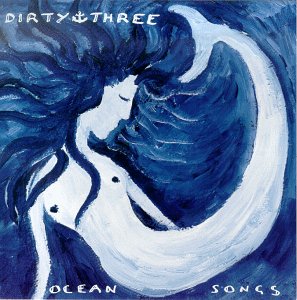
The Dirty Three, when not helping out old chum Nick Cave, make startlingly affecting, haunting records of a deceptive simplicity. Like Rachel's they rely on a kind of postmodern instrumental chamber music approach, but where Rachel's are skittish and try out all kinds of things in the search for emotional connections, the Dirty Three are more rigorous. There's no moving outside the strict format of guitar, drums and violin, and they explore every parameter there is to be explored within that limited framework. It's all lucid and descriptive whilst being simultaneously sedate and graceful and although there's always the sense of imminent collapse throughout their work, it holds because of the strict emotional drive that moves the music forward. It's occasionally sepulchral, often crepuscular but always deeply affecting, and the nautical theme that they have relied on often in titles and artwork is strangely appropriate - you could almost imagine sea-wrecked mariners hearing these pieces drifting over the seas in the night.

After Seefeel split up Mark Clifford released a couple of EPs and an album under the name Disjecta (not to sound like a sort of grime artist, but after a Samuel Beckett essay). It's similar to Seefeel's post-ambient electronica, but even more clinical. The album, Clean Pit and Lid (1996) is slick and slippery and it uses its status as a Warp release to show off just how much the Aphex Twin wasn't the only person capable of redefining the electronica genre, from keyboard noodling into a sort of post-Autechre mathematical project. It's determined and spacious, and it has a habit of breaking down into headache inducing, tinny repetitions. It's certainly clever and it's certainly compelling, but it's all head and no heart and the electronica by way of shoegaze that he made in Seefeel I think was much more engaging than the Disjecta work.

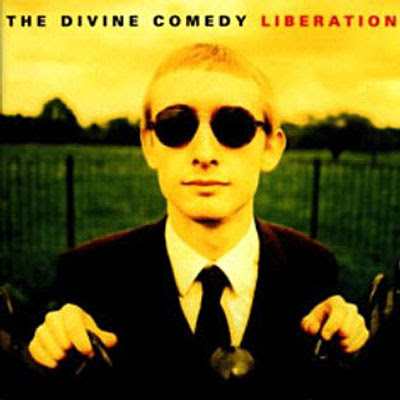
To kick off a Divine Comedy marathon should have been the 'Europop' single from 1992 but none of the three extra songs on it are anywhere to be found on the legitimate internet, so we have to start instead with the second album (and first widely available), Liberation (1993). As an album Liberation is something of a mess, but as a statement of intent it couldn't possibly be clearer. Neil Hannon's ambition to be simultaneously F Scott Fitzgerald, Anthony Trollope, Collette, Cole Porter, George & Ira Gershwin, Ray Davies and Oscar Wilde is remarkably well established by the personality he adopts and portrays on Liberation. The themes, the preoccupations, the effete Englishness by way of Ireland are all clearly set out and in many ways, although the album can be an irritation, you have to marvel at the completeness of Hannon's vision at such an early stage. Musically there's all sorts going on in the chamber pop framework of Liberation from stupid and annoying out and out pop song ('Europop', 'The Pop Singer's Fear of the Pollen Count' - always ironic though) to superb Brackhage style sound experiments ('Europe By Train'). There's Evelyn Waugh style throwback irony ('Your Daddy's Car'), to renderings of Fitzgerald in pop song ('Bernice Bobs Her Hair') by way of tributes to Mr Benn ('Festive Road'). There are a few pointers to the great records Hannon would make, and there's a truly beautiful piece in album closer 'Lucy', one of Wordsworth's most affecting poems turned respectfully into a delicate pop song, but the album is too sprawling, lacking in focus and sounds too much like a collection of disperate ideas rather than a coherent album.

That album was follow-up, Promenade (1994) an arch, ornate record of remarkable sophistication, both musically and conceptually. Many people find the Charles Ryderish nature of Hannon's character, which is at its apex on Promenade, too much to take but personally I feel a great affinity for it. The entirely fictitious universe of rolling lawns, country houses and ballrooms that he creates is similar to that intellectual upper classism that Stephen Poliakoff finds so attractive, and so do I. The conceipt is one thing, the execution of it is another, and Hannon's masterstroke with Promenade is to populate it with beautiful, stately pop songs, performed with no pop instruments at all. The only concession is the drum kit, the rest is piano, woodwinds and strings and the result is a record that seems on the surface a fairly straight, if arch, pop album but that is in fact an acutely anti-pop/rock one. It makes no active concessions at all when you listen to it closely and this fits absolutely with the broader false-nostalgia theme of the album. It's really quite something. There are a couple of missteps with the rollicking 'A Drinking Song' and 'A Seafood Song' but that's only because they muddy the waters of melancholic, bucolic nostalgia that the rest of the album conjures. 'The Summerhouse' is the archetype of Hannon's approach at this time, graceful, and delicately paced, with cor anglais marking out the melody while he delivers a grandstanding vocal outlining what can only be a pretence of the romance of an upper-class childhood. It's lovely stuff. Really Promenade is romantic throughout with its tales of country house balconies, lovers running through the rain and freewheeling bicycle rides. It also ends with what I think is one of Hannon's most directly moving songs, 'Tonight We Fly'.

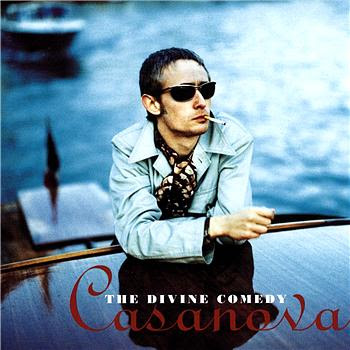
The next step was the one that finally divided critics once and for all. Casanova (1996) found Hannon turning his foppish, intellectual alter ego and making him a lascivious, leering creature, prowling Europe in search of prey. The songs are even more over the top and preposterously ambitious than ever and although there are some straight ahead pop songs, everything involves such ornate orchestration that it seems like a towering piece of showing off. It's a big, bold record and one that seems unprepared to make any concessions to accusations of vainglory. That's what hacked many people off and it's what I love about Casanova. I don't think Hannon has every knowing courted popularity in a mainstream sense and even though he has bemoaned a lack of financial reward in the past, I can't help but think that he knows as well as anyone that his career has been all about rowing against the tide. It's a band effort this time around and the music, although heavy with string arrangements, is for the most part principally based around the standard guitar, bass, drums set-up. There are very clear references to Scott Walker's records as well as to pop cultural ephemera and the orchestration is courtesy of Joby Talbot who plays an increasingly prominent role in the Divine Comedy records from this point. In fact it's Talbot's contributions that really make Casanova fly. The best songs are the ones in which Hannon reverts to the more pseudo-romantic mode and critical modes ('A Woman of the World' and especially closer 'The Dogs and the Horses' are fabulous, and 'Middle-Class Heroes' throws some successful cheap shots). It's an easy album to hate, I can understand that, but I think it's an easy album to love too.

I think Hannon sensed that it might be possible to take a similar approach to that of Casanova and up the ante in terms of the dramatic arrangements, but tone down the arch attitude and A Short Album About Love (1997) does just that. With its 30-piece orchestra foundations, it's an album of truly vaulting ambition and Hannon's deep croon is forced to reach new levels of control to maintain dominance over the music. The songs are great, indulging the Scott Walker fixation to the absolute limit, with lush, romantic leanings predominating throughout. 'Everybody Knows (Except You)' is lovely, 'The Pursuit of Happiness' charmingly snide, 'I'm All You Need' grand without being grandiose.

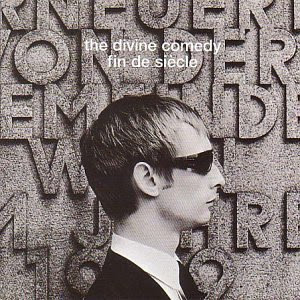
1998's Fin de Siecle assimilates all of the various approaches of the Divine Comedy's previous records and creates a monolithic piece of grandstanding pop, with a bitingly gloomy edge. There are massive pieces of orchestration from Talbot which drive along songs which in some cases might not otherwise stand up. It does also have the bitingly nasty, but sadly utterly irritating 'National Express', but in some ways that song is representative of an element of the album as a whole. There's something very dark and basically misanthropic about Fin de Siecle - elements which have never been much on show previously. Any romantic sense is completely taken apart by context. If 'Commuter Love' weren't so drily sarcastic it would be romantic and that's true of a lot of the album. It's as if Hannon is saying that if we didn't get that he was just being horrible before, he'd better make it crystal clear this time around. It's a shame because I think it's a fantastically well constructed record with some gloomily brilliant songs. There's silliness (the Kurt Weillisms of 'Sweden' for instance) and some tricksy but cheap social wordplay ('Generation Sex' is righteous but perhaps too easily curmudgeonly) - there always is with Divine Comedy records, but there's also some wonderful stuff ('The Certainty of Chance', 'Sunrise' which is a lovely finish).